I’ve ruined pans I loved. A carbon steel skillet I spent three months breaking in — left wet in the dish rack one night. Orange bloom across the whole surface by morning. A cast iron griddle stored in a humid garage over winter. Found it six weeks later, completely pitted. These weren’t beginner mistakes. They were rushed moments where I ignored what I already knew.
Rust doesn’t care about your intentions. It cares about moisture, iron, and time. Give it all three and it moves fast. The good news: preventing it is genuinely simple once you understand what’s happening to the metal — and why certain habits protect it while others destroy it.
I’ve cooked on, and rescued, cast iron, carbon steel, stainless, and everything between. What follows is what actually works — not tips you’ve read a hundred times, but the system I use and the mistakes I’ve watched people repeat.
The 5 Rules That Prevent Most Rust
Do only these 5 things and you’ll prevent 95% of rust problems:
Dry on the burner — not with a towel. Heat kills moisture a cloth leaves behind.
Apply a thin oil film while warm — enough to look matte, never wet or slick.
Never air-dry iron or steel — a dish rack is a rust incubator for these materials.
Store uncovered in open air — trapped humidity inside a closed cabinet is worse than ambient kitchen air.
Don’t leave food sitting in the pan — especially acidic food. It strips seasoning within minutes.
Why Cookware Rusts
Rust is iron oxide — Fe₂O₃. It forms when iron meets oxygen in the presence of water. Remove any one of those three and oxidation slows or stops. That’s the whole game, and moisture is the only variable you control.
Salt speeds things up. Leave salted pasta water residue in a carbon steel pan overnight and the salt acts as an electrolyte, helping electrons transfer faster between the iron and the water film. Rust by morning. Acid works differently — it doesn’t cause rust directly, but strips the polymerized oil layer (seasoning) that protects the bare metal underneath.
Improper drying is the number one cause of rust in home kitchens. Even an invisible water film left on cast iron overnight is enough. Temperature swings matter too — a pan moved from a hot oven into a cool kitchen pulls condensation onto its surface. That counts as moisture.
High humidity compounds everything. A kitchen that runs above 60% relative humidity year-round is actively hostile to unprotected iron and steel — and if you’re near a coast, a dishwasher vent, or live somewhere that doesn’t dry out well, you’re already fighting harder than you probably realize.
Which Cookware Rusts — and Which Doesn’t
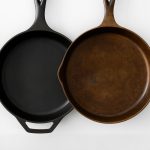
Cast Iron
Extremely prone. Cast iron has no alloy protection, no passive chemical layer. Every bit of rust resistance comes from the seasoning you build yourself — polymerized oil baked into the surface. Scratch that, leave it wet, store it in the wrong place and it rusts within hours. On the flip side, cast iron is the most forgiving material when things go wrong. I’ve brought back pans that looked like they’d been on a shipwreck. If the metal isn’t pitted too deeply, it can be fully restored.
Carbon Steel
Same rust risk as cast iron, but it moves faster. Carbon steel’s thinner walls mean it responds more quickly to both temperature and moisture — sometimes showing rust within 4–6 hours of being stored wet. Professional kitchen pans look black and indestructible because they get seasoned constantly through heavy daily use. At home, with days between sessions, that protection doesn’t build the same way. You have to compensate with more deliberate maintenance.
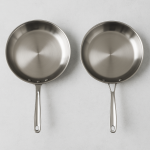
Stainless Steel
Mostly rust-resistant, not rust-proof — and that distinction matters. The chromium content (minimum 10.5% in most grades) forms a passive oxide layer that reforms itself when scratched. Durable in most home kitchens. But chlorides — from salt, certain cleaners, coastal air — can break down that passive layer at a molecular level. Once that happens, pitting starts. You’ll see brownish spots around rivets, weld seams, and areas where the surface finish is inconsistent.
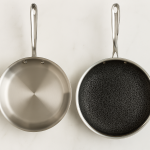
Nonstick and Coated Cookware
The PTFE or ceramic coating itself doesn’t rust. But when it chips — and it will eventually — the base material is exposed. Aluminum bases oxidize dull grey, not orange. Steel bases rust normally. The edges are particularly vulnerable, where the coating often fails first. A nonstick pan with chipped edges and a steel core will show rust within days in a humid kitchen.
Enameled Cast Iron
Very low risk when the enamel is intact. The glass-like coating completely seals the iron underneath. The vulnerability is the rim — where enamel ends and bare iron begins — and any chips in the interior. A small chip in the floor of an enameled Dutch oven will eventually rust if you ignore it.
Material
Rust Risk
How Fast
Restorable?
Main Vulnerability
Cast Iron
Very High
Hours
Almost always
Any moisture contact
Carbon Steel
Very High
4–6 hours
Yes
Humidity, acidic foods
Stainless Steel
Low–Medium
Weeks–months
Usually
Chlorides, deep scratches
Nonstick (coated)
Low → High if chipped
Days if chipped
Coating: No. Body: Sometimes
Coating wear at edges
Enameled Cast Iron
Very Low
Only if chipped
Partially
Rim and interior chips
Copper
None (different oxidation)
N/A
Yes — polishing
Verdigris, not rust
Aluminum (bare)
None (oxidizes differently)
N/A
Yes
Pitting from alkalis
Cast Iron vs Carbon Steel vs Stainless: How They Rust Differently
This comparison matters because the prevention approach is different for each, even though two of the three are essentially the same base material.
Factor
Cast Iron
Carbon Steel
Stainless Steel
Rust mechanism
Direct iron oxidation
Direct iron oxidation
Passive layer breakdown
Speed to rust
Fast (hours)
Very fast (4–6 hrs)
Slow (weeks to months)
Protection source
Polymerized seasoning
Polymerized seasoning
Chromium oxide layer (self-forming)
Seasoning required?
Yes — essential
Yes — essential
No
Worst enemy
Water + no oil
Acids + humidity
Chlorides + abrasion
Recovery from rust
Easy to full restoration
Easy to moderate
Moderate — pitting is permanent
Daily care effort
High
High
Low
Cast iron and carbon steel rust the same way at slightly different speeds. The real difference between them is wall thickness: cast iron holds heat longer and tolerates uneven seasoning better. Carbon steel heats faster, seasons more easily on the stovetop, but also loses that seasoning faster. Stainless is a completely different animal — its protection comes from the alloy itself, not from anything you apply.
The Prevention System That Actually Works
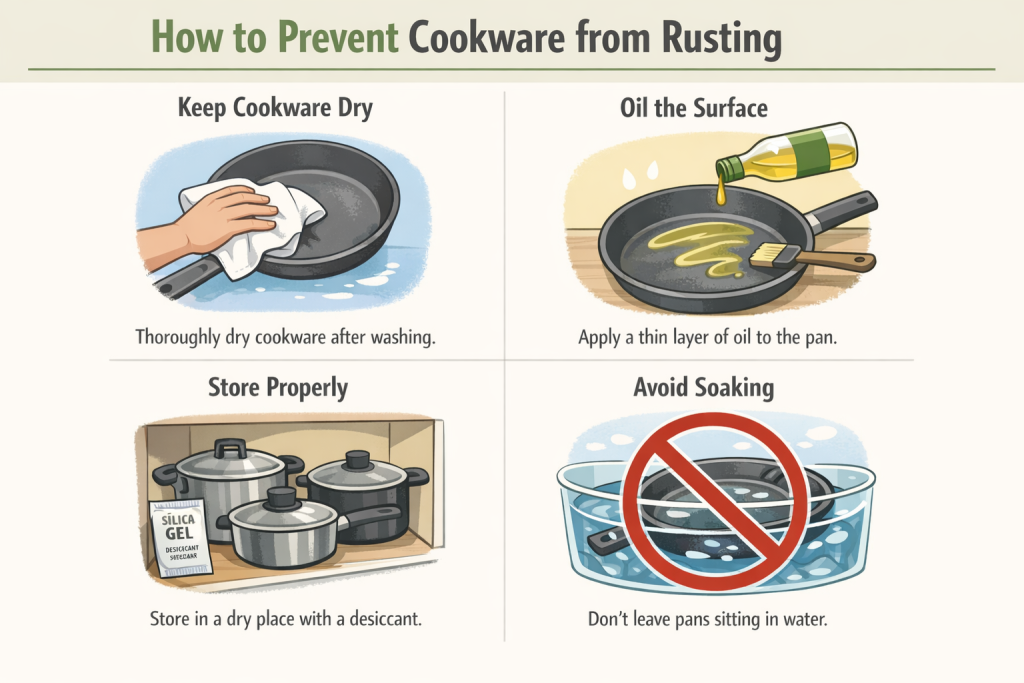
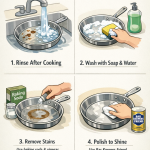
Step 1: Dry on the Burner, Not With a Towel
Towel drying removes visible water. It does not remove the moisture film sitting in the microscopic pores of cast iron and carbon steel. That invisible layer is what causes rust overnight. The only way to fully clear it is heat.
After washing, put the pan on a burner over medium heat for 2–3 minutes. For cast iron, wait until you see the last wisp of steam disappear — that’s the moisture leaving. The pan should feel bone dry. Carbon steel, same rule. Thirty seconds in a warm oven works too, but the stovetop is faster.
Step 2: Oil While Still Warm
While the pan is still warm — not hot, just cool enough to touch — add 3–4 drops of neutral oil. Grapeseed, flaxseed, canola. Wipe it across every surface with a paper towel: inside, outside, the handle. Then wipe again with a clean paper towel. You want a matte, barely-there film. If it looks wet and shiny, you’ve used too much. Too much oil goes rancid and creates sticky patches that are a pain to fix.
This creates a temporary moisture barrier that protects the seasoning until the next use. It’s not reseasoning — it’s maintenance. Takes 20 seconds.
Step 3: Store Correctly
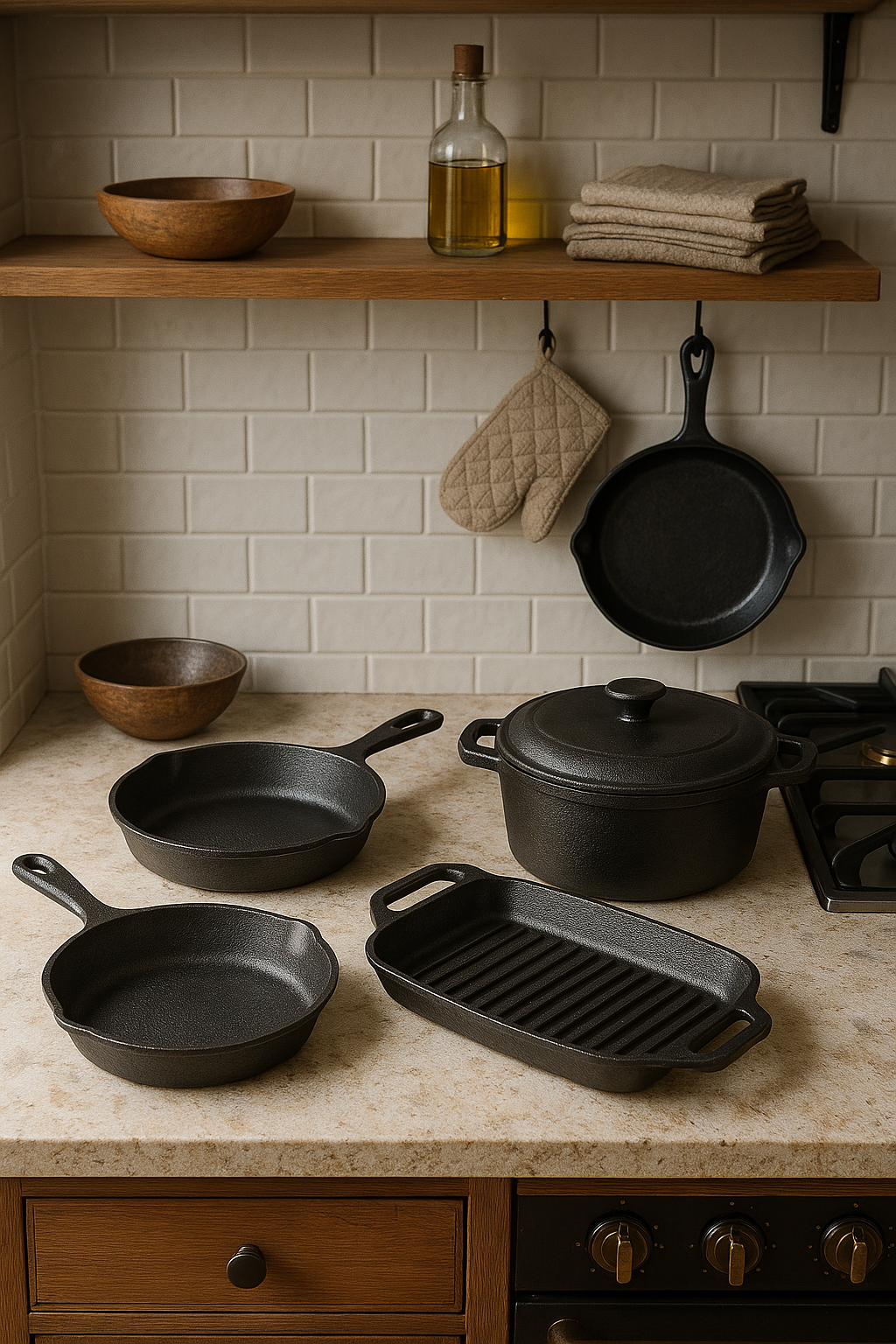
Hanging beats stacking for two reasons: open-air circulation prevents moisture buildup, and there’s no metal-on-metal contact scraping the seasoning off both surfaces. If you must stack, put a paper towel or pan protector between each layer. Never store cast iron or carbon steel with a lid on — trapped humidity inside a covered pan is worse than ambient kitchen air.
The full daily system:
Wash with warm water (minimal or no soap for cast iron and carbon steel)
Rinse completely
Burner on medium — 2–3 minutes until fully dry
3–4 drops of oil, wipe all surfaces while warm
Buff off excess with a clean paper towel
Hang or store in a dry, ventilated spot — no lid
Material-Specific Prevention
A. Cast Iron: Seasoning and Maintenance
Cast iron rewards consistency more than perfection. The seasoning improves over months — not from reseasoning sessions, but from cooking: fat from bacon, butter from sautéed vegetables, residual oil from every pan-fried meal. The more you cook, the better it gets. Rust appears when you break the routine.
Initial seasoning: Clean the pan, dry it completely on the burner. Apply the thinnest possible layer of flaxseed or grapeseed oil — thinner than you think is right. The surface should look nearly dry, not coated. Bake upside down at 230°C / 450°F for one hour. Let it cool in the oven. Repeat 3–4 times before first use.
Why upside down? Oil that pools in a right-side-up pan forms gummy spots that never properly polymerize. Upside down, any excess drips off the rim instead of collecting on the cooking surface.
Ongoing maintenance: Burner-dry, thin oil wipe, every time after cooking. That’s it. For a formal re-season, a quick 30-minute oven session at 200°C / 400°F when the surface looks patchy or after you’ve had to scrub off rust. Once every few months for regular users, more often if you cook a lot of acidic food.
One note on soap: one small drop of modern dish soap during washing is fine — today’s formulas aren’t the aggressive lye-based soaps of 50 years ago. Rinse fast and dry on the burner right after. The “never use soap” rule is overcautious. The “never soak in soapy water” rule is absolutely not.
B. Carbon Steel: Where It Differs from Cast Iron
The rust risk is identical to cast iron. The seasoning behavior is different. Carbon steel’s thinner walls mean stovetop seasoning is more effective than oven seasoning, at least in the early stages.
The professional kitchen method: heat the dry pan over medium-high until it just starts to smoke. Add a tiny amount of oil — less than you’d use to dress a salad — and let it smoke while you tilt the pan to coat. Wipe with a paper towel. Repeat 2–3 times. This builds a quick, solid initial layer that oven seasoning would take an hour to match.
Carbon steel is also more sensitive to acidic foods than cast iron — the thinner gauge means acids strip the seasoning more aggressively. Tomatoes, wine, citrus-based sauces: fine to cook briefly, but rinse and re-oil immediately after. And don’t store carbon steel for two weeks without a fresh oil coat — I’ve seen light surface rust develop on a properly seasoned pan just from extended dry storage in a coastal kitchen.
C. Stainless Steel: Preventing Pitting and Surface Spots
Stainless doesn’t need seasoning. What it needs is respect for the passive layer: no steel wool, no bleach, no prolonged contact with salty water, no storing wet for long periods.
For cleaning: nylon, soft copper mesh, or a melamine sponge. Bar Keepers Friend is safe and works well for stubborn staining — it cleans without scratching. Avoid anything abrasive enough to leave visible scratch marks, since those create microscopic valleys where moisture and chlorides concentrate. That’s where pitting starts.
Those brownish spots on stainless are often not rust at all — they’re iron particles from steel wool, other pans, or tap water that have deposited on the surface. A paste of baking soda and water, or a Bar Keepers Friend scrub, removes them without damage. True stainless rust (pitting) is darker, sunken into the surface, and won’t rub off.
Pay attention to rivets and welded handles. That’s where dissimilar metals meet and moisture accumulates. Dry them specifically after washing — a paper towel worked into the join line takes 5 seconds and prevents the pitting that tends to start there and spread.
D. Knives and Small Kitchen Tools
Carbon steel knives rust faster than any cookware you own. They’re thin, highly reactive, and often left wet on a cutting board. Wipe dry immediately after every use — not after you finish cooking, immediately. Apply a drop of food-grade mineral oil to the blade monthly. Store on a magnetic strip, not in a block where moisture sits against the blade.
For scissors, graters, zesters, and tin openers: rust starts at pivot points and fine edges where water collects. Dry completely before storing. A light wipe of food-safe mineral oil on moving parts monthly keeps them working and rust-free.
How to Remove Rust from Cookware
Light Rust — Surface Bloom Only
This is the faint orange tinge that appears after a pan was stored slightly damp or sat in a humid environment. It hasn’t gone deep. Fix it in 10 minutes: scrub with coarse salt and a few drops of oil, using steel wool or a chain mail scrubber. The salt is mildly abrasive, the oil prevents further oxidation while you work. Rinse, dry on the burner immediately, re-oil. Done.
Moderate Rust — Patchy, Rough, Orange Surface
More work required. Make a paste of coarse salt and white vinegar — aggressive enough to cut through the oxide layer. Scrub in circles with steel wool or a coarse scrubber. For cast iron specifically, a 50/50 vinegar-water soak works well. Maximum 30 minutes. Set a timer. Longer than that and the acid starts attacking the iron itself, not just the rust, and you’ll end up with pitting worse than what you started with. Rinse the vinegar off immediately after soaking, dry on the burner, and reseason that same day.
Don’t leave cast iron in a vinegar solution overnight. I did this once with a pan I was confident had “just surface rust.” Eight hours in diluted white vinegar left the surface rough and pitted in ways that took two full re-season cycles to partially recover. Thirty minutes maximum — then rinse immediately.
Heavy Rust — Full Coverage, Deep Pitting
This is a restoration job. Two methods work well:
Electrolytic removal: A bucket of water with dissolved washing soda, a battery charger, and a piece of scrap metal as the anode. The electrical current pulls iron oxide off the pan without mechanical abrasion. Takes 4–8 hours depending on severity. Sounds complicated, but the setup takes about 15 minutes and the results are thorough — every trace of rust removed down to bare metal, without damaging the iron underneath.
Self-cleaning oven method: Run a self-cleaning cycle with the pan inside. It burns off everything — rust, old seasoning, grease — and leaves bare grey iron. Let it cool completely before opening. Then reseason from scratch. I used this on a griddle that spent a winter in an unheated garage. After the oven cycle and three seasoning layers, it cooked like new.
How to Reseason After Rust Removal
Once the rust is gone, you’re working with bare metal. Build the base seasoning before cooking — it’s what protects the pan going forward.
Step 1: Wash with dish soap and hot water. This is the one moment soap is mandatory — remove all rust residue, vinegar, or electrolyte solution from the surface before oiling.
Step 2: Dry completely on the burner — 3–5 minutes. Watch for any last wisps of steam. The pan must be bone dry before oil touches it.
Step 3: Apply the thinnest possible oil layer across the entire pan — inside, outside, handle. Buff most of it off. If the surface looks wet or shiny, you’ve used too much.
Step 4: Place upside down in oven at 230°C / 450°F for one hour. Upside down prevents pooling.
Step 5: Let cool in the oven. Pulling a hot pan into cold air causes thermal stress that can affect the seasoning layer before it fully hardens.
Step 6: Repeat steps 3–5 at least three times for cast iron, twice for carbon steel.
Step 7: Your first cook should be fatty. Bacon, sausage, hash browns in butter or lard. Cooking-based seasoning bonds into the metal differently than oven cycles alone — the combination is what makes a truly durable surface.
Mistakes to avoid during reseasoning: Too much oil creates gummy patches that never fully cure. Oven temperature below 200°C / 400°F means the oil won’t polymerize — it just sits there. Washing immediately after a seasoning session strips everything you just built. And cooking tomato sauce or lemon butter in the first week is a bad idea — the new seasoning layer is still fragile.
Common Mistakes That Cause Rust
Mistake
Why It Causes Rust
What to Do Instead
Air drying on rack
Leaves moisture in metal pores — even invisible films rust cast iron overnight
Burner-dry every time, no exceptions
Dishwasher use
High-alkalinity detergent strips all seasoning; the drying cycle then leaves porous metal wet
Hand-wash only for iron and carbon steel
Storing while damp
Even 2% surface moisture is enough for oxidation to begin
Dry and oil before every storage
Excessive soap
Strips the polymerized oil layer, exposes bare metal to air
Minimal or no soap; coarse salt for stubborn bits
Leaving food in pan
Acidic foods strip seasoning within minutes; salty residue accelerates corrosion
Transfer food immediately; clean same day
Steel wool on stainless
Scratches the passive chromium layer; creates pits where rust nucleates
Nylon scrubber or soft copper mesh
Storing with lid on
Traps humidity inside — internal condensation is worse than ambient air
Store without lid, or lid ajar
Stacking bare metal
Metal-on-metal contact scratches seasoning off both surfaces
Pan protectors or folded towels between each pan
Long dry storage without oil
Carbon steel oxidizes during extended storage from ambient humidity alone
Oil coat before any storage longer than 2 weeks
Storage and Kitchen Environment
Humidity Comes First
A kitchen running consistently above 60–65% relative humidity is actively hostile to iron and steel cookware. If you’re near a dishwasher vent, a steaming pot that runs daily, or live in a coastal or tropical climate — humidity is already working against you. A small portable dehumidifier near the cookware storage area makes a real difference. If the inside of your pan cabinet smells musty, your seasoning is absorbing that moisture right now.
Hanging vs. Stacking
Hanging is better for cast iron and carbon steel. Open-air circulation means moisture doesn’t accumulate between surfaces, and there’s no contact abrasion scratching the seasoning. A wall-mounted rail or ceiling pot rack is the ideal setup. If stacking is unavoidable, use pan protectors or folded kitchen towels between each piece. The towels absorb any residual moisture and cushion the surface. Replace them when they smell or look damp.
Silica Gel and Drawer Liners
Silica packets in a closed knife drawer help in humid climates — not a magic fix, but they do reduce ambient moisture in a sealed space. Replace them every three months; once saturated they stop working. Some can be dried out in a low oven and reused.
Soft drawer liners reduce abrasion on knife blades and small tools as they slide around during daily use. Less abrasion means less protective finish lost — and that finish, whether it’s seasoning, a polished surface, or a factory coating, is your first defense against moisture contact.
Simple habit: Keep a small jar of food-grade mineral oil and a paper towel directly at your storage area. Ten seconds to wipe down a carbon steel knife or small pan before putting it away. Becomes automatic within a week.
When to Restore vs. When to Replace
Cast iron and carbon steel: restore almost always. Even severe rust is not a death sentence for these materials. If the pan isn’t warped, cracked, or deeply pitted across the entire cooking surface, it’s worth restoring. The electrolytic method or self-cleaning oven cycle can pull back pans that look genuinely unsalvageable.
Stainless steel: restore if the pitting is minor and confined to the exterior. Deep interior pitting on a stainless cooking surface affects both performance and cleanliness — food catches in the pits, bacteria can colonize them. At that point, replace it.
Nonstick cookware: the coating cannot be restored. Once it’s peeling, flaking, or visibly compromised, replace it. There’s no home fix for PTFE or ceramic coatings, and a flaking nonstick pan isn’t just a rust risk — the coating ends up in your food.
Enameled cast iron: if only the rim is chipped, the pan is still fully functional. Season the bare iron at the rim the same way you’d season regular cast iron — thin oil, low heat. If the interior enamel has large chips exposing significant bare iron, performance suffers and restoration gets complicated.
Features worth paying attention to when buying: Enamel coating on cast iron eliminates rust risk entirely when intact. Hard-anodized aluminum resists both rust and acid corrosion. Higher chromium content in stainless (18/10 vs 18/0) means a more stable passive layer. A stainless pan with a brushed finish actually develops rust more readily than a mirror-polished surface in the same conditions — the brush marks create more surface area for moisture to contact.
Maintenance Routine: Daily, Weekly, Monthly
Frequency
Cast Iron / Carbon Steel
Stainless Steel
Knives and Small Tools
Daily
Burner-dry and thin oil wipe after every use
Dry after washing, especially around rivets
Wipe dry immediately after every use
Weekly
Check surface — spot re-oil any dull or patchy areas before they worsen
Check for brownish spots around welds; clean with baking soda paste or Bar Keepers Friend
Oil carbon steel knife blades; inspect pivot points on scissors for early rust
Monthly
Light oven re-season if surface is uneven; check cabinet humidity; replace pan liners if damp
Polish if needed; check for scratches that have deepened; inspect weld seams
Replace silica packets in drawers; oil all moving parts; check for edge rust on graters or zesters
Never go to sleep with a wet cast iron or carbon steel pan — not in the sink, not on the rack
Keep oil and paper towels within arm’s reach of the stove — the easier the habit, the more often you’ll actually do it
Season new cookware before first use, not after the first rust spot appears
Check stored pans monthly in summer and coastal climates when humidity peaks
If a pan smells metallic or food is sticking unusually — check for rust before your next cook
Common Questions
Is rust on cookware dangerous to eat?
Small amounts of incidentally consumed iron oxide are not acutely toxic — iron is a dietary mineral and trace amounts won’t harm you. That said, cooking on a visibly rusted surface is still a bad idea: it changes the flavor of food (metallic, unpleasant), and a degraded surface means food sticks, heat distributes unevenly, and seasoning won’t rebuild properly. A faint surface blush on cast iron after re-seasoning? Fine to cook on immediately. Deep orange pitting you can feel with your fingernail? Remove it first.
Can you cook on a slightly rusted pan?
Technically yes. Practically, no. Even light rust affects how oil bonds to the cooking surface — food sticks where the bare oxide layer is. Seasoning won’t build over rust. Takes 10 minutes to remove light rust with salt and oil. Do it before cooking, not after wondering why your eggs won’t release.
Why does my pan rust right after washing?
Because you’re leaving it wet, or you’re towel-drying instead of heat-drying. Tap water contains dissolved minerals and trace chlorides that accelerate iron oxidation — especially in hard water areas. The fix is always the same: burner-dry immediately after washing, every time. This single habit eliminates most rust problems.
Does oil actually prevent rust?
Yes — by creating a physical and chemical barrier between the iron surface and atmospheric moisture. But it works best as polymerized seasoning (baked in), not as a raw wet oil coat. A wet film of olive oil sitting on a cast iron pan will go rancid within a few days and can actually attract moisture as it degrades. Properly polymerized seasoning is chemically bonded to the metal and creates durable protection that improves with each use.
Is stainless steel truly rust-proof?
No — “rust-proof” on cookware packaging is a marketing claim, not a chemistry claim. Stainless steel is highly rust-resistant because its chromium content forms a self-repairing passive layer. But that layer is vulnerable to chlorides, prolonged moisture contact, and mechanical abrasion. In a typical home kitchen with normal care, a quality stainless pan will last decades without rust. But it’s not unconditionally protected.
How often do I actually need to season?
Cast iron: the daily oil wipe after drying IS your seasoning maintenance. Formal oven re-seasoning is only needed when the surface looks genuinely patchy or after rust removal — maybe every 2–3 months for regular users who cook acidic foods. Carbon steel: same logic. Stainless: never. Nonstick: cannot be seasoned — when the coating fails, the pan needs replacing, not more oil.
The Short Version
Rust prevention is not complicated. It’s consistent habits — ones that take 90 seconds after every cook. The materials that rust most easily are also the most forgiving when things go wrong, and the best to cook on when they’re in good shape. Stainless takes care of itself as long as you’re not abrading it. Nonstick needs protecting from physical damage more than from moisture. Enameled cast iron is the lowest-maintenance option if you want iron cookware without the upkeep.
If you only remember three things:
Dry on the burner. Not with a cloth, not on a rack. Heat. Every time. This single habit eliminates most rust problems.
Thin oil film while warm. Three drops, wiped across every surface, buffed dry. That’s the entire maintenance routine for cast iron and carbon steel.
Store in open air with a liner if stacked. No lids, no bare metal contact, no humid sealed spaces.
Do those three things and rust becomes a rare event. And when it does show up — because at some point it will — it’s almost always fixable. The pan is not dead. Clean it, dry it, oil it, and start again.