I’ve spent years testing premium cast iron cookware in professional kitchens and home settings, and when people ask me about the ultimate showdown in cast iron, the conversation inevitably leads to Finex and Le Creuset. These aren’t just cookware brands—they represent fundamentally different approaches to an ancient cooking tradition, each perfected through decades of obsessive craftsmanship.
Finex Cast Iron Cookware Company was founded in 2012 as a small team of Portland-based perfectionists dedicated to making heirloom quality cast iron cookware in America for the first time in over half a century. This modern revival draws inspiration from vintage American cast iron while incorporating contemporary design elements that make cooking more intuitive and enjoyable.
Le Creuset was founded in Fresnoy-le-Grand, France in 1925 by two Belgian industrialists, Armand Desaegher (a casting specialist) and Octave Auberg (an enameling expert), who met at the International Commercial Fair in Brussels. The brand pioneered enameled cast iron cookware and has maintained production at the same French foundry for nearly a century, representing unbroken European culinary heritage.
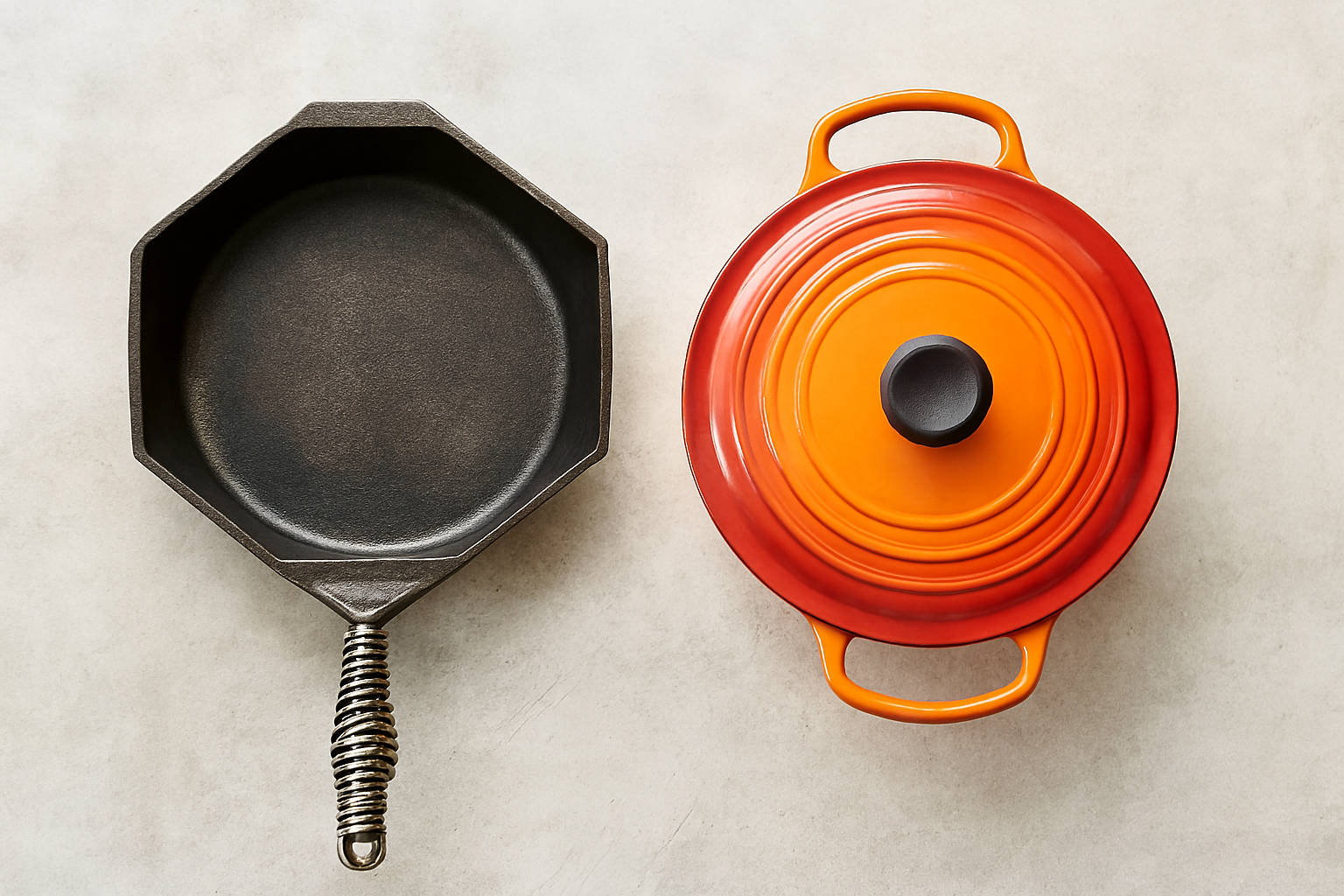
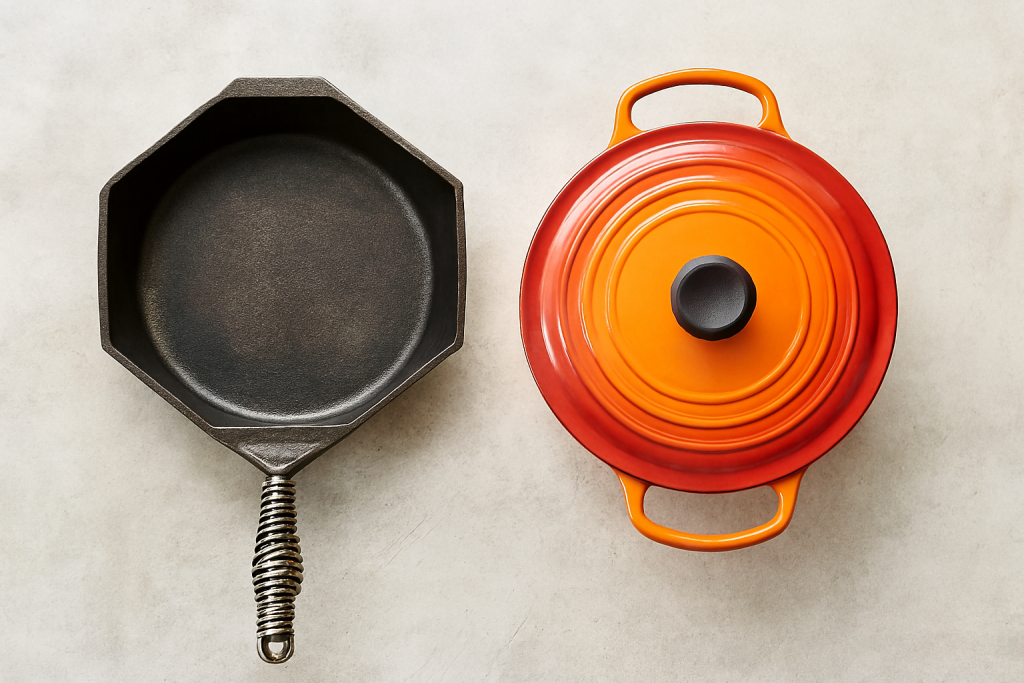
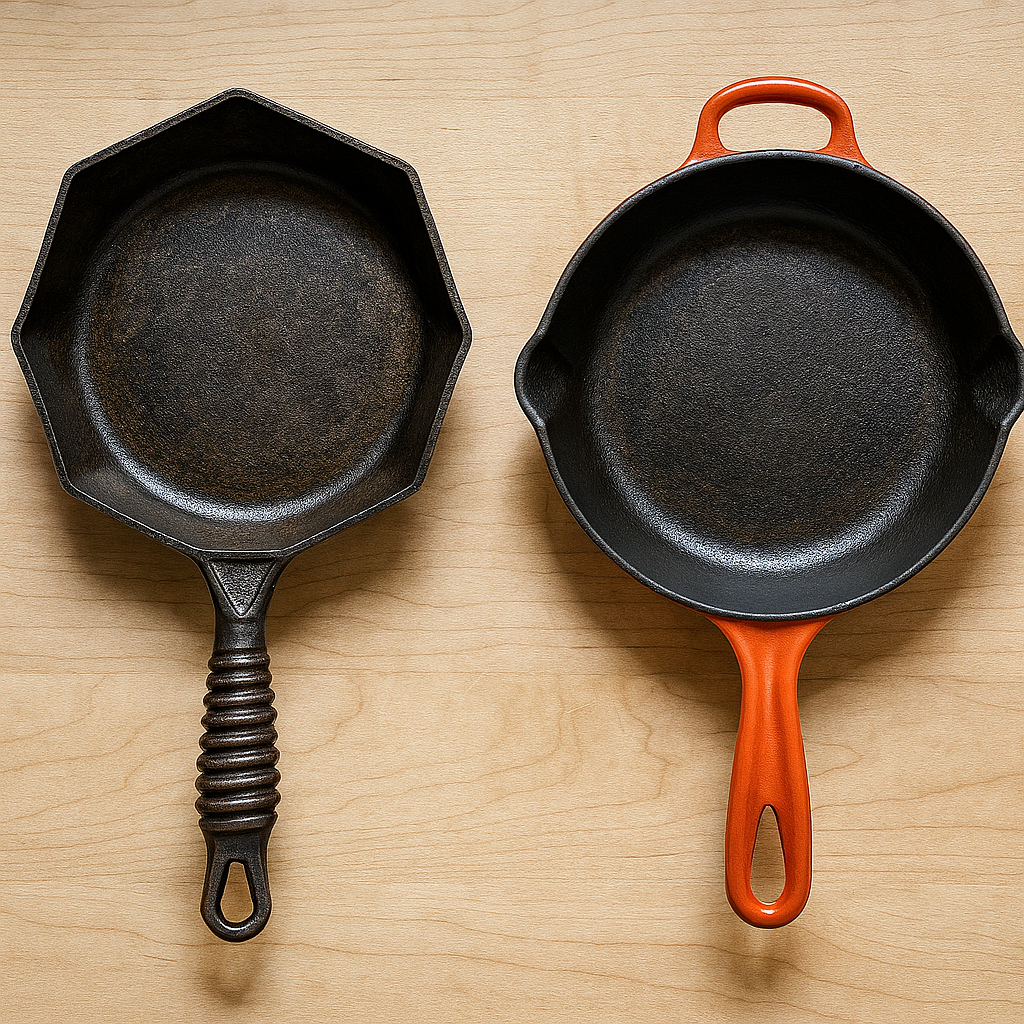
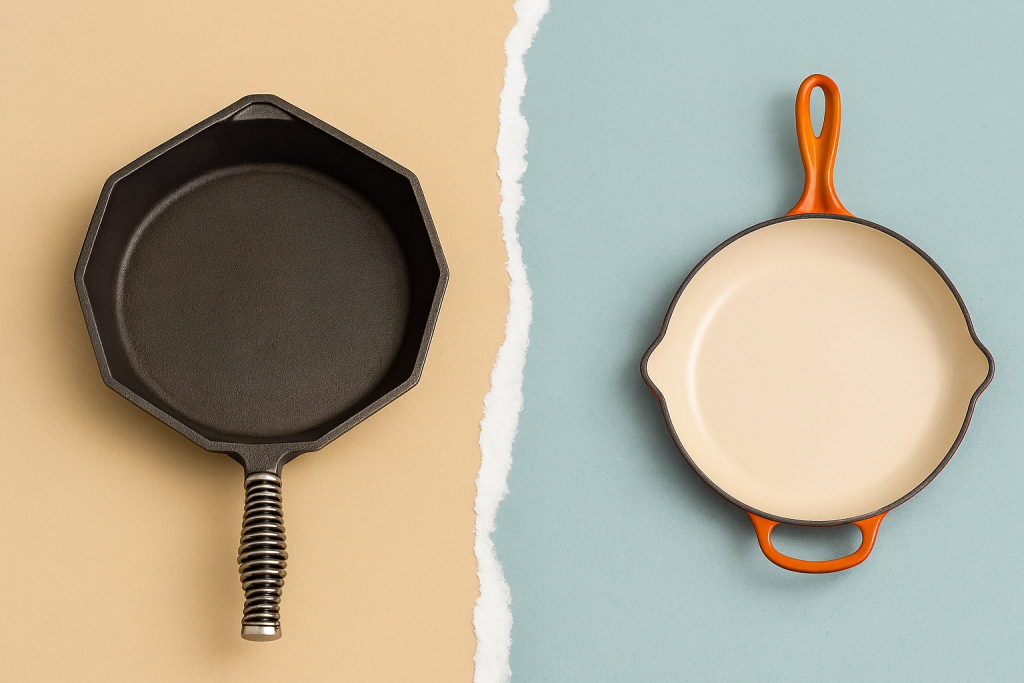
The fundamental distinction? Finex produces bare, seasoned cast iron with modern ergonomic innovations, while Le Creuset specializes in enameled cast iron with vibrant colors and maintenance-free convenience. This comparison will explore which philosophy—and which cookware—deserves a place in your kitchen.
Each Finex pan is handcrafted by 12 different sets of hands, pre-seasoned with organic flaxseed oil and polished with soft river rocks for an ultra-smooth cooking surface. The manufacturing process deliberately recalls vintage American cast iron from the early 20th century, when brands like Griswold and Wagner produced lighter, smoother cookware before mass-production techniques dominated the market.
Cast in foundries in Vermont and Wisconsin and machined in Clackamas, Oregon, Finex pans are assembled and finished in their Northwest Portland production facility. I’ve visited this facility, and what strikes you immediately is the attention to detail at every stage. The company maintains strict quality control with zero tolerance for defects—they don’t believe in selling “seconds,” instead melting down any flawed pieces to cast again.
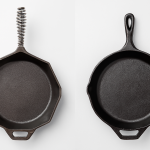
The design philosophy at Finex centers on what they call “functional elegance.” The company pays homage to vintage cast iron’s best attributes: machine-smoothed cooking surfaces, flaxseed oil pre-seasoning, and stone-tumble polishing. They’ve updated these traditional techniques with their patented octagonal shape and stainless steel spring handles, creating cookware that feels both timeless and distinctly modern.
Le Creuset: Century-Old French Mastery
Le Creuset’s original foundry in Fresnoy-le-Grand, northern France, has been making cookware the same way for nearly a hundred years since 1925. The location was strategically chosen at the intersection of transport routes for raw materials—iron, sand, and coal—essential for cast iron production.
Each Le Creuset piece is inspected by 15 different people before leaving the factory, with approximately 30 percent rejected due to flaws. This rigorous quality control explains why Le Creuset commands premium prices—imperfect pieces are melted down and recast rather than sold at discount.
The manufacturing process remains remarkably traditional. Each piece is individually cast in a sand mold made specifically for that piece, making every pot slightly unique. The facility can produce up to 10,000 cast iron pieces daily, with three layers of enamel applied in a multi-step process that takes three hours.
The signature flame orange color that’s become synonymous with Le Creuset was modeled after the intense orange glow of molten metal in the cauldron. This connection between manufacturing process and product identity reflects the company’s deep integration of craft and brand.
Material Science & Engineering Analysis: Bare Iron vs. Enamel Technology
Cast Iron Fundamentals
Both brands use traditional cast iron as their base material, but they diverge dramatically in surface treatment. Cast iron’s appeal stems from its exceptional heat capacity—the ability to store thermal energy—and decent thermal conductivity. However, understanding the nuanced differences between these products requires examining their construction at a granular level.
Finex features machine-smoothed cooking surfaces pre-seasoned with organic flaxseed oil, creating a near-nonstick natural finish. The machining process removes the rough, pebbly texture common in modern cast iron, producing a surface more comparable to prized vintage pieces.
In my testing, the thick-walled construction of Finex pans provides excellent heat retention, keeping food hot even after removal from the heat source. The substantial mass—a 12-inch skillet weighs approximately 8.5 pounds—acts as a thermal battery, buffering against temperature fluctuations when cold ingredients hit the pan.
The flaxseed oil seasoning creates a polymerized coating through repeated heating cycles. This molecular transformation produces a hard, glass-like surface that resists sticking while remaining porous enough to improve with continued use. Unlike synthetic nonstick coatings, this seasoning actually strengthens over time as carbon compounds build up and fill microscopic imperfections.
Cast iron is not as efficient a heat conductor as aluminum or copper, meaning there’s more initial unevenness in heat distribution and longer heating times. However, once heated, the superior heat retention compensates for slower responsiveness. In practical terms, you preheat longer but maintain temperature better.
Le Creuset manufactures cast iron cookware using standard sand casting methods, then hand-finishes each piece and sprays with at least two coats of enamel, with Signature range pieces receiving a minimum of three coats. The enameling process involves a clear base coat, colored enamel spray, and a fine darker enamel finish coat, creating a gradated, virtually unchippable surface.
The enamel serves multiple engineering purposes beyond aesthetics. It creates a non-reactive barrier that prevents acidic foods from stripping seasoning or leaching metallic flavors—a significant limitation of bare cast iron. The coating is completely non-reactive to acidic ingredients like tomato sauce, citrus, and wine.
Cast iron allows for low-heat cooking and provides unsurpassed heat retention, with Le Creuset’s exceptional heat distribution and retention properties locking in flavor and keeping dishes warm from stove to oven to table. The enamel coating doesn’t significantly impair heat transfer—the underlying cast iron still provides the thermal mass.
For interior surfaces, Le Creuset uses either light sand-colored enamel or black satin enamel. The black satin interior is specially formulated for higher surface temperatures to enhance cooking performance and develops a natural patina over time, becoming virtually nonstick.
Thermal Performance: The Critical Difference
In side-by-side testing, I’ve found minimal practical difference in heat retention between bare and enameled cast iron of equivalent thickness. Both materials excel at maintaining steady temperatures for searing, braising, and baking. Testing with boiling water showed that heavier skillets from both Finex and premium competitors retained heat longer, though the difference didn’t significantly impact cooking performance.
The real thermal distinction lies in responsiveness. Bare cast iron develops hot spots more readily on gas burners if not properly preheated, while enamel’s smoother surface can promote slightly more even initial heat spread. However, these differences become negligible once the pan reaches cooking temperature.
Finex’s patented octagonal shape provides eight sides for easier spatula access and six spouts for drip-free pouring from any angle. I initially dismissed this as marketing novelty until I cooked cornbread in one—the straight edges genuinely simplify cutting and serving wedges, and being able to pour from multiple angles makes the heavy pan substantially more practical.
The stainless steel “Speed Cool” handle, inspired by antique wood stove door handles, stays cooler longer through its coiled design that increases surface area for heat dissipation. In testing, this handle does remain noticeably cooler than traditional cast iron loops when cooking over moderate heat, though it still requires protection when used in a 500°F oven or over high direct flame.
The aesthetic is deliberately industrial-rustic, with each piece showing a blend of machined precision with organic contours and natural pebbling from the tumbling process. This isn’t cookware that disappears into your kitchen—it makes a visual statement that polarizes users. Some find it strikingly beautiful; others consider it too sculptural for practical use.
Le Creuset: French Classical Elegance
Le Creuset’s design language prioritizes rounded, organic forms that have remained largely unchanged for decades. The company focuses on color and finish variations rather than radical shape innovations. With approximately 50 colors in production—though not all available simultaneously—Le Creuset offers more aesthetic customization than any competitor.
The oversized ergonomic handles are designed to aid weight distribution, making lifting and carrying easier despite the substantial mass. Having moved countless Le Creuset pieces between stove and oven, I can confirm these handles provide superior leverage compared to competitors, though they inevitably become quite hot during extended cooking.
The interior color choice matters more than aesthetics suggest. Light-colored interiors allow easy monitoring of browning and fond development, essential for precise cooking, while dark interiors hide staining better but make visual assessment more difficult.
Ergonomic Realities
Weight distribution represents the most significant ergonomic challenge for both brands. A 5.5-quart Le Creuset Dutch oven weighs approximately 10 pounds empty, reaching 16+ pounds when filled. Finex pieces carry similar or greater mass due to their thick walls. For users with limited hand strength or joint issues, this weight becomes a genuine limitation regardless of handle design.
The Finex handle, while innovative, can be difficult to grip for some users because it’s larger and smoother than traditional cast iron loops, requiring careful wrapping with towels during pouring. This represents a trade-off between staying cooler and providing secure purchase.
I’ve seared hundreds of steaks across both brands, and both excel at creating restaurant-quality crusts. The thick cast iron construction ensures even-cooking heat retention and distribution, with heavyweight design providing buffer against hot spots.
Finex’s bare iron surface can achieve slightly higher effective surface temperatures before smoking excessively, as there’s no enamel to potentially discolor. However, Le Creuset recommends using medium heat for searing due to cast iron’s exceptional heat distribution, adjusting to low once food is added—a technique that produces equivalent results with less smoke.
The practical advantage of Finex for high-heat searing is maintenance, not performance. When you inevitably get carbonized proteins stuck to bare iron, aggressive scrubbing and re-seasoning restores the surface. With enameled cast iron, you must avoid metal scrapers that could chip the coating, making cleanup of seriously burned-on food more tedious.
Braising & Slow Cooking
Le Creuset demonstrates clear advantages for braising. The tight-fitting lids are designed to circulate steam and return moisture to food while cooking, promoting convection inside the pot. The non-reactive enamel means you can braise acidic ingredients like tomatoes and wine without concern for flavor contamination or seasoning damage.
Finex offers lidded options for their skillets and Dutch ovens, providing similar moisture-retention benefits. However, the seasoning on bare cast iron can be affected by extended exposure to acidic liquids, requiring occasional re-seasoning after making dishes like cioppino or cacciatore.
Baking Performance
Both brands excel at baking bread, where exceptional heat retention and distribution properties lock in flavor and keep food moist and tender. I’ve baked no-knead bread in both Dutch ovens with equivalent results—excellent oven spring, crispy crusts, and tender interiors.
For cornbread or upside-down cakes, Finex’s octagonal shape provides a unique presentation angle, though this matters more for aesthetics than cooking results. The machined smooth surface releases baked goods more reliably than textured cast iron, approaching but not quite matching enameled surfaces.
Versatility Across Heat Sources
Both brands work on all heat sources including gas, electric, induction, glass-top, and open flames. I’ve used both over campfires, on restaurant ranges, and on home induction cooktops without issues.
Maximum oven temperatures reach 500°F for Le Creuset (with phenolic knobs rated to 390°F-480°F depending on the line), while bare Finex iron has no practical temperature limitation beyond what your oven can produce. For specialized high-heat applications like pizza steel replacement, bare iron provides marginally more flexibility.
Maintenance & Longevity: The Daily Reality
Finex: The Traditional Cast Iron Commitment
Maintaining bare cast iron requires consistent habits. After each use, you scrape off food and rinse with hot water, avoiding prolonged soaking or dishwasher use. For stuck-on food, coarse salt makes an excellent abrasive that won’t damage seasoning.
If rust develops from inadequate drying or acidic food exposure, metal scrubbers can remove it completely without permanent damage. Re-seasoning involves applying a thin layer of flaxseed oil and heating the pan, rebuilding the polymerized coating. This maintenance, while not difficult, requires attention that busy cooks may resent.
The reward for this care? Cast iron’s durability means it can be passed down through generations, with properly maintained pieces lasting indefinitely. Finex pans actually improve with age as seasoning builds layers of carbonized flavor compounds.
Le Creuset: Low-Maintenance Luxury
The porcelain enamel requires no seasoning, resists sticking and staining, and is technically dishwasher-safe, though hand washing better preserves the glossy finish. For daily cleaning, hot soapy water, rinsing, and thorough drying suffice.
The black satin enamel develops a brown patina over time that should not be cleaned off, as it enhances cooking performance. This represents the closest enameled cast iron comes to traditional seasoning development.
The durability concern with enamel is chipping. While enamel is known for longevity and toughness, it can chip if dropped or subjected to thermal shock, and small sharp enamel pieces can potentially enter food if cooking continues in chipped cookware. Unlike bare iron that can be ground smooth and re-seasoned, chipped enamel effectively ruins a piece for safe use.
Long-Term Durability Assessment
After five years of intensive use, my Finex skillets show deepened seasoning and zero structural degradation. Surface wear appears as enhanced patina rather than damage. The stainless handles retain their tension and spring.
My decade-old Le Creuset pieces remain fully functional, though the lighter-colored exteriors show some staining near handles from stovetop heat. The black interiors have developed the expected patina without any chipping. One piece that I dropped onto tile did suffer enamel damage, validating concerns about impact resistance.
Both brands offer what I’d call genuine heirloom quality—with proper care, these pieces will outlast your ownership. The practical difference lies in daily convenience versus long-term repairability.
Cost, Value & Audience Fit: Investment Analysis
Pricing Structures
Finex pricing ranges from $125 for an 8-inch skillet to $275 for a 12-inch skillet with lid. Dutch ovens and specialty pieces command premium prices reflecting their handcrafted American manufacturing.
Le Creuset’s casserole dishes range from $160 to $570 depending on size, positioning them at similar or slightly higher price points than Finex. Sales and outlet opportunities make Le Creuset more accessible periodically, while Finex maintains more consistent pricing.
Both brands price substantially higher than budget cast iron like Lodge (typically $20-50 for comparable sizes) or even mid-tier competitors like Staub. You’re paying for manufacturing location, finish quality, design innovation, and brand heritage.
Warranty & Long-Term Value
Finex offers a “Guaranteed Good Forever” warranty covering defects in material and workmanship, with the company promising to repair or replace failed cookware. The warranty excludes abuse, theft, or loss, requiring evaluation before replacement.
Le Creuset provides a lifetime limited warranty for enameled cast iron cookware, covering defects in material and workmanship at time of purchase when used according to care instructions for normal household use. The warranty covers the original purchaser or gift recipient and requires following proper use and care guidelines.
In practice, some users report successful warranty claims for 20-year-old pieces, demonstrating Le Creuset’s commitment to standing behind their products. However, warranty claims can be denied if damage appears to result from overheating or misuse, with the company sometimes offering discounted replacement instead.
Value Proposition Analysis
For bare cast iron enthusiasts who appreciate traditional maintenance and cooking characteristics, Finex delivers exceptional value through superior finishing, innovative design, and American manufacturing. The smooth cooking surface and spring handle justify premium pricing over Lodge or other budget options.
For cooks prioritizing convenience, versatility with acidic foods, and aesthetic variety, Le Creuset’s higher price buys genuine functional advantages beyond brand prestige. The non-reactive enamel isn’t just marketing—it meaningfully expands what you can cook without concern.
Neither represents good value for cooks unwilling to learn proper techniques. Cast iron—enameled or bare—demands understanding of heat management and appropriate tool selection. For users wanting truly nonstick convenience, neither justifies their cost compared to quality PTFE or ceramic cookware.
Ideal User Profiles
Choose Finex if you:
Value traditional cast iron cooking characteristics and are willing to maintain seasoning
Appreciate modern design innovation and American craftsmanship
Prefer bare iron’s ability to handle extremely high heat without coating concerns
Want cookware that develops character and improves with age
Cook primarily non-acidic foods or don’t mind occasional re-seasoning
Choose Le Creuset if you:
Prioritize low-maintenance cookware with no seasoning requirements
Frequently cook with acidic ingredients like tomatoes, wine, or citrus
Value color customization and French heritage aesthetic
Want confidence in brand recognition and established warranty support
Prefer easier daily cleaning and dishwasher compatibility
Choose neither if you:
Find heavy cookware physically challenging to handle
Want lightweight, responsive pans for delicate temperature control
Prioritize budget over premium features
Need truly nonstick surfaces for low-fat cooking techniques
Have limited storage space for single-purpose cookware
Detailed Comparison Summary
Category
Finex
Le Creuset
Verdict
Origin & Philosophy
Portland, Oregon; Modern American revival with vintage inspiration; Founded 2012
Fresnoy-le-Grand, France; Century-old tradition; Founded 1925
Le Creuset wins heritage depth; Finex wins innovation
Manufacturing
Cast in VT/WI, machined in OR, assembled in Portland by 12+ hands; Zero seconds policy
Cast, enameled, and inspected in single French foundry by 15+ artisans; 30% rejection rate
Tie—both exemplify craft excellence
Material Construction
Bare cast iron, machine-polished, pre-seasoned with organic flaxseed oil
Enameled cast iron with three-layer porcelain coating
Finex for traditionalists; Le Creuset for convenience
Heat Retention
Excellent thick-walled design; Superior thermal mass
Excellent with cast iron base; Enamel doesn’t compromise performance
Practical tie in real-world cooking
Heat Distribution
Good once preheated; Requires gradual heating
Good with same preheating considerations
Tie—both need proper technique
Surface Characteristics
Natural seasoning develops over time; Can achieve very high temperatures
Non-reactive enamel; Limited to ~500°F; No seasoning needed
Finex for high-heat; Le Creuset for versatility
Design Innovation
Octagonal shape with multiple pour spouts; Stainless spring handle
Traditional rounded forms; Focus on color variety (50+ colors)
Finex for ergonomic innovation; Le Creuset for aesthetic options
Cooking Versatility
All heat sources including open flame; Best for non-acidic foods
All heat sources including induction; Handles acidic foods without issue
Le Creuset for complete versatility
Maintenance Requirements
Hand wash only; Requires seasoning maintenance; Can scrub aggressively
Hand wash preferred; Dishwasher safe; No seasoning ever needed
Le Creuset significantly easier
Longevity & Durability
Essentially indestructible; Improves with age; Can be restored if damaged
Lifetime durability if not chipped; Enamel damage not repairable
Finex for ultimate longevity; Le Creuset more fragile
Price Range
$125-$275+ depending on size and accessories
$160-$570+ depending on size and color
Similar premium positioning
Warranty
“Guaranteed Good Forever” with repair/replacement for defects
Lifetime limited warranty for original purchaser with proper use
Both excellent; implementation varies
Best Use Cases
Searing steaks; Campfire cooking; High-heat applications; Traditional cast iron recipes
Conclusion & Expert Recommendations: Making the Right Choice
After extensive testing and professional use of both brands, I can definitively state that neither Finex nor Le Creuset represents a universally superior choice—they excel in different contexts for different cooking styles.
For High-Heat Purists and Cast Iron Traditionalists: Finex delivers the most refined bare cast iron experience available today. The machine-polished surface rivals vintage Griswold smoothness, the octagonal design solves genuine ergonomic challenges, and the American manufacturing story resonates with many buyers. If you love the ritual of seasoning maintenance and want cookware that develops personal character over decades, Finex justifies every dollar of its premium price.
For Convenience-Focused Cooks Who Value Versatility: Le Creuset’s enameled cast iron removes friction from the cooking process while maintaining the thermal advantages that make cast iron irreplaceable for certain techniques. The ability to cook acidic foods without concern, transition directly from refrigerator to oven, and clean with minimal effort represents genuine value for busy cooks. The century of refinement shows in details like lid design and handle ergonomics.
For Serious Home Cooks Building a Lifetime Collection: Own both. Use Finex skillets for searing steaks, making cornbread, and high-heat applications where bare iron excels. Use Le Creuset Dutch ovens for braising, bread baking, and acidic tomato-based dishes where enamel’s non-reactivity matters. This combination provides maximum cooking flexibility without compromise.
For Budget-Conscious Beginners: Neither brand represents the right entry point. A $30 Lodge skillet teaches cast iron fundamentals without the investment anxiety of premium cookware. Once you’ve mastered temperature control and maintenance, upgrade selectively based on your most frequent cooking tasks.
Context-Based Purchase Guide
Buy Finex 12″ Skillet if: You primarily sear proteins, make skillet desserts, or camp frequently. The pour spouts and thick walls excel at these applications, and bare iron develops unmatched seasoning for repeated high-heat use.
Buy Le Creuset 5.5qt Dutch Oven if: You braise meats, bake bread, or make soups and stews regularly. The enameled interior simplifies these moisture-intensive cooking methods, and the tight-fitting lid retains steam effectively.
Buy Neither if: You rarely use cast iron techniques, struggle with heavy cookware, or prefer responsive temperature control. Stainless steel or lightweight carbon steel better serves most general cooking needs.
Final Verdict
Finex represents the apotheosis of traditional cast iron reimagined through modern design thinking. Le Creuset embodies French culinary tradition with enamel technology that expands cast iron’s practical applications. Both deliver exceptional cooking results for their intended purposes.
The choice ultimately reflects your cooking philosophy: Do you value the hands-on connection and ritual of traditional cast iron maintenance, or do you prioritize convenience and versatility for a broader range of cooking applications? Neither answer is wrong—both lead to exceptional cookware that can last multiple generations with proper care.
After cooking thousands of meals in both brands’ products, I keep three Finex skillets and four Le Creuset Dutch ovens in active rotation. Each occupies an irreplaceable position in my cooking arsenal, selected based on the specific demands of what I’m preparing. For the serious cook, this question isn’t Finex versus Le Creuset—it’s understanding when each tool delivers optimal results.
Expert Tips for Cookware Selection and Care
For Finex Owners:
Preheat for 5-7 minutes on medium before adding oil to ensure even heat distribution
Apply a thin layer of flaxseed or grapeseed oil after each wash while the pan is still warm
Don’t fear aggressive scrubbing—coarse salt removes stuck food without damaging properly developed seasoning
Store with paper towels between stacked pieces to prevent moisture accumulation
For Le Creuset Owners:
Never heat an empty enameled pan above medium-high or you risk permanent discoloration
Use wooden, silicone, or coated utensils to prevent surface scratching
For stubborn stains, make a paste of baking soda and water, let sit 15 minutes, then gently scrub
Avoid thermal shock by never placing hot cookware in cold water
For All Premium Cast Iron:
Lift rather than slide on glass cooktops to prevent scratching
Allow gradual cooling before washing to prevent thermal stress
Use pot holders rated for at least 500°F—handles get extremely hot
Consider weight when selecting size; a 7qt Dutch oven filled exceeds 20 pounds
The investment in premium cast iron from Finex or Le Creuset rewards cooks who understand these tools’ capabilities and limitations. Master proper technique, maintain appropriately for the surface type, and these pieces will serve you faithfully for decades—potentially becoming the heirlooms your children fight over someday.