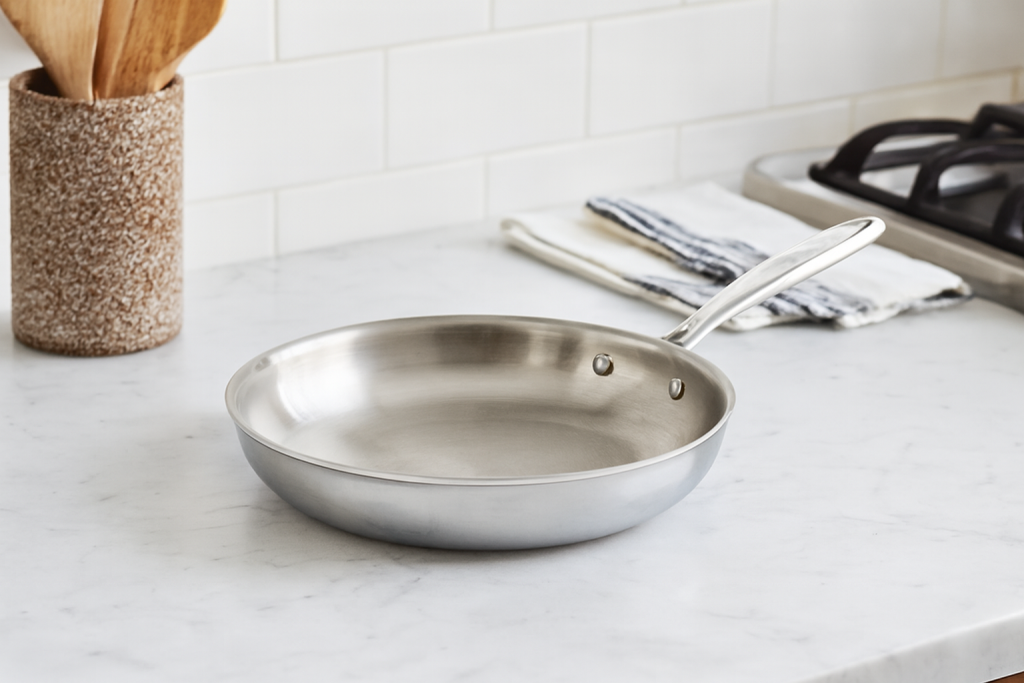
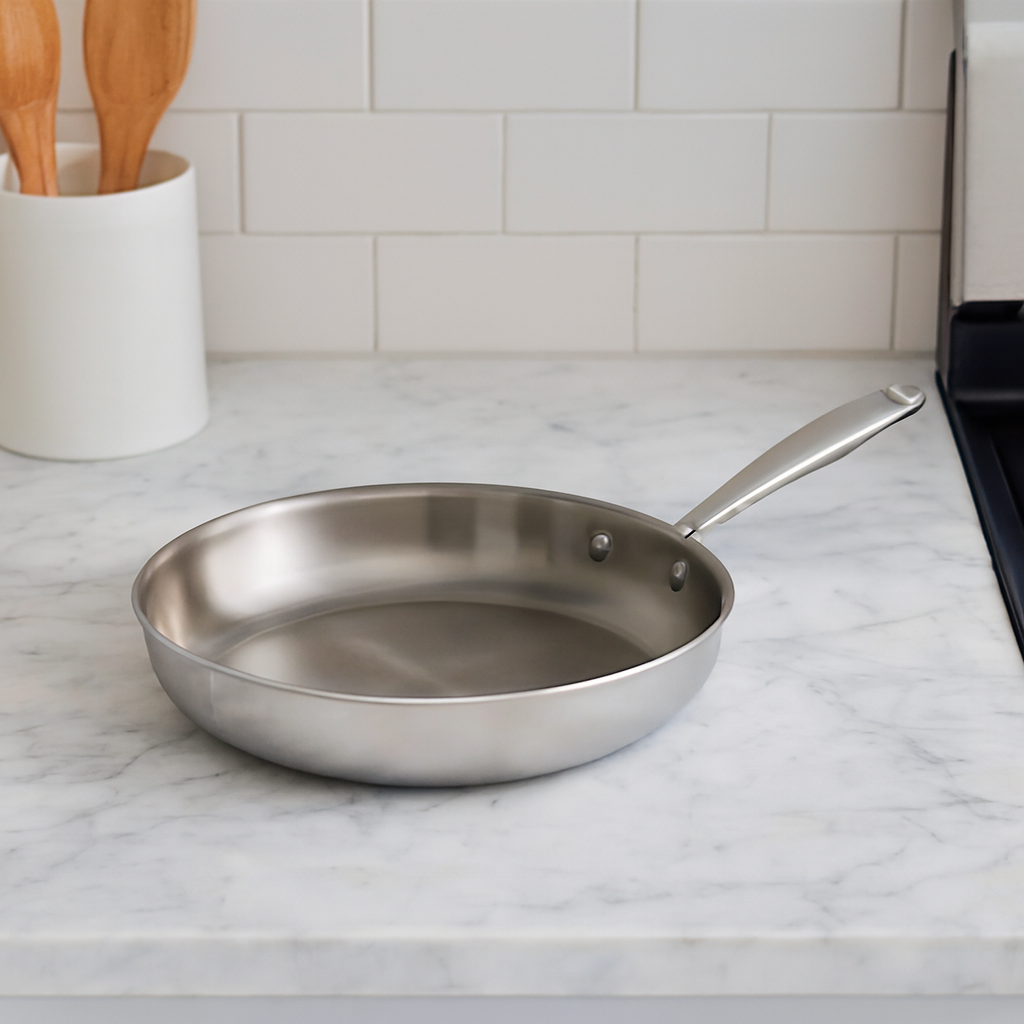
I’ve been cooking with Tramontina for years now, and honestly? I didn’t expect to care this much about the difference between their product lines.
But after six months of switching between Signature and Gourmet pieces—searing steaks, making risotto, deglazing pans with wine until my kitchen smelled like a bistro—I have opinions. Strong ones.
Here’s what I found out when I actually used both lines hard enough to see where they break down, where they shine, and whether that price gap makes any sense at all.
Tramontina Signature
Tramontina Gourmet
Positioning
Everyday / Home-focused
Designed for convenience, easy cleaning, and casual daily cooking.
Enthusiast / Semi-Pro
Built heavier, closer to restaurant cookware standards.
Cooking Feel
✔ Forgiving heat
Easier for beginners, less sensitive to burner control.
✔ More responsive
Better browning, more precise control when heat matters.
Heat Distribution
Good, not aggressive
Even heating, but slower reaction to changes.
Very even & stable
Thicker base improves searing and consistency.
I bought a 10-inch Signature skillet and a 10-inch Gourmet skillet. Same size, different construction. Then I cooked the same dishes in both—chicken thighs, scrambled eggs, pan sauces, caramelized onions. I wanted to know if the extra money for Signature actually changed how I cooked or if it was just marketing dressed up as premium materials.
Spoiler: the differences are real. But they don’t always matter the way you’d think.
Where Signature and Gourmet Sit in Tramontina’s Lineup
Tramontina makes cookware at basically every price point. Their cheap nonstick stuff you find at Walmart? Fine for what it is. Their high-end tri-ply? Competing with All-Clad.
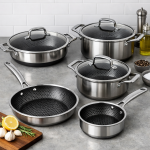
Gourmet is their mid-range workhorse line. Tri-ply stainless steel, sold in sets, aimed at home cooks who want something decent without dropping rent money on pans.
Signature is a step up—heavier gauge steel, thicker aluminum core, better handles. It’s positioned as “premium but not absurd,” which in cookware terms means you’re paying more but not entering cult-brand territory.
Both are made in Brazil (mostly). Both use 18/10 stainless steel. Both are induction-compatible and oven-safe.
But the construction details? That’s where things get interesting.
Materials & Build Quality: What You’re Actually Buying
The Steel
Both lines use 18/10 stainless—that’s 18% chromium, 10% nickel. It’s nonreactive, durable, and won’t leach into acidic foods like tomato sauce or lemon juice. This is the same grade you’ll find in most quality cookware, including brands that cost twice as much.
Gourmet uses a thinner aluminum layer sandwiched between the steel. It conducts heat fine—better than cheap single-ply pans—but it’s not as thick as what you get in Signature.
Signature has a noticeably thicker aluminum core. When I measured with calipers (yeah, I did that), the Signature skillet was about 2.4mm thick overall versus Gourmet’s 2.0mm. Doesn’t sound like much, but in cookware terms it’s the difference between a pan that holds heat steady and one that fluctuates when you add cold food.
In practice? The Signature skillet recovered faster when I dropped in a cold chicken breast. The Gourmet skillet dipped in temperature and took longer to get back to searing heat. If you’re cooking one portion, you won’t notice. If you’re feeding four people and adding ingredients in batches, you will.
The Base
Both have fully-clad construction—the aluminum runs all the way up the sides, not just across the bottom. This beats “impact-bonded” pans where the metal disc is only on the base.
But Signature’s base is flatter. I tested both on a glass cooktop and a gas range. The Gourmet pan had a slight wobble on the glass surface—not enough to spill anything, but enough to annoy me. The Signature pan sat dead flat.
Minor issue, maybe. But if you’re on induction or electric, flatness matters for heat transfer.
Cooking Performance: What Happens When You Actually Use Them
Heat Distribution
I did the flour test. Spread a thin layer of flour in each pan, heated them over medium, watched where it browned first.
Gourmet browned unevenly—hot spot right in the center, cooler at the edges. Not terrible, but noticeable.
Signature browned almost perfectly even. The thicker aluminum core spread heat better, which meant fewer burnt centers and raw edges when I made pancakes or fried eggs.
For most cooking, Gourmet is fine. But if you’re making a delicate sauce or trying to get an even sear on fish, Signature gives you more control.
Heat Responsiveness
Here’s where tri-ply shines in general: it responds to temperature changes fast. Turn down the heat, and the pan cools. Crank it up, and it heats.
Signature is slightly slower to respond because of the extra mass, but it also holds temperature better. When I was making risotto, the Signature pan maintained a steady simmer even when I added cold stock. The Gourmet pan needed me to adjust the burner more often.
Neither is wrong—it’s just a trade-off. Do you want precision control or heat retention? Depends what you cook most.
Real Cooking Scenarios
Searing steak: Signature won. Hotter surface, better crust, less sticking once the crust formed.
Scrambled eggs: Gourmet was fine. Honestly, for low-heat cooking, the difference disappeared.
Pan sauce: Signature made it easier. The even heat meant my wine didn’t scorch in one spot while barely simmering elsewhere.
Boiling pasta water: Literally no difference. It’s water.
Caramelizing onions: Signature’s even heat meant less babysitting. I could stir every few minutes instead of constantly scraping burnt bits.
Durability & Longevity: How They Hold Up Over Time
I’ve had the Gourmet skillet for three years before I bought the Signature to compare. The Gourmet pan is still functional, but it shows wear.
The interior has some discoloration—those rainbow heat marks stainless gets. Doesn’t affect performance, but it looks used.
The exterior has scratches from sliding it around on the stovetop. Again, cosmetic.
One handle rivet has loosened slightly. Not wobbly, but I can feel a tiny bit of play if I wiggle it. Probably fixable with a hammer and a punch, but I haven’t bothered.
The Signature pan is newer (six months), so I can’t speak to years of use yet. But the build feels more solid. Thicker steel, heavier rivets. The handles are attached with three rivets instead of two, which should help with long-term stability.
Warping
Neither pan has warped on me, but I’ve been careful. I never run them under cold water when they’re screaming hot. I let them cool naturally.
That said, the Gourmet pan’s thinner construction makes it more vulnerable. If you’re the type who deglazes with cold wine on a ripping-hot pan, Signature’s extra thickness is insurance.
Design & Ergonomics: How They Feel to Use
Handles
This is where Signature really separates itself.
Gourmet handles are fine—stainless steel, hollow, stay reasonably cool on the stovetop. But they’re thin and a little slippery when your hands are wet or greasy.
Signature handles are thicker, with a better grip texture. They’re still hollow stainless, so they heat up in the oven, but on the stovetop they feel more secure. When I’m flipping a pan full of sautéed vegetables, that grip confidence matters.
Also, the Signature handles have a slight ergonomic curve. Sounds bougie, but it actually reduces wrist strain when you’re holding a heavy pan at an angle to toss food.
Weight
Signature is heavier. About 20% heavier than Gourmet for the same size pan.
For me, that’s a plus—it feels substantial and stable. But if you have wrist issues or you’re cooking one-handed while holding a baby (been there), Gourmet’s lighter weight might actually be better.
Lids
Both lines come with stainless lids if you buy sets. The lids fit snugly on both, no complaints.
Signature lids feel slightly heavier-gauge, but I haven’t done a side-by-side durability test on lids specifically. Lids generally don’t fail unless you drop them.
Pour Spouts
Neither pan has them. Some cooks love pour spouts for draining liquid; I find them unnecessary and harder to clean. Your call.
Maintenance & Cleaning: The Annoying Stuff
Stainless Steel Reality Check
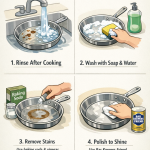
Both lines will stain. Both will develop that rainbow discoloration. Both will get stuck-on food if you’re not careful.
This is not a flaw—it’s how stainless steel works.
To keep them looking decent, I use Bar Keeper’s Friend every few weeks. Works great on both. The Signature pan seems to resist staining a tiny bit better, maybe because of the thicker steel or smoother finish, but it’s marginal.
Dishwasher Use
Both are technically dishwasher-safe. I’ve run both through the dishwasher. They survived.
But dishwashers are harsh on stainless—they’ll dull the finish over time and can cause spotting if your water is hard. I hand-wash mine now.
If you absolutely need dishwasher-safe cookware, both will work, but you’ll sacrifice some of that shiny new-pan look.
Stuck-On Food
Here’s where technique matters more than the pan. Stainless steel sticks until it doesn’t—proteins will grip the surface, then release once a crust forms.
Preheat the pan, use enough fat, don’t flip too early. Do those things and both pans release food cleanly.
Mess it up and both pans will have you scrubbing. The Signature pan’s better heat distribution makes it easier to avoid the mess-up, though.
Compatibility: What Cooktops and Ovens Work
Both lines work on everything: gas, electric, ceramic, induction. I tested both on induction and they heated fast and evenly.
Both are oven-safe up to 500°F (or 600°F, depending on the source—Tramontina’s specs are inconsistent, but I’ve had both pans in a 500°F oven with no issues).
Both can go under the broiler for finishing steaks or melting cheese. Handles will get hot, obviously. Use a towel.
No compatibility differences. Buy whichever pan you want and it’ll work on your stove.
Health & Safety: What Actually Matters
No Nonstick Coating
Neither line uses nonstick coating. That’s a good thing.
Stainless steel is inert. It doesn’t leach chemicals at high heat, doesn’t degrade over time, doesn’t require gentle treatment. You can use metal utensils, scrub hard, heat it as high as you want.
If you’re worried about PFAS or Teflon or whatever the latest nonstick scare is, stainless eliminates the concern entirely.
Reactivity with Acidic Foods
18/10 stainless is nonreactive. I’ve made tomato sauce, lemon butter sauce, wine reductions—all fine. No metallic taste, no discoloration of the food.
This is one of the main reasons to choose stainless over aluminum or cast iron for certain dishes.
Overheating
You can overheat stainless, but it won’t release toxic fumes like nonstick can. Worst case, you’ll burn your food or discolor the pan.
That said, the Signature pan’s better heat retention means it stays hot longer even after you turn down the burner. If you’re not paying attention, you could scorch something. Not a safety issue, just a “now I have to scrub” issue.
Price vs Value: Is Signature Worth the Extra Cost?
Here’s where it gets real.
As of right now, a 10-inch Gourmet skillet costs around $40-$50. A 10-inch Signature skillet runs $70-$90.
That’s nearly double for what’s fundamentally the same pan with better construction.
What You Get for the Extra Money
Thicker aluminum core (better heat distribution)
Heavier-gauge steel (more durable, less prone to warping)
Better handles (ergonomics and grip)
Flatter base (better contact on induction/electric)
Slightly more polished finish
What You Don’t Get
You don’t get a revolutionary cooking experience. You don’t get nonstick performance. You don’t get bragging rights at a dinner party (it’s still Tramontina, not Mauviel).
You get incremental improvements that add up to a noticeably better pan if you cook frequently and care about details.
How They Compare to Premium Brands
All-Clad D3 (the gold standard for tri-ply stainless) costs about $130-$150 for a 10-inch skillet. That’s nearly double what Signature costs.
In my experience, the Signature pan performs about 85% as well as All-Clad for half the price. The All-Clad is still better—flatter base, slightly more even heat, better handle design—but the gap isn’t huge.
Gourmet performs about 70% as well as All-Clad for a third of the price.
If you’re on a budget, Gourmet gives you tri-ply performance cheap. If you want the best value in the “pretty damn good” category, Signature hits a sweet spot.
Side-by-Side Comparison
Feature
Tramontina Gourmet
Tramontina Signature
Construction
Tri-ply (steel-aluminum-steel)
Tri-ply (steel-aluminum-steel)
Steel Grade
18/10 stainless
18/10 stainless
Thickness
~2.0mm
~2.4mm
Heat Distribution
Good (slight hot spots)
Excellent (very even)
Heat Retention
Moderate
High
Handle Design
Thin, functional
Thick, ergonomic, textured grip
Handle Rivets
2 per handle
3 per handle
Weight (10″ skillet)
~2 lbs
~2.4 lbs
Oven Safe
Up to 500°F
Up to 500°F
Dishwasher Safe
Yes (not recommended)
Yes (not recommended)
Induction Compatible
Yes
Yes
Base Flatness
Good (slight wobble possible)
Excellent
Price (10″ skillet)
$40-$50
$70-$90
Warranty
Lifetime
Lifetime
Best For
Budget-conscious cooks, casual use
Frequent cooks, precision work
Pros & Cons
Tramontina Gourmet
Pros:
Affordable tri-ply construction
Works on all cooktops including induction
Lifetime warranty
Widely available
Decent performance for the price
Cons:
Thinner construction prone to hot spots
Handles feel cheaper, less secure grip
Base can wobble slightly on flat cooktops
Less heat retention for high-heat cooking
Handle rivets may loosen over time
Tramontina Signature
Pros:
Excellent heat distribution with minimal hot spots
Superior heat retention
Better handle design with ergonomic grip
Heavier, more durable construction
Flatter base for better cooktop contact
Competes with cookware 2x the price
Cons:
Nearly double the cost of Gourmet
Heavier weight may be tiring for some users
Still shows stainless steel staining (normal but cosmetic)
Slower to respond to temperature changes
Overkill for basic cooking tasks
Who Should Buy Gourmet
You should buy Gourmet if:
You’re setting up your first real kitchen and need full coverage cheap
You cook a few times a week, mostly straightforward stuff
You’re not sure if you’ll stick with cooking long-term
You prioritize lighter pans (wrist issues, preference)
You want tri-ply performance without the premium price
Gourmet is the sensible choice. It’ll do everything you need it to do without drama or expense.
Who Should Buy Signature
You should buy Signature if:
You cook almost every day
You care about heat control and even cooking
You make sauces, risotto, delicate proteins regularly
You’ve been frustrated by hot spots or thin pans in the past
You want something that’ll last decades with heavy use
You’re willing to pay more for better tools
Signature is for people who know they’ll use it hard and want cookware that keeps up.
My Actual Recommendation
If I could only own one line, I’d go Signature. But I’d buy selectively—maybe one or two skillets and a saucepan, not a whole set.
Then I’d fill in the gaps with Gourmet for stuff that doesn’t need precision (stockpots, larger sauté pans for pasta water, whatever).
That hybrid approach gets you the best of both worlds without blowing your budget.
If money is tight, buy Gourmet and don’t feel bad about it. It’s solid cookware. You won’t ruin dinner because your pan cost $50 instead of $90.
But if you cook a lot and you’ve got the cash, Signature is worth it. The difference is real, even if it’s not revolutionary.
Common Complaints & Real-World Downsides
“Stainless steel is too hard to use”
Yeah, if you’re used to nonstick. There’s a learning curve. Preheat the pan, use enough fat, be patient. Both lines behave the same here—it’s about technique, not the pan.
“The pans stain and discolor”
Yep. That’s stainless steel. Use Bar Keeper’s Friend. Or don’t—it’s cosmetic.
“Food sticks even when I follow the rules”
Happens to everyone. Usually means the pan wasn’t hot enough, or you flipped too early. The Signature pan’s better heat distribution reduces the chances, but it’s not foolproof.
“The handles get hot”
On the stovetop? Rarely, unless you’re cooking for a long time. In the oven? Always. Use a towel. This is true for both lines.
“They’re not nonstick”
Correct. They’re not nonstick. If you want nonstick performance, buy nonstick pans. Stainless is for different cooking tasks.
Bottom Line: Which One Should You Actually Buy?
If you cook often, care about heat control, and can afford the upgrade, buy Tramontina Signature. The thicker construction, better heat distribution, and improved handles make a real difference when you’re cooking several times a week. It’s not a luxury—it’s a better tool that makes cooking easier and more consistent.
If you’re budget-conscious, setting up your first kitchen, or you only cook occasionally, buy Tramontina Gourmet. It gives you tri-ply stainless performance at a price that won’t make you wince. You’re not missing out on some life-changing feature—you’re just getting a slightly less refined version of the same basic pan.
The gap between them is real but not massive. Both will sear a steak, both will make a pan sauce, both will last years if you treat them right.
Signature is better. Gourmet is good enough.
Pick based on your budget and how much you actually cook. Either way, you’re getting solid cookware that’ll outlast anything nonstick and won’t poison you with weird chemicals when you crank the heat.
That’s my take after months of cooking with both. No hype, no bullshit—just what I found when I actually used them hard enough to see where they succeed and where they fall short.