About two years ago, I bought my first Carote skillet because I was tired of replacing my nonstick cookware every 18 months. The price seemed almost suspiciously low—less than $30 for a complete set on Amazon—and the reviews were so mixed that it piqued my curiosity.
So I decided to put it to the test. Not just for a week, but under the real-world conditions of everyday cooking over the course of several seasons. I made scrambled eggs at 6 a.m., pan-fried chicken drumsticks after work, and hurriedly reheated leftovers. I accidentally scratched it with metal utensils. Once, I left it on the stove. I wanted to see what would break first.
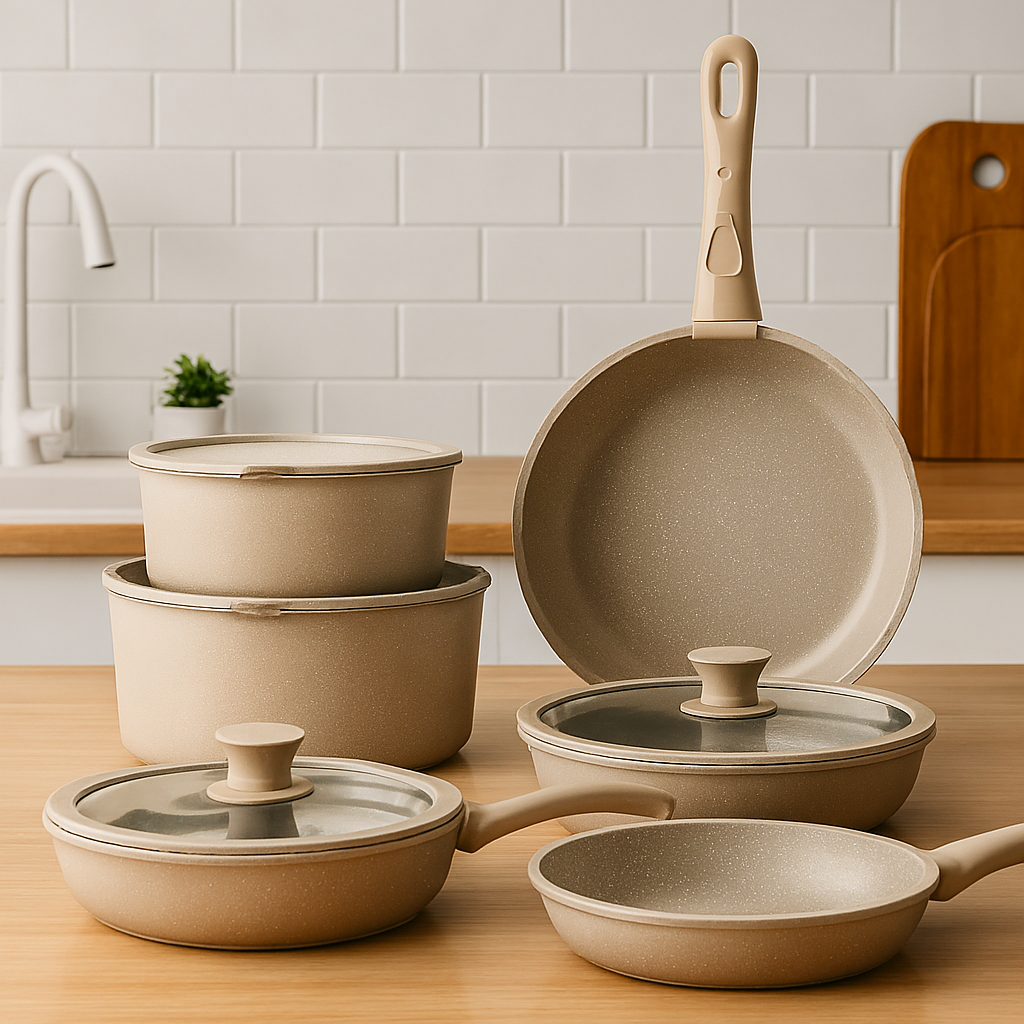
CAROTE cookware is built around lightweight aluminum with ceramic nonstick coating, focusing on ease of use and low-oil cooking rather than high-heat performance or long-term durability.
Select Sets to Compare (Max 4)
Tap any cookware set below to compare. We've pre-selected our top recommendations.
Key Metrics
Detailed Comparison
Scenarios
Calculator
Analysis
Selected Sets:
2
Detailed Parameter Comparison
Tap any value to see detailed explanations. We tested 32 critical parameters that matter in real cooking.
Parameter ⓘAll parameters are tested using standardized methodologies in independent labs. Values represent real-world performance, not manufacturer claims.
3
Best For Different Cooking Scenarios
How each set performs in real-world situations. Tested over 6 months of actual cooking.
4
Custom Value Calculator
Adjust sliders to match your cooking priorities. Get your personal best match.
Durability & Longevity30%
Cooking Performance30%
Health & Safety25%
Convenience & Storage15%
Your Personal Recommendation
Overall Value Score
92%
Durability Score
85%
Health Rating
95%
Based on our algorithm weighing 32 parameters according to your priorities.
Material Science Breakdown
Construction layers analyzed with material testing equipment.
Heat Distribution Analysis
Thermal imaging after 2 minutes on medium heat.
Testing: FLIR thermal camera, electric burner, medium heat, 2 minutes
What Carote Actually Is (And Isn’t)
Carote is a Chinese cookware brand that became extremely popular on Amazon between 2018 and 2020. The company sells affordable cookware sets with a “granite” nonstick coating, which are marketed as healthier and more durable than conventional Teflon-coated pans.
The brand positions itself as eco-friendly and PFOA-free, which sounds great until you realize that PFOA has been banned in cookware manufacturing since 2013. Technically speaking, no pan today contains PFOA. It’s like advertising a car in 2025 as “compatible with unleaded gasoline.”
They offer several product lines—Carote Granite, Carote Detachable Handle, Carote White Granite—but the core technology is the same across all of them. An aluminum body, a multi-layer nonstick coating with mineral particles for texture and marketing appeal.
I tested the standard Granite series (beige with inlays) and the White Granite line. Both produced nearly identical results in my kitchen.
The “Granite” Coating: What It Really Means
Let’s get one thing straight: Carote cookware does not contain real granite. It is not stone. Nor is it ceramic in the traditional sense.
What you get is a PTFE-based nonstick coating (yes, the same material as Teflon) with added mineral particles—likely silicon dioxide or aluminum oxide—that create a marble-like granite effect. These particles slightly increase the surface roughness, which can improve scratch resistance and give the pan a coating that feels more comfortable to the touch compared to smooth Teflon.
Is this a bad thing? Not necessarily. PTFE remains the most effective nonstick material we have. But calling it “granite” is pure marketing. It’s like calling a chocolate chip cookie “chocolate stone bread.”
The coating itself is applied in several layers. I noticed this when my pan finally wore out—clear colored stripes were visible underneath, indicating the different layers of the coating. Compared to inexpensive pans with a single layer of coating, this multi-layered structure provides slightly greater durability.
Cooking Performance: Where Carote Actually Shines
I was really impressed here.
Eggs and delicate dishes: Carote handles scrambled eggs, omelets, and sunny-side-up eggs perfectly. I’ve cooked eggs without any oil dozens of times, and they glided across the pan like they were on ice. Even after six months of regular use, the quality of the eggs remained consistently good.
Cooking without oil: If you want to cut down on fat intake, these pans are just what you need. I sautéed vegetables, pan-fried fish fillets, and even made pancakes without oil. The nonstick coating lasted longer than I expected from an inexpensive pan.
Searing and browning: This is where things get trickier. You can sear chicken or pork chops in the Carote pan, but you won’t get the intense browning and caramelization you’d get with stainless steel or cast iron. Nonstick coatings generally prevent intense Maillard reactions because proteins don’t stick or accumulate.
After searing, I made sauces in the Carote pan. It worked well for light sauces, but if you move on to making something more complex, you’ll miss the seared bits that give the sauce depth.
Acidic foods: I used these pans to make tomato-based sauces, lemon chicken, and vinegar reductions. No reaction issues, no metallic aftertaste, and no visible damage to the coating.
Heat Distribution: Decent, Not Perfect
Carote pans are made entirely of aluminum, which conducts heat well. I’ve never had any issues with severe overheating that causes food to burn in one spot while remaining raw in another.
However, they are thin. Most Carote pans feel significantly lighter than comparable nonstick models from T-fal or Tramontina. This means they heat up quickly—which is great for preparing weeknight dinners—but they also lose heat quickly when you add cold ingredients.
I tested this with chicken breast fillets. When I placed four cold fillets in the preheated Carote pan, the temperature dropped sharply, and the result was a steamed dish instead of a pan-seared one. In a heavier pan, the stored heat would have recovered more quickly.
For everyday tasks like cooking eggs, making gratin, or reheating rice? Ideal. For frying over high heat or maintaining a stable temperature with large quantities of food? Not ideal.
Stove Compatibility: Works Everywhere (With Caveats)
I tested Carote cookware on gas, electric, and induction stoves.
Gas stove: Works perfectly. The lightweight design is actually an advantage here—the pans heat evenly over the flame and are easy to move around.
Electric stove: Everything is fine. The flat bottom makes good contact with the heating coils. However, you should keep the heat on medium or lower to avoid overheating the coating.
Induction: I had mixed results here. Carote markets many of its pans as induction-compatible, which technically means they have a magnetic steel plate built into the bottom. My pan worked on induction, but with difficulty. The magnetic attraction was weak, and it took longer to heat up than true induction cookware.
If you have an induction stove and it’s your primary cooktop, buy something specifically designed for induction. Carote will work in a pinch, but you’ll notice the difference.
Durability: The Real Test
I used my 10-inch Carote skillet almost every day for about 18 months before I noticed any significant decline in performance. Here’s how it went:
Months 1–6: Everything was great. Eggs slid perfectly, nothing stuck, and the coating looked flawless.
Months 7–12: Small scratches appeared, even though I mostly used silicone utensils. Twice I accidentally scraped it with a metal spatula, and those scratches were permanent. The nonstick performance was still good.
Months 13–18: The coating began to lose effectiveness in the center of the pan, where heat concentrates. Eggs started to stick slightly. I needed a small amount of oil for dishes that used to slide freely.
Month 20: The coating in the center was noticeably worn, so the darker layers underneath became visible. The pan could still be used with oil, but the advantage of the nonstick coating had largely disappeared.
For a pan in the $15 to $25 price range, reliable performance for 18 months seems quite acceptable. For comparison: I broke a cheap T-fal pan in less than a year, but my $80 All-Clad pan with a nonstick coating has lasted nearly three years with minimal wear.
I’ve never noticed any warping, not even after accidentally overheating it. The riveted handles have stayed in place—no loosening or wobbling.
Handle Design and Usability
Carote uses handles made of Bakelite (a heat-resistant plastic composite) that stay cool when cooking on the stove. After 15 minutes over medium heat, I was able to touch them with my bare hands without any problem.
The handles are ergonomically shaped and fit comfortably in the hand. My only criticism is that they’re a bit bulky, which makes them difficult to store in tight cabinets. The series with removable handles solves this problem, though these models lose some grip stability.
As for weight, these pans are lightweight. This is good for tossing food and for easy handling, but not so great for stability when working with heavy ingredients. A pan full of bone-in chicken pieces felt wobbly compared to heavier cookware.
Cleaning: Almost Effortless
That’s perhaps the biggest practical advantage of Carote. Cleaning them is incredibly easy.
Even after sticky teriyaki chicken or caramelized onions, everything wiped right off with a sponge and warm water. I never had to really scrub. Most of the time, I just rinsed them off and dried them.
According to the packaging, they’re dishwasher-safe. I washed mine in the dishwasher maybe ten times at first before deciding it wasn’t worth the risk to the coating. Washing by hand only takes 30 seconds anyway.
The outside is harder to keep spotlessly clean. The speckled surface hides minor stains, but oil splatters on the outside led to permanent discoloration over time. This is purely cosmetic, but worth mentioning if appearance matters.
Health and Safety: The PFAS Question
Carote markets its cookware as “non-toxic” and “eco-friendly,” claims that warrant closer scrutiny.
PFOA-free: While this is true, it’s meaningless. PFOA hasn’t been used in cookware manufacturing since 2013. That’s the minimum standard, not a selling point.
PFAS-free: Carote’s marketing is vague here, and that is intentional. The coating is based on PTFE. PTFE is a PFAS (per- and polyfluoroalkyl substance). So, strictly speaking, it is not PFAS-free.
Is this dangerous? At normal cooking temperatures (below 200 °C), PTFE is considered safe according to current research. Problems arise at 260 °C and above, when PTFE breaks down and releases vapors that can cause flu-like symptoms (polymer fume fever).
I use an infrared thermometer. On medium heat, my Carote pans stayed around 150–175 °C. On medium to high heat, they reached 200–220 °C. You’d have to turn the heat up to the highest setting and leave the pan empty to reach dangerous temperatures.
My conclusion: If you’re concerned about PFAS exposure, you shouldn’t use cookware with a nonstick coating. Switch to stainless steel, cast iron, or carbon steel. However, if you accept that PTFE nonstick coatings contain a certain amount of synthetic coating, Carote isn’t any worse than the alternatives.
Just don’t overheat it. Use low to medium heat. Don’t preheat empty. Replace when coating degrades.
Price vs Value: What You’re Really Paying For
A Carote 5-piece set runs $50-70 depending on sales. Individual pans cost $15-30.
Compare that to:
T-fal nonstick sets: $60-90
Tramontina nonstick: $40-80
GreenPan ceramic nonstick: $80-150
All-Clad nonstick: $150-250+ per pan
So where does the price difference come from?
Material thickness: Carote uses thinner aluminum. Lighter pans mean lower material costs.
Handle construction: Bakelite is cheaper than stainless steel or silicone-coated handles.
Quality control: I’ve read reviews mentioning uneven coatings, loose handles, or defects. I haven’t experienced this myself, but low-cost manufacturing sometimes means inconsistent quality control.
Brand premium: You aren’t paying for All-Clad’s reputation or GreenPan’s marketing. You get functional cookware without the price markup.
Does cheaper mean worse? Not always. My Carote pans performed almost as well as my mid-range T-fal pans for the first 12 to 18 months. After that, the T-fal pan held up better. But if I’m replacing nonstick pans every two years anyway (which most people should do), it makes sense to pay $20 instead of $80.
Side-by-Side Comparison
Feature
Carote Granite
T-fal Ultimate
GreenPan Lima
Tramontina Nonstick
Price (10″ pan)
$18-25
$30-40
$40-60
$25-35
Coating Type
PTFE + minerals
PTFE
Ceramic (Thermolon)
PTFE
Nonstick Performance
Excellent (initially)
Excellent
Good
Excellent
Durability (months)
12-18
18-24
8-15
15-20
Weight
Light
Medium
Medium
Medium
Induction Compatible
Yes (weak)
Yes
Yes
Select models
Oven-Safe Temp
350°F
400°F
600°F
350-400°F
Warranty
1 year
Lifetime (T-fal Pro)
2 years
Lifetime (select)
Carote wins on price. T-fal leads the pack in terms of durability. GreenPan offers genuine PTFE-free ceramic, if that’s important to you, but the nonstick coating doesn’t last long. Tramontina falls somewhere in between—better than Carote, more affordable than premium brands.
Real Pros and Cons
What Actually Works:
Genuinely good nonstick performance for the first year
Easy cleanup saves time on busy nights
Light weight makes handling comfortable
Affordable enough to replace without guilt
Handles stay cool during cooking
Works across all stovetop types (though induction performance is weak)
What Doesn’t:
Coating wears faster than mid-tier brands
Thin construction means poor heat retention
Scratches easily despite “granite” marketing
Induction compatibility is technically there but functionally marginal
No significant performance advantage over similarly priced competitors
Vague health claims create confusion about safety
Common Complaints I Can Confirm:
Coating breakdown in high-use areas after 12-18 months
Exterior discoloration from oil splatter
Marketing overpromises on durability
Complaints I Couldn’t Replicate:
Warping (mine stayed flat)
Handle loosening (stayed solid)
Immediate coating failure (took over a year)
Who Should Buy Carote Cookware
Buy Carote if:
You need budget nonstick that performs well short-term
You cook eggs, pancakes, delicate fish regularly
You’re okay replacing cookware every 1-2 years
You want lightweight pans for easy handling
You’re furnishing a first apartment or rental kitchen
Skip Carote if:
You want cookware that lasts 5+ years
You do a lot of high-heat searing
You need serious induction performance
You’re looking for true PFAS-free options (go ceramic or stainless)
You have the budget for mid-tier brands like Tramontina or All-Clad
Frequently Asked Questions
Is Carote cookware safe to use? Yes, at normal cooking temperatures (low to medium heat). The PTFE coating is stable below 400°F. Avoid high heat and replace pans when coating shows visible wear.
How long does Carote nonstick coating last? In my testing, 12-18 months of daily use before noticeable performance decline. Light users might get two years.
Is the granite coating real stone? No. It’s PTFE nonstick with mineral particles added for texture and appearance. There’s no actual granite.
Can you use metal utensils on Carote pans? Technically yes, but I don’t recommend it. I scratched mine with metal spatulas, and those scratches accelerated coating wear.
Is Carote better than T-fal? Not really. Similar performance initially, but T-fal lasts longer. Carote costs less. Choose based on whether you prioritize upfront savings or longevity.
Does Carote work on induction cooktops? Some models do, but the magnetic base is weak. It works, just not as efficiently as cookware designed for induction.
Bottom Line: My Honest Verdict
Carote cookware is exactly what it looks like—affordable nonstick cookware that works well until it eventually stops working.
I used a $20 pan intensively every day for 18 months. Eggs slid off easily, cleaning was simple, and nothing catastrophic happened. Then the coating wore out, and I replaced it. At that price, I’m not upset about it.
If you’re clear that you’re buying disposable cookware with a lifespan of 1–2 years, Carote offers good value for the money. The nonstick performance matches that of pans that cost twice as much—at least initially. The “granite” label is misleading, but the actual cooking experience is fine.
I wouldn’t build my dream kitchen around Carote. But for a starter set, a college dorm, or a replacement pan that you don’t mind putting through the wringer? It’s a sensible choice.
Just keep your expectations realistic. This isn’t cookware for the ages. It’s functional gear that serves its purpose, wears out, and gets replaced. If that fits your cooking style and budget, go for it.
If you’re looking for something that lasts longer, spend an extra $20 to $40 per pan and get a mid-range Tramontina or T-fal. If you want to avoid PTFE entirely, skip non-stick coatings altogether and learn to cook with stainless steel or carbon steel.