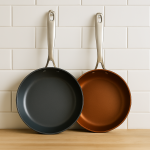
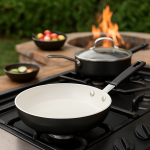
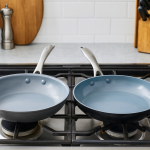
I’ve been testing cookware for years. Stainless steel, cast iron, carbon steel, enameled cast iron—every brand with a ceramic coating that’s hit the market in the last five years. And for a long time, pure ceramic cookware—genuine, kiln-fired clay with no metal components—occupied a strange niche in the market that I largely ignored. Too niche, I thought. Too fragile for a real kitchen.
Then I started getting emails.
Readers asked if their Caraway pans were “really made of ceramic.” If GreenPan was safe in the long run. If there was anything truly non-toxic—not just ceramic-coated, but through and through, completely free of synthetic chemicals.
I kept dodging the topic. Then I stopped. I spent several months using pure ceramic cookware—mainly Xtrema, some Emile Henry, a bit of Ceraflame—and going through the safety studies from both the brands and their critics. The answer is more complex than either side presents it, and more interesting.
Quick Answer: Best 100% Ceramic Cookware (At a Glance)
Use Case
Best Pick
Best overall 100% ceramic stovetop pan
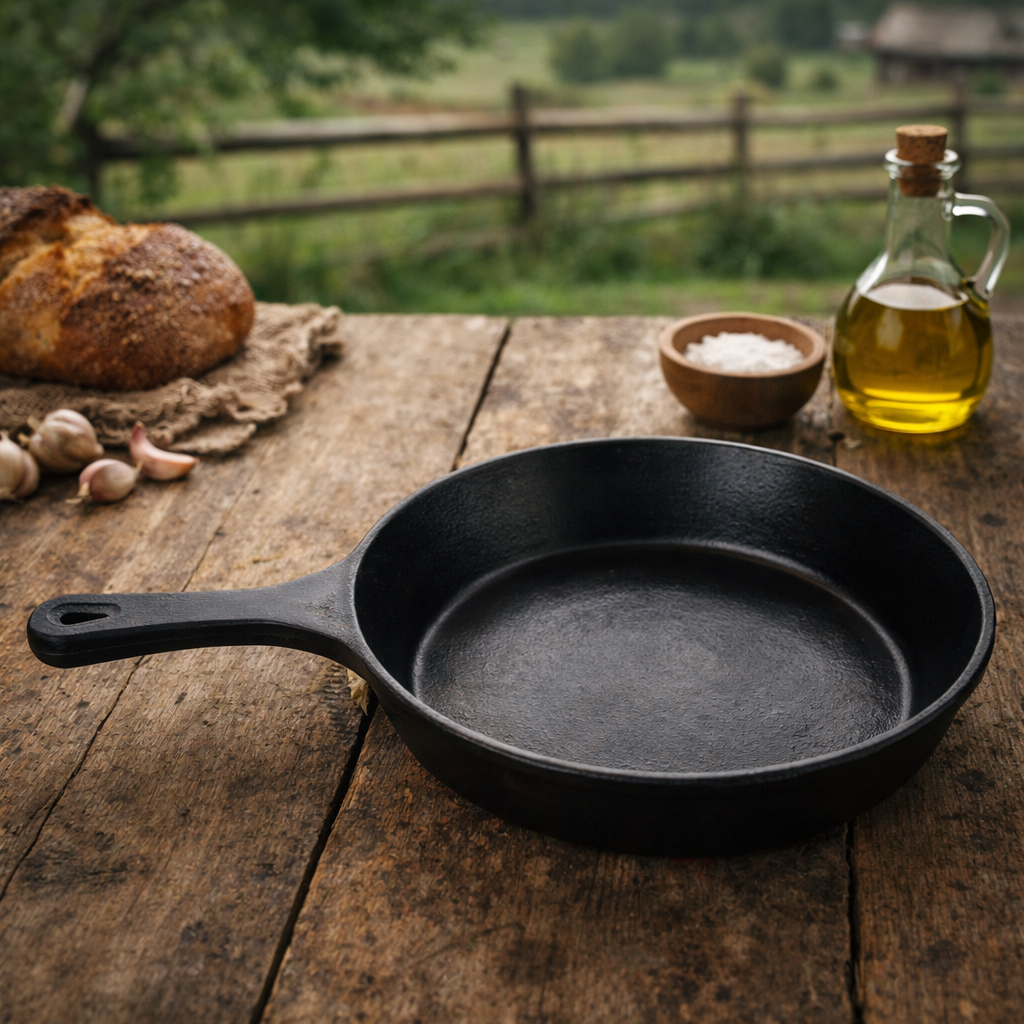
Xtrema Signature Skillet (9-inch or 11-inch)
Best 100% ceramic set
Xtrema Signature Series Set
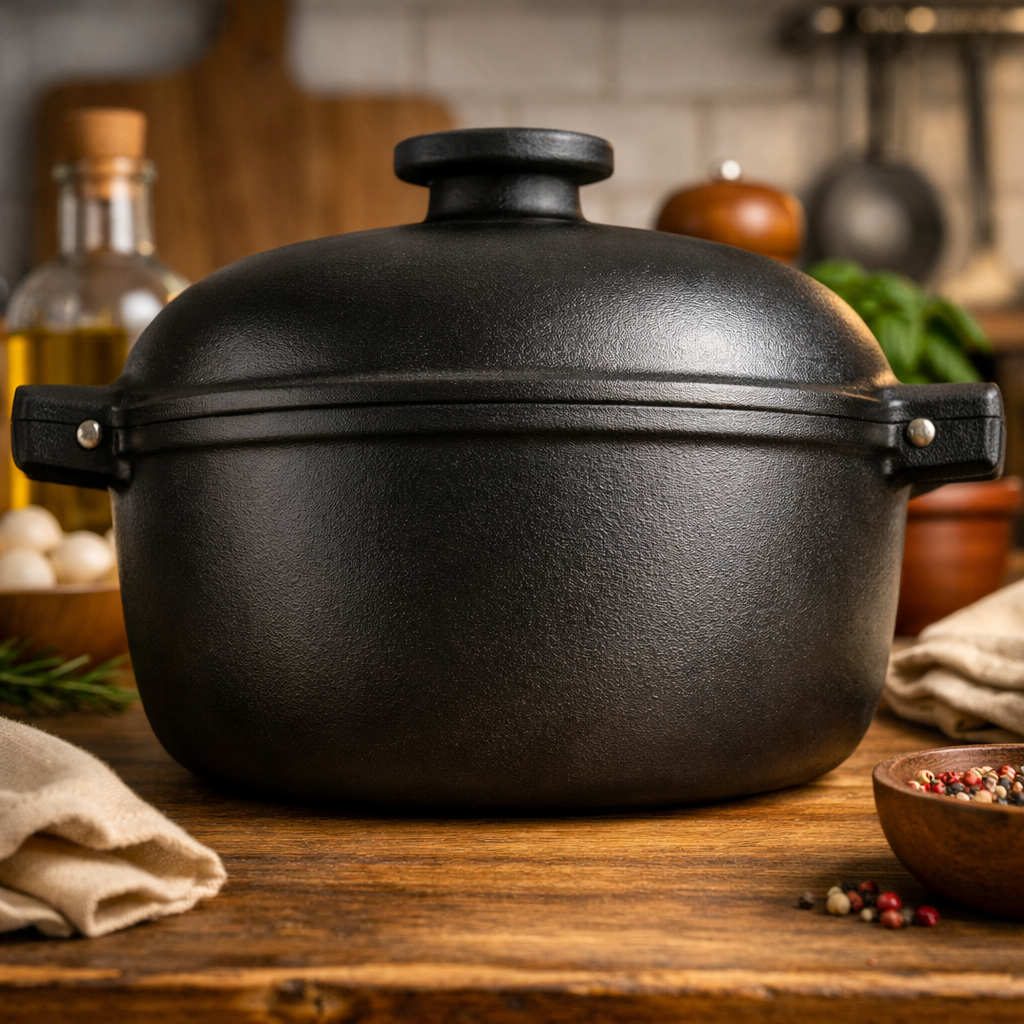
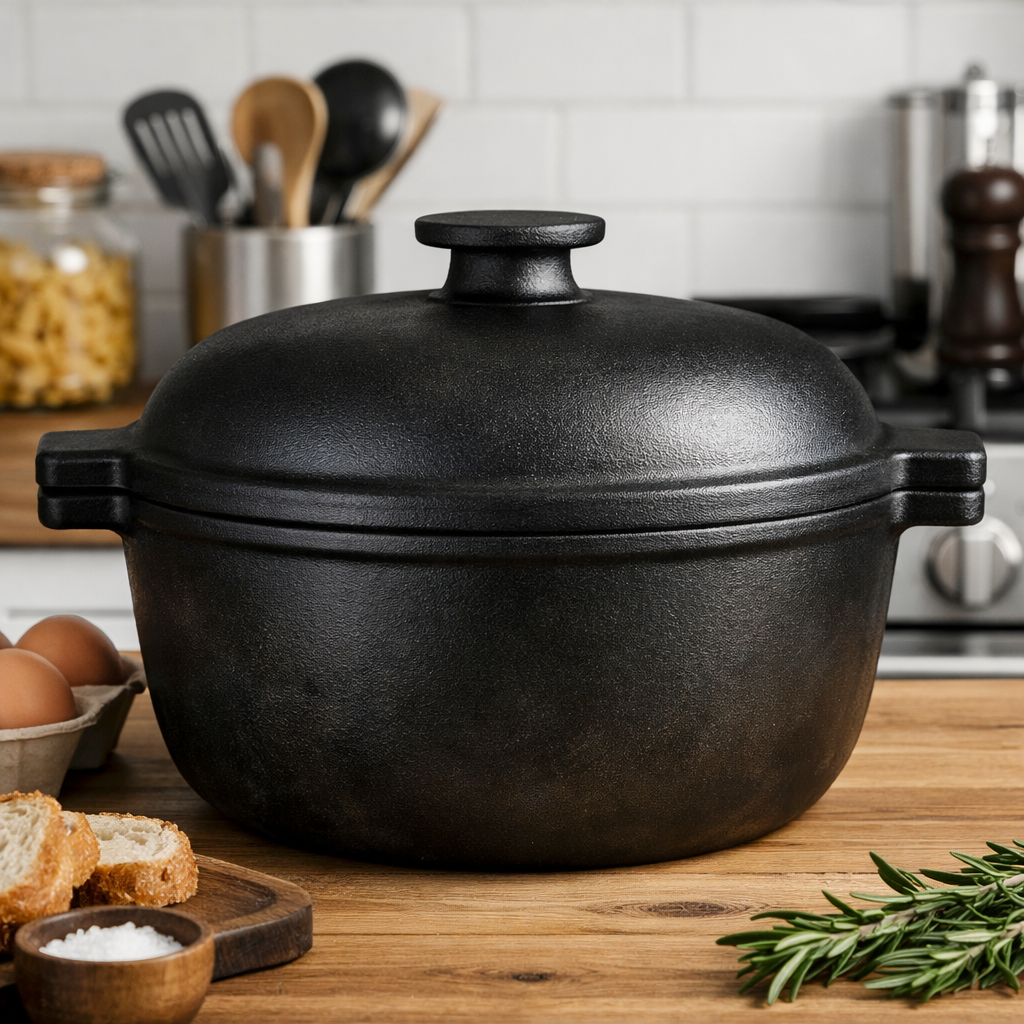
Best pure ceramic Dutch oven
Emile Henry Delight Dutch Oven
Best stovetop-to-oven pure ceramic
Emile Henry Flame Series
Best pure ceramic bakeware
Staub 3-piece Ceramic Baking Set
Best budget pure ceramic (oven use)
CorningWare French White
Best underrated brand
Ceraflame (Brazilian, pure ceramic since 1998)
The short version: When it comes to stovetop pans, Ceramcor’s Xtrema is the only mainstream brand worth considering that offers products made entirely of ceramic for everyday use. For cooking and braising in the oven, Emile Henry is the better choice—it offers greater thermal shock resistance, a wider range of products, and a price per piece that’s easier to justify. Neither brand can replace a Teflon pan without some adjustments on your part, and if you drop one of them on a tile floor, you’ll regret it.
What Is 100% Ceramic Cookware — And Why Most “Ceramic” Pans Aren’t
Ask ten people in a kitchenware store what “ceramic tableware” means, and you’ll get ten different answers, most of which are incorrect. The industry has been very lax with this term for the past 15 years, leading to many costly misunderstandings.
True ceramic tableware is made from natural clay, water, and mineral compounds; it is shaped and fired in a kiln at temperatures exceeding 1,093 °C until the material becomes dense, non-porous, and chemically inert. The final product is ceramic through and through—no metal core, no synthetic coating, nothing applied to the surface after firing. The ceramic glaze fuses with the ceramic body during the final firing process. It is not a layer sitting on top. It is part of the material itself.
This is not the case with GreenPan. Nor with Caraway. Nor with Our Place.
These are aluminum pans with a sol-gel coating derived from ceramics sprayed onto the surface—a thin layer of silicon dioxide-based material that provides a non-stick surface. The coating is truly PFAS-free and truly safer than the old polytetrafluoroethylene (PTFE) Teflon. But it is still a coating on a metal pan. It wears down from heat, scratches, and dishwasher cycles. After 18 months of daily cooking, it often looks rough and doesn’t work as well.
In the cookware industry, the term “ceramic” is used both to describe the finish and as a general term for the material itself. This is the source of most of the confusion—and the reason why people who spend $400 on a Caraway set believe they’re buying something fundamentally different from what they actually receive.
How Pure Ceramic Cookware Is Actually Made
Clay is mixed with water and natural mineral oxides, poured into molds, dried slowly, and fired multiple times. The first firing hardens the structure. The glaze is then applied, and the piece is fired again at even higher temperatures—this causes the glaze to chemically bond with the ceramic core. Some manufacturers use so-called flameware, a special type of ceramic clay developed for greater resistance to thermal shock. Ceramcor’s Xtrema fires each piece three times in a so-called triple-firing process, with about 20 days elapsing per piece from casting to the finished product.
The finished piece is technically a form of stoneware—dense, non-porous, fired from non-porous clay—although it is sold on the market under the term “pure ceramic cookware.” Whatever you call it, what matters are the material properties: chemically inert, scratch-resistant, non-porous so it absorbs neither oils nor bacteria, and truly non-toxic in a way that no coated pan can fully claim.
I’ll be honest—I was skeptical of many of these claims before I began testing. The category of non-toxic cookware is surrounded by a lot of marketing hype. But the material science behind it is real, and the safety tests conducted by reputable brands are published and verifiable. More on that later.
Use it for ten years and the surface is chemically identical to day one. There’s no coating to wear down, no moment where you start wondering if the pan needs replacing.
Pure Ceramic vs. Ceramic-Coated Cookware: The Critical Difference
If you take one table away from this article, make it this one.
Feature
100% Pure Ceramic
Ceramic-Coated (Metal + Coating)
Core material
Kiln-fired clay — solid, no metal anywhere
Aluminum or stainless steel base
Surface material
Fused ceramic glaze — part of the body
Sol-gel silica coating, sprayed on separately
PFAS / PTFE / forever chemicals
None — no synthetic coating exists
None in coating (verify base materials)
Coating lifespan
No coating — surface doesn’t degrade
1–3 years under regular home use
Heat retention
Exceptional — holds temp long after burner off
Moderate — depends on base metal
Heat response
Slow — ceramic has low thermal conductivity
Fast — aluminum heats quickly
Induction compatible
No — no ferromagnetic metal present
Yes, if steel base included
Weight
Heavy (comparable to cast iron)
Light to moderate
Nonstick performance
Requires proper preheat, oil, and technique
Excellent when new; degrades over time
Scratch resistance
High — metal utensils, steel wool fine
Low — metal utensils scratch coating
Impact resistance
Low — shatters on hard drop
Higher — dents but won’t shatter
Thermal shock risk
Real — no cold-to-high-heat transitions
More forgiving
Reaction with acidic foods
Zero — completely non-reactive
Depends on coating and base integrity
Titanium dioxide nanoparticles
None
Present in some brands, unverified safety
Eco-footprint
No replacement cycle — decades of use
Replace every 2–4 years, ends in landfill
Price
High upfront
Low to mid upfront
Long-term cost
Better — single purchase
Higher — replacement cycle
It’s not that one type is objectively better than the other. They solve different problems. The important thing is not to pay a high price for something you think is pure ceramic, when in reality it’s a metal pan with a coating that will need to be replaced in a few years.
Best 100% Ceramic Cookware Brands: What I Actually Found
Xtrema by Ceramcor — The Only Real Stovetop Option
If you’re looking for pure ceramic cookware for everyday stovetop cooking—a frying pan for eggs, a saucepan for pasta sauce, a sauté pan for chicken—Xtrema by Ceramcor is practically the only mainstream brand that makes such products. I’ve looked around extensively. All other suppliers either focus on baking pans or don’t reliably ship to North America.
Ceramcor was founded by Rich Bergstrom, who launched the Xtrema product line in 2007 after 40 years in the ceramics industry. Each piece is handcrafted from a proprietary blend of natural clay, water, and natural minerals and oxides. The material consists of what Xtrema calls “Flameware”—a dense, kiln-fired ceramic clay specifically designed for use on the stovetop. It is triple-fired at over 2,500 °F. The factory is located in China and is operated under strict supervision by Ceramcor; each production batch is inspected by an independent agency before shipment.
Product lineup: The core pieces worth knowing:
Signature Skillet (9-inch and 11-inch) — the daily driver, redesigned with longer handle and shallow side walls for eggs
Traditions Saucepan (1, 1.5, 2.5-quart with lids) — excellent for sauces, rice, soups
Sauté Pan (10-inch) — deeper walls, more versatile
Versa Pan (10-inch) — no protruding handle, doubles as bakeware, includes silicone grip handles
Signature Series Set — the entry point most people buy (skillet + three saucepan sizes)
Dutch Oven — oval, beautiful, works stovetop-to-oven-to-table
Build quality: Everything is made from a single piece—handle, body, ceramic glaze—no rivets, no metal joints, nothing that could come loose or trap food particles. The deep black glaze is created by the reaction of natural mineral oxides during the high-temperature firing process. On well-made pieces, it is smooth and even. I have occasionally seen reports of quality control issues—minor surface imperfections or labels that aren’t centered—but neither affects cooking performance or safety.
The handles are also made of ceramic. This means they get hot on the stove. While this isn’t dangerous, it’s still hot enough that you’ll need the cotton handle covers that Xtrema sells with the sets, or a silicone grip. The older Classic series had short handles where your knuckles were uncomfortably close to the burner. The longer handle on the Signature pan is a real improvement.
One small detail you should be aware of: The base of some Xtrema pots has a slight curve. On a flat electric or glass-ceramic stove, this can lead to uneven contact and uneven heat distribution. This is less of an issue with gas stoves. It’s worth checking this before purchasing if you have a flat electric cooktop.
Cooking on the stovetop — the real details:
First things first: preheating. Ceramic has low thermal conductivity—at medium heat, it takes 2–3 minutes before you should add anything. If you skip this step, the food will stick. If you do it consistently, the surface becomes much more forgiving. Most frustrations with Xtrema stem from skipping this step.
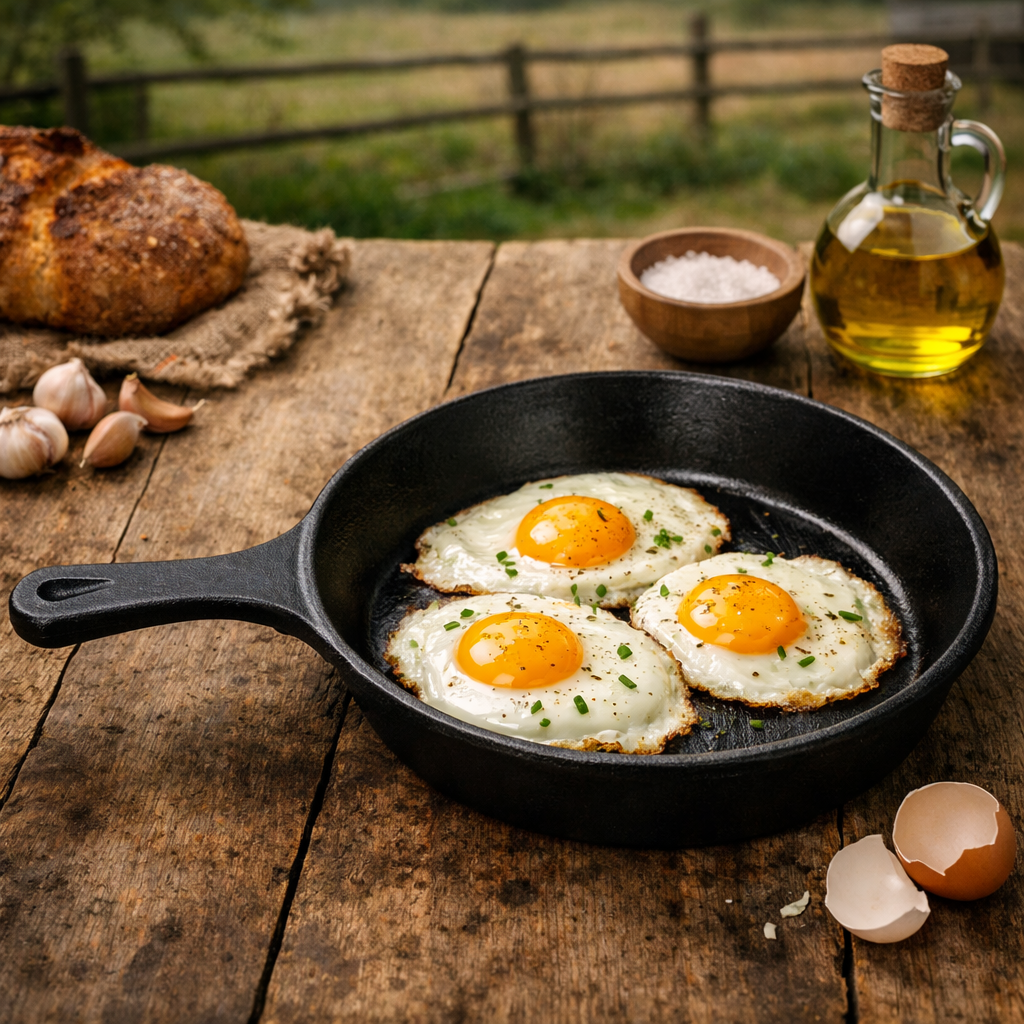
Eggs: I’ll be honest. Eggs in Xtrema aren’t like eggs in Teflon. Not even close. What actually works: Preheat thoroughly over medium-low heat, add butter or oil until it shimmers, then add the eggs. Scrambled eggs prepared this way come off the pan easily. Fried eggs require more fat than you might like—the Food Network Test Kitchen reported that nearly two tablespoons of oil are needed for them to release properly. The limitations of this technique are real. If your only measure of nonstick performance is whether an egg slides off effortlessly, pure ceramic will frustrate you.
Sauces and slow cooking: To be honest, this is where I let go of my skepticism. Tomato sauce for pasta, slow-cooked curries, braised ribs, lentil stew—the even, sustained heat of the ceramic core achieves something a thin aluminum pan simply can’t. No burnt edges spreading from the sides. No hot spots. And acidic ingredients—tomatoes, wine—don’t react with the surface at all, which actually affects the flavor more than you might think.
Far-infrared cooking: Heated ceramic emits far-infrared energy when it’s hot, which means the heat penetrates the food from multiple directions rather than just radiating from the contact surface. This is a genuine physical property of the material, not a marketing gimmick—and likely the reason why slow-cooked dishes taste different in ceramic than in metal. I noticed this with braised chicken even before I knew what was causing it.
Rice and grains are consistently excellent — even heat floor, no burned bottom layer. Oatmeal, polenta, risotto all work well. High-heat searing doesn’t work — skip it and use cast iron or carbon steel for that.
After you turn off the burner: The pan continues to cook for a few more minutes. This is ideal for soups and stews—thanks to the heat retention after turning off the burner, the food stays warm while you serve it onto plates. For delicate egg dishes or vegetables where the cooking process must be stopped immediately, you should remove the pan completely from the burner and place it on a trivet. You can’t reduce the heat as quickly as you can with a responsive stainless steel or aluminum pan.
Oven and beyond: Xtrema works on gas, electric, and glass top cooktops — not induction without an adapter disc. Oven-safe up to 2,500°F, which is absurdly higher than any home oven will ever go. It’s also broiler safe, microwave safe, freezer safe, and goes straight from oven to table without looking out of place. That flexibility is genuinely useful once you start thinking of it as a full-kitchen tool rather than just a stovetop pan.
Product spec table:
Product
Size
Oven Temp
Induction
Weight (approx)
Price (2025)
Signature Skillet
9-inch / 11-inch
2,500°F
No (adapter OK)
~2.5 lb
~$160–190
Traditions Saucepan
1 / 1.5 / 2.5 qt
2,500°F
No
~2–3 lb
~$80–130
Sauté Pan
10-inch
2,500°F
No
~3 lb
~$170
Versa Pan
10-inch
2,500°F
No
~2.5 lb
~$150
Signature Series Set
Skillet + 3 saucepans
2,500°F
No
—
~$380–450
Pros:
Genuinely 100% ceramic — no metal core, no coatings anywhere
Flameware construction: triple-fired at 2,500°F
Far-infrared cooking — even, deep heat penetration
Exceptional heat retention for slow cooking
Scratch-resistant — metal utensils and steel wool fine, which still surprises me
Works on gas, electric, glass top, oven, grill, microwave, broiler
Third-party leach testing published publicly (quarterly reports on website)
No coating to degrade — surface is chemically identical in year 20
Can genuinely become a family heirloom — passes to the next generation
Cons:
Slow to heat — and I mean slow. Plan ahead or you’ll be standing there waiting
Not nonstick in the conventional sense
Heavy in a way that gets old fast if you have wrist issues
No induction compatibility without an adapter disc
Shatters if dropped. Not scratched. Not dented. Shatters.
Handle heats up during stovetop cooking — burns are possible if you forget
Bottom ridge causes uneven contact on some flat electric cooktops
~$160–190 per skillet is a lot to commit to before you know if the technique clicks for you
Quality control has been inconsistent on some batches based on user reports
Who it’s for: If you cook mostly at low to medium heat and don’t mind learning new habits, this is worth the money. Especially if you make a lot of sauces, braises, or grain dishes, or if you’re coming from PTFE nonstick and want something that won’t need replacing every few years.
Who should skip it: Anyone on induction without an adapter, anyone who needs responsive heat control, anyone who sears frequently, anyone who’s rough on their gear. Also anyone expecting it to cook like a nonstick pan out of the box — it won’t.
Emile Henry — The French Benchmark for Oven and Braise
Emile Henry has operated out of the village of Marcigny in Burgundy, France since 1850. The Henry family still owns it. The clay still comes from Burgundy — the same mineral-rich regional earth that contributes to Burgundy wine’s flavor profile, if you want the terroir angle. Their HR (High Resistance) ceramic technology produces significantly better thermal shock resistance than standard ceramic formulations — enough that they can credibly advertise freezer-to-oven use on most pieces.
If Xtrema is built for the stovetop, Emile Henry is built for the oven. Their whole product logic is different — Dutch ovens, tagines, braisers, casseroles. Pieces you start on a burner and move to a 325°F oven for two hours. The Flame series handles gas and electric cooktops, but there’s no real skillet in the lineup the way Xtrema has one. That’s not a knock — it’s just what the brand is for.
The bread cloche deserves its own paragraph. It’s the best home bread-baking tool I’ve tested, at any price. I’ve used Dutch ovens, covered cast iron, baking stones — nothing produces a crust like a ceramic cloche. The steam stays trapped in those first critical minutes of bake time. The result is noticeably different. If you bake sourdough at home, this alone is worth a look at Emile Henry regardless of what else you buy.
Best Emile Henry picks:
Delight Dutch Oven — lighter than Le Creuset enameled cast iron, pure ceramic throughout, excellent for braises
Flame Series tagine or braiser — stovetop-compatible on gas and electric
Bread Cloche — exceptional for sourdough and artisan-style loaves
HR Baking Dishes — oven, freezer, microwave, dishwasher safe; freezer-to-oven without drama
Pros:
Pure ceramic throughout — no metal, no coatings
Superior thermal shock resistance vs. Xtrema — freezer-to-oven capable on most pieces
Lighter than enameled cast iron for equivalent piece size
Beautiful design — oven-to-table presentation
Lead-free per European ceramic certification
Dishwasher safe
10-year warranty
Excellent for acidic foods — completely non-reactive surface
Cons:
No true stovetop frying skillet — not a daily pan solution
No induction (without adapter on Flame line)
Expensive — Dutch ovens $120–200
Still fragile on hard impact
Flame line limited to gas and electric (not halogen-to-induction)
Best for: Oven-focused cooks, braising enthusiasts, bread bakers, anyone who wants a Le Creuset alternative without the cast iron weight. Not a replacement for a daily stovetop skillet.
Ceraflame — The One Most Americans Have Never Heard Of
A Brazilian company that’s been making 100% ceramic cookware since 1998, with manufacturing in São Paulo. Their claim: the glaze is fired alongside the ceramic piece and is intrinsic to it — not a separate coating applied after. No metals, no PFAS, no coatings. Their product line is explicitly marketed as not nonstick, which is honest.
Ceraflame pieces have thicker walls than Xtrema, which means even more thermal mass — slower heat-up, longer heat retention. The user reviews from people cooking with Ceraflame daily over five-plus years are consistently positive, particularly for braising and slow cooking. Several users note adapting to the heat-off-early technique (turning off the burner 5 minutes before the food is done and letting the retained heat finish the job).
Available in the US through ceraflameus.com directly. Not stocked in major US retailers. Pricing is generally lower than Xtrema on comparable pieces. Worth serious consideration if Xtrema’s price is a barrier.
The limitation: minimal English-language independent review coverage, which makes it harder to evaluate. The brand’s transparency on safety testing is less prominent than Xtrema’s, though their European market presence implies EU compliance.
Xtrema vs. Emile Henry vs. Ceraflame — Side by Side
Xtrema
Emile Henry
Ceraflame
Stovetop skillet
✅ Full range
❌ Limited
✅ Available
Dutch oven / braisers
✅ Available
✅ Excellent
✅ Available
Thermal shock resistance
Moderate
Better (HR ceramic)
Good
Safety testing published
✅ Quarterly, public
✅ European certified
Limited English info
Induction
❌ (adapter needed)
❌ (adapter needed)
❌
Price per skillet
~$160–190
No skillet
~$80–120
Available in US
✅ Direct + retailers
✅ Wide retail
✅ Direct only
Manufacturing origin
China (supervised)
France
Brazil
Warranty
10 years
10 years
Varies
Cooking With Pure Ceramic: A Practical Guide
Most people figure out pure ceramic within a couple weeks. The adjustment isn’t complicated — it’s mostly about preheat and patience. The main mental shift is understanding that ceramic stores heat rather than conducts it. Once that clicks, you stop fighting the pan and start cooking with it.
How to Cook Eggs in Pure Ceramic
The technique that works every time: place the pan on medium-low heat, wait 2–3 minutes for full preheat, add a teaspoon of butter or oil, let it heat for another 30 seconds until it shimmers, then add your eggs. Keep the heat at medium-low throughout. Don’t rush it. Scrambled eggs done this way release cleanly and taste noticeably better than eggs cooked on a screaming-hot nonstick. The slower, gentler heat does something real.
Don’t use cooking spray — the aerosol propellants in commercial cooking sprays leave a residue on ceramic surfaces that builds up and causes sticking over time. Butter or a neutral oil is the right tool.
The Heat-Off Trick (Actually Use This)
Pure ceramic retains heat significantly longer than metal — longer than most people expect the first few times. For soups, stews, and braises, try turning off the burner 5–10 minutes before the food looks done. The retained heat in the ceramic finishes the cooking while you set the table, and the food stays genuinely hot. I burned a few things before I internalized this. Once you do, it starts feeling like a feature rather than an annoyance.
What to Avoid
High heat on an empty pan is the fastest way to crack it — the thermal stress from rapid heating without food mass in the pan can fracture the ceramic. Start on medium or medium-low, always.
Same logic applies going the other direction. Cold pan straight to a hot burner is asking for trouble. Let it come to room temperature first. And please don’t rinse a hot pan under cold running water — that temperature shock is probably the single most common cause of ceramic failure that I see reported.
Storage: don’t let ceramic pieces knock against each other in a cabinet. A kitchen towel between stacked pieces is enough. And skip the cooking spray — already said it but worth repeating because it genuinely wrecks the surface over time in a way that’s hard to undo.
How to Clean Pure Ceramic Cookware
Cleaning pure ceramic is easier than people expect, and the rules are basically the opposite of coated pans. No coating to protect means you can be aggressive.
For everyday cleanup, warm water and dish soap is fine. If something stuck, fill the pan with water, put it back on low heat for a minute, and it releases. For stubborn residue — steel wool, Brillo pads, Bon Ami, Comet — all fine. Xtrema literally tells you to use abrasive cleaners. The surface is harder than the steel wool. This still catches me off guard after months of use.
One thing that actually does cause problems: cooking spray. The aerosol propellants in PAM and similar products leave a polymerized film on ceramic surfaces that builds up over time and causes sticking. Don’t use it. Butter or a neutral oil poured from the bottle, always.
The dishwasher is technically safe per Xtrema’s specs. I hand-wash mine because the mechanical jostling with other dishes is how you chip a rim. The black glaze doesn’t stain or fade — minor markings from high-heat cooking come off with baking soda paste.
Durability and Longevity: What Actually Breaks and Why
The ceramic cooking surface does not degrade. Nothing chips, peels, scratches off, or changes with heat cycling the way a coating does. The pan I’ve been using for two years cooks identically to the day it arrived.
What breaks is the pan itself, not the surface.
Dropping it on a hard floor — tile, concrete, even hardwood from counter height — is the main way these die. The material is dense and hard, which also makes it brittle under sudden impact. Several Xtrema owners in user forums describe years of incident-free use ended by one inattentive moment. It’s not that the pan is flimsy. It’s that the failure mode is binary: either it’s fine or it’s in pieces.
Thermal shock is the other failure route. Cold pan straight to a high flame. Hot pan rinsed under cold water. The rapid temperature change creates internal stress fractures — sometimes immediately, sometimes hairline cracks that show up later. The prevention is simple: room temperature to burner, always. And never rinse a hot pan. Let it cool on its own.
Storage is less dramatic but worth mentioning. Ceramic pieces banging against each other in a cabinet can chip rims. A dish towel between stacked pieces is enough.
Realistically, handled with basic care, pure ceramic lasts 20–50 years. Xtrema’s warranty is 10 years, Emile Henry’s is the same. Neither covers drops or thermal shock from misuse — which is fair. Gravity isn’t a defect.
Health and Safety: What’s Verified vs. What’s Marketing
I want to be careful here because this topic gets weaponized in both directions — brands overselling purity, critics catastrophizing trace minerals. Let me try to be straight about what the evidence actually shows.
The no-synthetic-materials claim is straightforward and accurate.
Pure ceramic cookware contains no PFAS, PFOA, PTFE, or any synthetic fluoropolymer. No forever chemicals, no coating that degrades and releases particles, no polymer fumes at high heat. That’s true and it matters — especially compared to conventional PTFE nonstick, which has documented concerns at temperatures above 500°F, and ceramic-coated pans, which often contain undisclosed sol-gel binding agents and sometimes titanium dioxide nanoparticles whose long-term safety nobody has really studied yet.
Pure ceramic is also completely non-reactive with acidic foods. Stainless leaches trace nickel and chromium into wine sauces over long cooking. Cast iron leaches iron. Pure ceramic doesn’t react with anything.
The lead question is where it gets complicated, and I want to be direct about it.
Natural clay contains naturally occurring heavy metals — lead, cadmium, chromium — as mineral compounds. Independent XRF testing has found these metals detectable in Xtrema’s ceramic body and glaze. Xtrema doesn’t dispute this. What they argue — correctly, in terms of the regulatory science — is that the relevant question isn’t whether lead is present in the material, but whether it leaches into food. Leach testing exposes the cookware to acidic liquid for 24 hours and measures transfer. Xtrema has published those results quarterly since the company’s founding. No batch has failed California Prop 65 limits for leachable lead.
The FDA’s current position complicates this: they say no level of leachable lead from cookware is acceptable, period. One analysis of Xtrema’s own published documents found 31mg lead per kg of ceramic — within Prop 65 limits but technically non-zero. Xtrema hasn’t fully addressed this publicly.
I cook with Xtrema and I’m not worried about it. The leach evidence, including an independent test of a well-used pan showing no detectable transfer, is reassuring. But if your standard is zero possible lead anywhere in the material, no ceramic cookware meets that — and neither does most stainless or enameled cast iron. Glass cookware would be your answer.
Buy from brands that publish testing. Avoid cheap unbranded ceramic with no documentation. Vintage ceramic from before modern glazing standards is a real risk.
Is Pure Ceramic Cookware Eco-Friendly?
Short answer: yes, and the argument is pretty simple. One pan that lasts 30 years generates dramatically less waste than replacing a ceramic-coated aluminum pan every 2–3 years. Ceramic-coated pans are also hard to recycle — the metal and ceramic composite can’t be processed by most municipal facilities. They go to landfill.
Pure ceramic, being a single mineral material, has cleaner manufacturing chemistry too. No fluoropolymer synthesis, no PFAS process chemicals in the factory.
The honest caveat: kiln-firing is energy-intensive, and shipping from China adds to the carbon footprint. That’s real. But over a 20–30 year lifespan, the math still favors pure ceramic by a wide margin.
Full Pros and Cons of 100% Ceramic Cookware
Pros:
No synthetic materials — no PFAS, PTFE, PFOA, forever chemicals anywhere
Completely non-reactive cooking surface — no reaction with acidic foods
Far-infrared cooking — even heat penetration from inside and outside
Best heat retention of any cookware category
Non-porous surface — doesn’t absorb oils, odors, or bacteria
No coating to degrade — same cooking surface in year 20 as year one
Scratch-resistant — metal utensils, steel wool, abrasive cleaners all fine
Works on gas, electric, glass top cooktop, oven, grill, microwave, broiler
Dishwasher safe
Eco-friendly: single purchase, no replacement cycle, minimal landfill impact
Can become a genuine family heirloom — designed to pass to the next generation
Cons:
Slow to heat — significant technique adjustment required, including preheating
Not nonstick — requires fat and proper technique for egg-style foods
Heavy — comparable weight to cast iron
Shatters on hard impact — dropped on tile = likely broken
Thermal shock vulnerability — no cold pan to hot burner, no hot pan under cold water
No induction compatibility without an adapter disc
Expensive entry price (~$160+ per skillet for Xtrema)
Handle heats up during stovetop use
Bottom ridge on some pieces causes uneven contact on flat electric cooktops
Limited brand options for stovetop pans (essentially Xtrema only for US market)
How Pure Ceramic Compares to Every Major Cookware Type
Cookware
Best For
Health Profile
Nonstick
Durability
Price Range
100% Pure Ceramic
Slow cooking, sauces, braising, baking
Excellent — no coatings, no metals
No — requires technique
High (if not dropped)
High
Ceramic-Coated
Everyday nonstick, eggs
Good — PFAS-free, but coating degrades
Yes when new, declines
Moderate (2–4 years)
Low–Mid
Stainless Steel
Searing, browning, versatility
Excellent (trace nickel in acidic foods)
No — learning curve
Very high
Mid–High
Enameled Cast Iron
Braising, Dutch ovens, long cooking
Good (lead in some brands’ glaze)
Moderate
High (chips possible)
High
Cast Iron (bare)
Searing, high heat, pancakes
Good (trace iron transfer)
Yes when seasoned
Extremely high
Low
Carbon Steel
High heat, woks, quick searing
Good
Yes when seasoned
High
Mid
Nonstick PTFE
Eggs, pancakes, delicate foods
Concerns at high heat (>500°F)
Excellent
Low (3–5 years)
Low
Worth saying plainly: stainless steel and cast iron offer health profiles close to pure ceramic at significantly lower prices with far better cooking versatility. If “safe cookware” is your only goal, stainless or cast iron gets you most of the way there without the fragility, the price, or the technique adjustment. Pure ceramic’s actual unique position is zero synthetic materials AND zero metal core — no other category does both.
Price vs. Value: The Real Math
A Xtrema 9-inch Signature Skillet: ~$160. The full Signature Series Set: ~$380–450.
A Caraway Home 4-piece set: ~$395 new. Realistically replaced every 3 years by regular users (ceramic coating degradation is the consistent feedback from heavy daily users): $395 × 3 replacements over 9 years = $1,185 plus the environmental cost of three sets in landfill.
A Xtrema set handled carefully: ~$400–450 once, lasting 15–30 years.
The long-term math heavily favors pure ceramic. The challenge is the upfront number and the fragility risk — one dropped skillet at year 4 resets the calculation. Worth being realistic about your kitchen habits before committing.
Emile Henry Dutch ovens run $120–200 per piece — comparable to Le Creuset enameled cast iron, lighter, and genuinely pure ceramic throughout. For the oven-focused cook who doesn’t need a daily stovetop skillet, this price point is easier to justify on a per-piece basis.
Who Should Buy 100% Ceramic Cookware
If you cook mostly at low to medium heat — long sauces, soups, grains, braises, anything that benefits from slow and even heat — pure ceramic is genuinely excellent for that. Same if acidic foods are a big part of your cooking: tomatoes, wine reductions, citrus-based sauces. Zero reactivity matters there.
The other person who should seriously consider it: anyone who’s replaced two or three ceramic-coated sets and is tired of the cycle. The math over 10 years often favors ceramic, and the environmental case is real.
Health-focused households who want complete material transparency obviously belong here too. Just go in knowing what the tradeoffs actually are.
Who Should Avoid It
Induction cooktop households — without an adapter disc, it simply doesn’t work, and the adapter is a friction point most people don’t want.
Anyone who needs fast heat response. If you sear steaks, cook stir-fry at high heat, or work quickly and adjust burners constantly, pure ceramic will frustrate you. It’s not built for that style of cooking.
People who are rough on equipment. Not a judgment — just physics. If you bang pans around or have a history of dropping things in the kitchen, a $170 ceramic skillet is a bad bet. Get carbon steel or cast iron, clean them with chain mail, cook steaks forever.
And honestly? Anyone brand new to cooking. The technique ceiling on pure ceramic is learnable but it’s not beginner-friendly. Get comfortable with basic heat control first, then revisit this category in a year or two.
FAQ: People Also Ask
Is 100% ceramic cookware actually safe? For the reputable brands — Xtrema, Emile Henry — yes, the evidence supports it. No PFAS, no PTFE, no synthetic coatings. Lead comes up a lot in discussions about ceramic, and it’s worth being clear: what matters is leachable lead — what actually transfers to food — not total lead detectable in the clay material. Those are different things, measured differently, and Xtrema has been publishing quarterly leach tests for 15+ years. None show unsafe transfer. Buy from brands that publish results. Don’t buy unbranded ceramic from sources with no documentation.
What is the best 100% ceramic cookware brand? Xtrema by Ceramcor for stovetop pans. Emile Henry for Dutch ovens and bakeware. Ceraflame if price is the barrier and you’re willing to import directly. No one else is doing this in the mainstream US market.
Does 100% ceramic cookware break easily? Cooking and cleaning won’t break it — the surface is genuinely hard and scratch-resistant. Dropping it on tile from counter height might. That’s the realistic risk. It’s not flimsy, but it’s not forgiving of accidents the way cast iron is.
Is pure ceramic cookware better than stainless steel? For material purity, yes — pure ceramic contains no metal whatsoever. For actual cooking, stainless steel wins on most criteria: faster response, better for searing, no fragility issues, induction-compatible. I’d rather have a good stainless pan for most cooking. I’d rather have Xtrema for a long-simmered sauce. They’re different tools.
Can you use 100% ceramic cookware on a glass top stove? Yes. Lift and place pieces rather than sliding — ceramic can scratch glass surfaces. Don’t put a cold pan on a hot burner. The bottom ridge on some Xtrema pieces causes uneven contact on flat cooktops, which can affect heat distribution. Check that detail before you buy.
Is Xtrema worth the price? If slow cooking is most of what you do and synthetic-free materials genuinely matter to you: yes. If you want nonstick convenience, cook on induction, or need fast heat response: probably not the right tool. I think people would be more satisfied with it if the marketing was more honest about what it does and doesn’t do well.
What’s the actual difference between pure ceramic and ceramic-coated cookware? Pure ceramic is fired clay throughout — no metal, no coating. The cooking surface IS the pan. Ceramic-coated is an aluminum pan with a thin silica-based coating sprayed on. That coating degrades over 1–3 years. The pure ceramic surface doesn’t change. That’s the whole difference.
Are cheap “ceramic” pans on Amazon the same thing? No. Almost certainly ceramic-coated aluminum. Even if something claims 100% ceramic, no published safety testing means the claim is unverifiable. Cheap, unbranded ceramic with no documentation is a real lead risk — old glazing formulations in unregulated manufacturing don’t follow the same protocols as Xtrema or Emile Henry.
Bottom Line: What Is the Best 100% Ceramic Cookware — And Is It Actually Worth It?
Xtrema. That’s the answer for stovetop use. Nothing else in the mainstream market is doing what Ceramcor is doing — triple-fired flameware ceramic, quarterly leach testing published publicly, a surface that doesn’t change over decades. If you want pure ceramic pans for daily cooking, Xtrema is the category. The Signature Skillet is where to start. The Signature Series Set if you want to go all-in.
For Dutch ovens, braisers, and bakeware, Emile Henry is better than Xtrema for most people — lighter, better thermal shock resistance, easier to recommend without caveats. The Delight Dutch Oven is exceptional. The bread cloche is worth buying even if you don’t buy anything else from this category.
Now — should you actually buy any of this? Maybe. I’ve been using Xtrema for sauces and braises and I genuinely like it. I don’t use it for eggs anymore. I tried, I adjusted my technique, I still think a well-seasoned carbon steel pan is just easier for eggs and I’ve stopped pretending otherwise. That’s the honest version of what using pure ceramic cookware is actually like. It’s excellent at specific things and frustrating at others, and most reviews don’t say that plainly enough.
If slow cooking is most of what you do, the investment makes sense. If you want one pan to do everything, look elsewhere — cast iron or stainless will serve you better.
Best 100% ceramic for stovetop: Xtrema Signature Skillet. Best for oven and braise: Emile Henry Delight Dutch Oven. Buy what matches how you actually cook.