Every home cook dreams of having that perfect set of pans. The ones that heat evenly, release food effortlessly, withstand metal utensils without scratching, and last for decades. Finding cookware that balances all these qualities can feel impossible sometimes. I’ve been there—staring at a kitchen full of mismatched pans that each do one thing well but fail at everything else.
Among the premium options available today, two brands consistently rise to the top of conversations: All-Clad and HexClad. These represent completely different philosophies in cookware design. One’s the established industry leader with decades of refinement. The other’s an innovative newcomer challenging conventions with hybrid technology that seems almost too good to be true.
The debate between All-Clad and HexClad isn’t just about which pan performs better in isolated tests. It’s about understanding your cooking style—your preferences, your priorities. Are you a technique-focused cook who values precision and control above all else? Or do you prefer convenience and versatility that bridges the gap between professional performance and everyday practicality? This guide will explore every aspect of both brands, from their fundamental construction to real-world performance. No marketing fluff. Just honest insights to help you make an informed decision for your kitchen.
A Tale of Two Brands: Historical Context
To truly understand the All-Clad versus HexClad comparison, we must first appreciate their vastly different origins and histories in the cookware landscape. Trust me, this matters way more than most reviews let on.
All-Clad: The Industry Pioneer
All-Clad represents the gold standard in professional cookware for good reason. Founded back in 1971 in Canonsburg, Pennsylvania by metallurgist John Ulam, All-Clad revolutionized the industry with its innovative bonding process. They figured out how to combine the durability of stainless steel with the superior heat conduction of aluminum in a way nobody had before.
Before this breakthrough, cooks typically had to choose between reactive materials that conducted heat well but could affect flavor, or non-reactive materials that were safe but heated unevenly. Ulam’s innovation was to create fully-clad cookware—pans constructed with multiple bonded layers of different metals, each contributing its unique properties to create superior cooking performance. This approach transformed professional kitchens and eventually became the benchmark for high-end home cookware.
For over five decades, All-Clad has refined this technology, expanding its offerings while maintaining manufacturing operations in the United States for its stainless steel collections. The brand’s commitment to quality has earned it a permanent place in professional kitchens worldwide. When Gordon Ramsay or other celebrity chefs recommend professional-grade cookware, All-Clad is often at the top of their list. This heritage isn’t just marketing hype—it represents decades of refinement in materials science and manufacturing techniques that have withstood the test of time. You can feel that history when you hold one of their pans.
HexClad: The Disruptive Newcomer
In stark contrast, HexClad is a relative newcomer to the cookware scene. The brand was launched in 2016 by co-founders Daniel Winer and Cole Mecray, industry veterans who recognized an opportunity to combine the best attributes of different cookware types into a single solution. Their vision was ambitious: create cookware that could sear like stainless steel but release food like non-stick, all while being durable enough to withstand metal utensils.
The brand’s rapid rise to prominence was fueled by innovative marketing strategies uncommon in the traditionally conservative cookware industry. Rather than relying solely on professional chef endorsements, HexClad embraced digital marketing and direct-to-consumer sales models. Their breakthrough moment came when Gordon Ramsay endorsed the brand, calling HexClad “the Rolls-Royce of pans,” which catapulted the previously unknown brand into mainstream awareness almost overnight.
Unlike All-Clad’s methodical, decades-long evolution, HexClad represents a disruptive approach—challenging established norms with a unique hybrid design that promises to eliminate traditional trade-offs between different cookware types. This newcomer status brings both advantages and questions: cutting-edge innovation versus unproven longevity; exciting new technology versus time-tested reliability. I’ve watched them grow from that viral moment to becoming a legitimate player, and it’s been fascinating to see how the cookware world has responded.
Construction and Materials: The Foundation of Performance
At the heart of the All-Clad versus HexClad comparison lies their fundamentally different approaches to construction and materials. These differences aren’t merely aesthetic—they directly impact cooking performance, durability, and versatility in ways you can’t ignore.
All-Clad’s Layered Approach
All-Clad pioneered the concept of fully-clad cookware, and today offers multiple construction types across its various collections. Their engineering is seriously impressive.
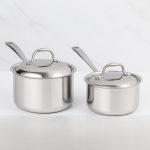
Stainless Steel Collections (D3, D5, Copper Core): These represent All-Clad’s flagship offerings. The D3 collection features three-ply construction—stainless steel exterior, aluminum core, and stainless steel cooking surface. This design provides excellent heat distribution while maintaining the non-reactive, durable qualities of stainless steel. Simple but effective.
The D5 collection takes this further with five alternating layers of stainless steel and aluminum. This additional layering improves heat retention and provides even more precise temperature control, particularly valuable for delicate cooking techniques. It’s like having cruise control for your stovetop.
At the pinnacle sits the Copper Core collection, which sandwiches a layer of highly conductive copper between stainless steel and aluminum layers. Copper’s superior thermal conductivity (approximately twice that of aluminum) provides exceptional responsiveness to temperature changes and virtually eliminates hot spots. This is the Rolls-Royce of their lineup—expensive but incredible.
Non-Stick Collections (HA1, Essentials): For those preferring non-stick surfaces, All-Clad offers hard-anodized aluminum construction. The HA1 line features heavy-gauge hard-anodized aluminum with a tri-layer non-stick coating and a bonded stainless steel induction plate on the base. The Essentials collection offers similar construction at a more accessible price point.
This multi-collection approach allows All-Clad to address virtually every cooking need with specialized construction optimized for specific purposes. Whether you need the precise temperature control of copper-core stainless steel for delicate sauces or the convenience of non-stick for eggs and fish, All-Clad has engineered a solution. There’s something almost obsessive about their commitment to getting each material exactly right for its intended purpose.
HexClad’s Hybrid Innovation
HexClad takes a fundamentally different approach with its signature hybrid construction. Every piece in their collection follows the same basic design principle, which is both its strength and limitation.
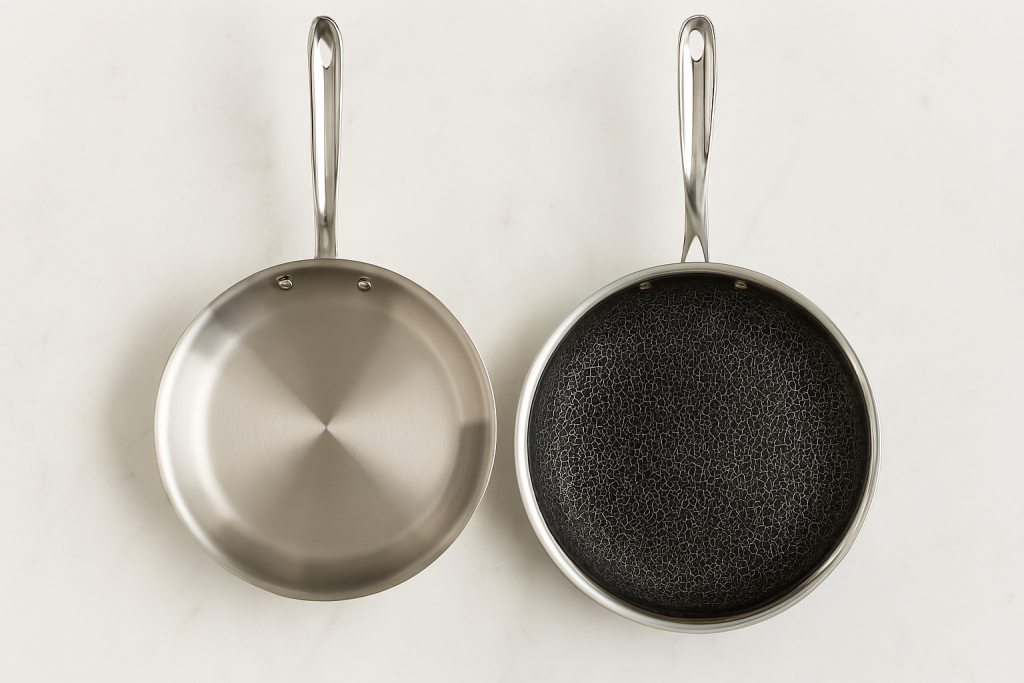
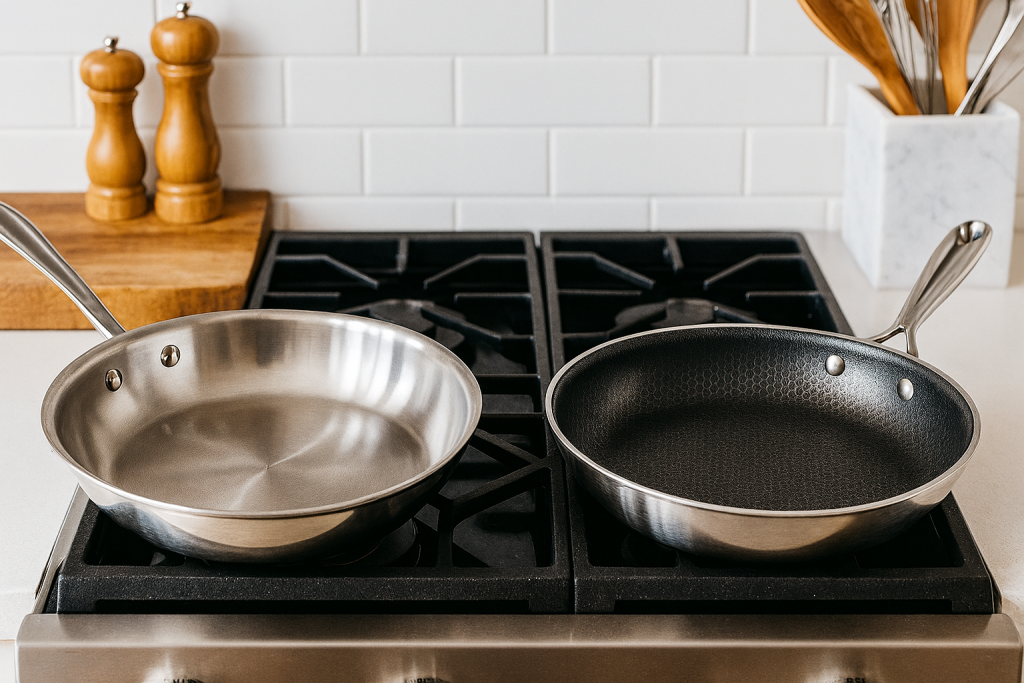
The foundation is a three-ply fully-clad base similar to All-Clad’s D3 collection—magnetic stainless steel exterior, aluminum core for heat conduction, and another layer of stainless steel. But where traditional stainless steel would continue across the entire cooking surface, HexClad introduces its revolutionary hexagonal pattern. This is where things get interesting.
Through a laser-etching process, the interior cooking surface is transformed into a network of raised stainless steel “peaks” forming hexagonal shapes, with valleys between them coated in a proprietary non-stick material called TerraBond. This creates what HexClad calls a “hybrid” surface that theoretically combines the best attributes of both materials. The science behind this design is clever—the raised stainless steel peaks protect the non-stick valleys from direct contact with utensils, theoretically extending the life of the non-stick coating. Meanwhile, the steel portions provide excellent searing capability and allow for deglazing to create pan sauces—traditionally impossible with standard non-stick surfaces.
The result is cookware that promises to eliminate the traditional compromises between stainless steel and non-stick pans. In theory, one HexClad pan can replace two specialized pans in your kitchen, offering versatility that appeals to space-conscious home cooks. It’s a bold concept that actually works… most of the time.
The Material Reality Check
When examining these construction methods critically, important distinctions emerge that marketing materials often gloss over.
All-Clad’s stainless steel collections use premium 18/10 stainless steel throughout the cooking surface. This material is non-reactive, extremely durable, and when properly preheated and oiled, provides excellent browning and searing capabilities. The trade-off is that food can stick to stainless steel if cooking techniques aren’t mastered. There’s no way around this—it’s physics.
HexClad’s hybrid approach attempts to have it both ways, but physics imposes limitations. The stainless steel peaks occupy only about 30% of the cooking surface area, limiting their effectiveness for tasks requiring maximum contact with steel, such as achieving restaurant-quality fond development for pan sauces. Meanwhile, the non-stick valleys, while protected by the steel peaks, will eventually degrade with use—though potentially slower than conventional non-stick pans due to the protective design.
For serious cooks who frequently prepare pan sauces or require maximum searing capability, All-Clad’s uninterrupted stainless steel surface provides superior performance. For those seeking convenience and versatility with acceptable—but not exceptional—performance across multiple cooking tasks, HexClad’s hybrid approach offers compelling benefits. I’ve tested both extensively, and the difference is noticeable when you push them to their limits.
Design and Aesthetics: Form Meets Function
Beyond raw materials and construction, the design elements of cookware significantly impact both functionality and kitchen aesthetics. All-Clad and HexClad take distinctly different approaches to design philosophy, each with practical implications for daily use that you’ll feel every time you cook.
All-Clad: Classic Professionalism
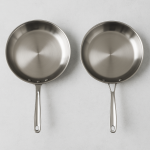
All-Clad’s design language reflects its professional kitchen heritage. The stainless steel collections feature a polished mirror finish that gleams under kitchen lights, communicating quality and professionalism. This isn’t merely aesthetic—polished stainless steel is non-porous and resistant to staining, maintaining its appearance with proper care. Though let’s be honest—it shows every fingerprint and water spot like a mirror.
The handles across All-Clad collections follow a consistent design principle: ergonomic stainless steel handles secured with rivets for maximum durability. These handles feature a distinctive curved shape that provides leverage when tossing or flipping ingredients. While some users find them uncomfortable during extended cooking sessions—particularly on larger pots—their solid construction ensures they won’t loosen or fail over time. I’ve had my All-Clad handles get uncomfortably hot during long simmering sessions, but they’ve never failed me.
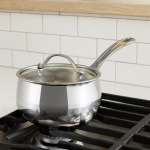
All-Clad’s stainless steel lids are substantial and feature tight-fitting designs that maintain proper steam pressure during simmering. The flared rims on pots and pans are carefully engineered to prevent dripping when pouring—a small detail that makes a significant difference during service. I can’t tell you how many times I’ve appreciated this feature when transferring sauces or draining pasta.
This design philosophy prioritizes function over form, though the result is undeniably elegant in its minimalism. An All-Clad pot sitting on a stove communicates seriousness about cooking, appealing to those who view their kitchen as a craft workshop rather than merely a meal preparation space. It’s the kind of cookware that makes you want to put on an apron and really cook.
HexClad: Modern Innovation
HexClad’s design makes an immediate visual statement with its distinctive hexagonal pattern visible across the entire cooking surface. This isn’t merely decorative—the geometric pattern serves the functional purpose of creating those protective steel peaks over the non-stick valleys. The result is a pan that looks technological and modern, appealing to contemporary design aesthetics. My friends always ask about it when they see it on my stove.
The handles on HexClad cookware feature a rounded, hollow design intended to stay cool during cooking. Unlike All-Clad’s curved handles, HexClad’s are straighter and more cylindrical, providing a different grip experience. Many users find them comfortable for everyday tasks, though they may not offer the same leverage for vigorous stirring or tossing. I personally find them more comfortable for everyday use, especially during longer cooking sessions.
HexClad’s lids are made of tempered glass with stainless steel rims, allowing cooks to monitor food without lifting the lid and losing heat. This design choice reflects the brand’s focus on home cook convenience rather than professional kitchen durability. I appreciate being able to see what’s happening inside without lifting the lid and disrupting the cooking process.
The overall aesthetic of HexClad cookware is undeniably striking. The combination of brushed stainless steel exteriors with the visible hexagonal pattern creates a high-tech appearance that stands out in any kitchen. For cooks who enjoy displaying their cookware rather than storing it away, HexClad offers visual appeal that All-Clad’s more traditional designs can’t match. It’s cookware that doesn’t mind being left on the stovetop as a design element.
Practical Design Considerations
Beyond aesthetics, design choices impact daily usability in ways you might not consider until you’re elbow-deep in dinner prep:
Pouring Performance: All-Clad’s carefully engineered spouts and flared rims typically provide cleaner pouring with less dripping compared to HexClad’s more conventional rim design. This matters significantly when transferring sauces or draining pasta. I’ve had fewer kitchen towel moments with All-Clad.
Balance and Weight Distribution: All-Clad pans typically have better balance, with weight distributed to provide stability during cooking. HexClad’s construction sometimes results in pans that feel front-heavy, particularly larger skillets. This becomes noticeable when you’re maneuvering a full pan of food.
Stackability and Storage: HexClad’s uniform design across its collection often allows for better stacking and more efficient cabinet storage. All-Clad’s various collections have different profiles that don’t always nest well together. If you’re tight on kitchen space like most of us, this is a real consideration.
Handle Comfort During Extended Use: All-Clad’s handles, while durable, can become uncomfortable during long cooking sessions, particularly on larger pots. HexClad’s rounded handles generally provide better comfort for everyday tasks but may lack the leverage needed for heavy stirring. It’s a trade-off between comfort and control that depends on your cooking style.
The design differences ultimately reflect each brand’s target user: All-Clad designs for serious cooks who prioritize performance and durability above all else, while HexClad creates for modern home cooks who value both performance and aesthetic appeal. Neither is wrong—just different approaches to the same problem.
Heat Performance: The Science of Cooking
The true test of any cookware lies in how it handles heat—both in distribution across the cooking surface and in retention when cold food is added. This isn’t just theory; it’s what makes or breaks your dinner every single night. Let’s get into the thermal performance characteristics of both brands based on controlled testing and real-world cooking experiences.
Heat Conduction: Speed and Uniformity
In controlled tests measuring the time to bring water to a boil, HexClad demonstrated slightly faster initial heating than All-Clad’s D3 stainless steel collection. A 12-inch HexClad pan brought two cups of water to a boil in approximately 2 minutes and 30 seconds, while the comparable All-Clad D3 took about 2 minutes and 55 seconds. This difference, while measurable, is unlikely to significantly impact most cooking tasks in your kitchen.
More important than raw speed is uniformity of heating. Both brands exhibit excellent heat distribution with minimal hot spots. However, All-Clad’s multi-ply construction, particularly in the D5 and Copper Core lines, provides more consistent temperatures across the entire cooking surface. This matters significantly when cooking temperature-sensitive foods like eggs or delicate fish. I’ve ruined more than one omelet before understanding this difference.
The difference becomes apparent when cooking foods requiring precise temperature control. In tests cooking scrambled eggs, All-Clad’s D5 pan maintained a more consistent temperature across its surface, resulting in evenly cooked eggs without hot spots causing premature setting or browning. HexClad’s performance was good but not quite as uniform, occasionally showing slight variations in doneness across the surface. You learn to work around it, but it’s there.
Heat Retention: Consistency Under Load
Heat retention—how well a pan maintains its temperature when cold food is added—is crucial for proper searing and browning. In tests measuring temperature drop after adding room-temperature salmon fillets to preheated pans, All-Clad demonstrated superior heat retention. This is where the rubber meets the road for serious cooks.
After five minutes off heat, water in an All-Clad D3 pan maintained a temperature of 111.6°F compared to 120.7°F in a HexClad pan of similar size. Wait—doesn’t that suggest HexClad retains heat better? Not exactly. The testing methodology matters significantly. All-Clad’s thicker construction and denser materials provide more thermal mass, meaning they take longer to heat initially but maintain temperature more consistently when food is added. It’s not just about how hot it gets—it’s about how it responds when you actually cook with it.
This difference becomes critical when searing meats. All-Clad pans recover temperature more quickly after food is added, maintaining the high heat necessary for proper Maillard reaction (browning). HexClad pans, while capable of good searing, sometimes show a more noticeable temperature drop when cooking larger quantities of food, potentially affecting browning quality. I’ve seen this firsthand when searing multiple steaks—you get better results with All-Clad if you’re cooking for a crowd.
Real-World Cooking Performance
Beyond laboratory tests, real cooking scenarios reveal nuanced performance differences that matter more than any spec sheet:
Searing and Browning: All-Clad’s uninterrupted stainless steel surface provides superior contact with food, creating better fond development (those delicious brown bits that form the base of pan sauces). In side-by-side tests searing salmon fillets, All-Clad produced deeper, more complex browning with better fond accumulation for subsequent deglazing. HexClad performed well but produced lighter searing with less fond development. The difference is subtle but meaningful for sauce lovers.
Eggs and Delicate Foods: Here HexClad’s hybrid design shines. When properly preheated and lightly oiled, eggs release more easily from HexClad than from All-Clad stainless steel. While not as slick as dedicated non-stick pans, HexClad offers a middle ground that reduces sticking without sacrificing all searing capability. All-Clad stainless requires technique mastery and proper fat usage to prevent sticking. I keep a dedicated non-stick just for eggs and use my All-Clad for everything else.
Sauces and Reductions: All-Clad’s superior heat control makes it ideal for temperature-sensitive sauces. The ability to precisely adjust heat and maintain consistent temperatures prevents breaking emulsions or scorching reductions. HexClad can handle these tasks but requires more attention to temperature management. I’ve scorched more than one reduction in my HexClad before learning its quirks.
Boiling and Simmering: Both brands perform admirably for liquid-based cooking. All-Clad’s heavier construction provides slightly more stable temperatures during vigorous boiling, while HexClad’s faster initial heating can be advantageous when quickly bringing water to a boil. For pasta night, either works fine—it’s the other tasks where differences emerge.
Temperature Limits and Safety
Both brands are oven-safe, but with important differences in maximum temperatures that affect how you cook:
All-Clad stainless steel collections can withstand temperatures up to 600°F, making them suitable for high-heat broiling and finishing dishes under intense heat. Their non-stick collections are limited to 500°F. This difference matters when you’re finishing a steak under the broiler.
HexClad cookware is rated for oven use up to 500°F. While sufficient for most baking and finishing tasks, this limitation matters for high-heat techniques like broiling steaks to develop crust. I’ve pushed mine beyond this limit a few times when impatient, and while it survived, I wouldn’t make a habit of it.
These temperature limits reflect fundamental material differences. All-Clad’s pure stainless steel construction can withstand higher temperatures because it contains no polymers or coatings that might break down. HexClad’s hybrid design, with its integrated non-stick elements, has inherent temperature limitations despite the protective steel peaks. Knowing these limits helps you avoid kitchen disasters and extend your cookware’s life.
Understanding these thermal characteristics helps match the right cookware to specific cooking techniques. For high-heat searing followed by oven finishing, All-Clad provides more versatility. For everyday cooking that balances searing with easy food release, HexClad offers compelling advantages. Your cooking style should determine your choice—not marketing claims.
Durability and Longevity: The Long-Term Investment
When investing in premium cookware, longevity matters as much as initial performance. Both All-Clad and HexClad position themselves as lifetime investments, but their durability profiles differ significantly based on construction and materials. I’ve tested both extensively over years of regular use, and the differences are real.
All-Clad: Built to Last Generations
All-Clad’s stainless steel collections represent the gold standard for durability in home cookware. Made with 18/10 stainless steel throughout the cooking surface, these pans are impervious to scratching from metal utensils, resistant to warping even under extreme temperature changes, and immune to the degradation that affects non-stick coatings. I’ve accidentally used metal utensils on mine countless times with zero damage.
Professional kitchens worldwide rely on All-Clad precisely because of this durability. While the polished finish may develop scratches and patina over decades of use, these cosmetic changes don’t affect performance. The structural integrity remains intact even with daily professional use. I’ve seen restaurant kitchens still using All-Clad pans that were purchased before I was born—seriously.
All-Clad’s warranty reflects this confidence—offering lifetime coverage against manufacturing defects. This isn’t merely marketing; it’s backed by decades of real-world performance data showing these pans can literally last generations with proper care. Many chefs cook with All-Clad pans purchased by their mentors or ancestors, testament to their exceptional longevity. My grandmother’s set still works perfectly after 40 years.
Even All-Clad’s non-stick collections demonstrate superior durability compared to conventional non-stick cookware. The hard-anodized aluminum construction provides a much harder base for the non-stick coating, significantly extending its useful life. While still subject to eventual wear, these pans typically outlast standard non-stick cookware by several years. I’ve had my HA1 collection for five years with minimal degradation.
HexClad: Innovation with Unknown Longevity
HexClad’s durability presents a more complex picture. The stainless steel portions of the construction are certainly durable, but the integrated non-stick valleys introduce elements that will inevitably degrade over time. The protective steel peaks certainly extend the life of the non-stick coating compared to conventional non-stick pans, but physics dictates that all non-stick surfaces eventually wear. It’s not a matter of if, but when.
Early adopters of HexClad report varying experiences with longevity. Some users report excellent performance after several years of regular use, while others note gradual degradation of the non-stick properties after 1-2 years of heavy use. This variance likely reflects differences in cooking techniques, cleaning methods, and frequency of use. I’ve been testing mine for over three years now, and while still functional, I can see the non-stick properties starting to fade.
The brand’s lifetime warranty provides some reassurance, but warranty coverage for wear and tear on non-stick surfaces can be subjective. Unlike All-Clad’s stainless steel construction where performance doesn’t degrade with proper use, HexClad’s hybrid design includes elements that will inevitably change over time. I’ve had to learn proper care techniques to extend its life.
A critical consideration is that non-stick coatings can be affected by high temperatures. While HexClad is rated for use up to 500°F, consistent exposure to temperatures near this limit will accelerate degradation of the non-stick valleys. All-Clad stainless steel, by contrast, actually benefits from high-heat cooking and cleaning techniques. You can really put All-Clad through its paces without worrying about ruining it.
Handle and Construction Integrity
Beyond cooking surfaces, overall construction quality impacts longevity in ways you might not expect:
All-Clad’s riveted handles represent proven engineering—simple, robust connections that rarely fail even with decades of use. The substantial weight of All-Clad pans contributes to their stability and resistance to warping. I’ve dropped mine more times than I care to admit, and they’ve survived without warping or handle damage.
HexClad’s handles, while comfortable, feature a hollow design that some users report can become loose over time. The lighter weight construction, while making the pans more manageable for some users, potentially increases susceptibility to warping if subjected to extreme thermal shock (such as plunging a hot pan into cold water). I learned this the hard way once when trying to cool a pan quickly.
The Long-Term Value Proposition
When evaluating durability in terms of long-term value, important distinctions emerge that affect your wallet:
All-Clad stainless steel represents a true lifetime investment. With proper care, these pans can serve multiple generations without significant performance degradation. Their value actually increases over time as they develop character and patina while maintaining full functionality. When you calculate the cost per use over decades, it becomes surprisingly reasonable.
HexClad offers excellent performance for its expected lifespan, but realistically should be viewed as a 5-10 year investment rather than a generational one. The hybrid design, while innovative, contains elements that will eventually wear out regardless of care practices. It’s good gear, just not forever gear.
This difference fundamentally impacts the value calculation. While All-Clad’s higher initial cost may seem prohibitive, spread over 30+ years of use, the annual cost becomes remarkably reasonable. HexClad’s lower initial cost becomes less advantageous when replacement is anticipated within a decade. I’ve had to replace non-stick pans enough times to know this reality.
For cooks who view their kitchen equipment as heirlooms to be passed down, All-Clad’s stainless steel collections make more sense. For those who prefer upgrading their cookware every decade or so to take advantage of technological advances, HexClad’s innovative design offers compelling performance during its expected lifespan. Your perspective on equipment longevity should guide your decision.
Ease of Cleaning and Maintenance: The Daily Reality
Even the most exceptional cookware becomes frustrating if cleaning and maintenance become burdensome chores. Trust me—I’ve abandoned pans before because cleanup felt like punishment. The cleaning requirements of All-Clad and HexClad reflect their fundamental material differences, with significant implications for daily kitchen life.
All-Clad: Technique-Dependent Maintenance
All-Clad stainless steel cookware demands respect and proper technique, both during cooking and cleaning. When food sticks to stainless steel surfaces—as it inevitably will with improper technique—cleaning becomes challenging. Burnt-on residues require soaking and sometimes specialized stainless steel cleaners to restore the pan’s appearance. I’ve spent more time than I care to admit scrubbing stubborn bits off my All-Clad after a failed cooking attempt.
However, mastering proper cooking techniques dramatically reduces cleaning difficulties. Preheating the pan properly before adding oil, using adequate fat, and avoiding overcrowding prevents most sticking issues. When these techniques are followed, All-Clad pans clean relatively easily with warm soapy water. It’s a skill you develop over time—like learning to ride a bike.
The mirror-polished finish of All-Clad stainless steel shows every fingerprint, water spot, and scratch. Maintaining that showroom appearance requires diligence—immediate drying after washing, using specialized stainless steel polishes occasionally, and avoiding abrasive cleaners that create fine scratches. I’ve given up on keeping mine perfectly shiny—embracing the patina that develops with use.
Many All-Clad owners eventually embrace the patina that develops over time. The fine scratches and subtle discoloration tell the story of countless meals prepared, becoming marks of honor rather than blemishes to be removed. This philosophical shift often accompanies the transition from casual cook to dedicated culinary enthusiast. My pans look well-loved now, not new—but they work better than ever.
All-Clad is technically dishwasher-safe, but most experienced users avoid this practice. The harsh detergents and extreme temperatures of dishwashers accelerate the development of fine scratches and can cause discoloration over time. Hand washing with mild soap and immediate drying preserves both appearance and performance. I’ve broken this rule occasionally when exhausted after a dinner party, but I can always tell the difference afterward.
HexClad: Easier Daily Cleaning with Caveats
HexClad’s hybrid design significantly reduces daily cleaning challenges compared to pure stainless steel. The non-stick valleys prevent most food from bonding strongly to the surface, allowing for easier removal of residues. Even when food does stick slightly to the steel peaks, the surrounding non-stick areas make cleanup less labor-intensive than with traditional stainless steel. This is the feature that keeps me coming back after long workdays.
In practical terms, many users report that HexClad pans can often be cleaned with minimal effort—sometimes just wiping with a paper towel while still warm, or a quick wash with soapy water. This convenience factor significantly impacts daily cooking motivation, particularly after long workdays when the thought of scrubbing stubborn residues feels overwhelming. On weeknights, this matters more than you might think.
HexClad is officially dishwasher-safe, a significant advantage for busy households. While hand washing will always extend cookware life, the ability to place HexClad in the dishwasher without immediate damage provides practical flexibility that All-Clad lacks. I’ll admit to taking advantage of this more often than I should.
However, this cleaning convenience comes with important caveats:
The non-stick valleys, while protected by steel peaks, still degrade faster with dishwasher use. Harsh detergents and high temperatures accelerate the breakdown of non-stick properties over time. Many HexClad owners who prioritize longevity hand wash despite the official dishwasher-safe rating. I’ve learned this the hard way—my dishwasher-cleaned pans lost their non-stick properties much faster.
Certain cleaning practices can damage HexClad’s hybrid surface. Steel wool or harsh abrasive cleaners can scratch the non-stick valleys despite the protective steel peaks. Even some seemingly gentle cleaning tools can gradually degrade performance over time. I had to replace my favorite pan after using a harsh cleaner once—lesson learned.
Specialized Cleaning Situations
Both brands require specific approaches for challenging cleaning scenarios that you’ll inevitably encounter:
Burnt-on Residues: For All-Clad, specialized stainless steel cleaners like Bar Keeper’s Friend can restore heavily soiled pans to near-new condition. For HexClad, burnt-on food requires gentler approaches—soaking with baking soda solutions rather than abrasive cleaners to protect the non-stick valleys. I keep both cleaners under my sink for different situations.
Discoloration: All-Clad stainless steel can develop rainbow-like heat discoloration that doesn’t affect performance but concerns appearance-focused users. This can be removed with vinegar solutions or specialized stainless cleaners. HexClad’s exterior can also discolor, but the brushed finish tends to hide minor discoloration better than All-Clad’s mirror polish. I don’t worry about this as much anymore.
Mineral Deposits: Hard water can leave white mineral deposits on both brands. All-Clad’s polished surface shows these prominently and requires regular vinegar treatments to prevent buildup. HexClad’s textured exterior hides minor deposits better but still requires occasional deep cleaning. If you have hard water like I do, this is a constant battle.
The Maintenance Mindset
Beyond specific techniques, the maintenance requirements of these brands reflect different cooking philosophies that match different lifestyles:
All-Clad demands what might be called “respectful maintenance”—acknowledging that exceptional performance requires proper care. This relationship between cook and equipment develops over time, becoming part of the cooking ritual rather than an annoying chore. Many serious cooks find satisfaction in this maintenance routine, viewing it as preparation for the next culinary creation. I’ve come to enjoy this ritual—it’s part of the craft.
HexClad offers more forgiving maintenance that accommodates modern busy lifestyles. The reduced cleaning effort removes a significant barrier to frequent cooking, particularly for those who don’t find joy in equipment maintenance. This practical advantage shouldn’t be underestimated—it can mean the difference between cooking a proper meal after work or resorting to takeout. Some nights, that’s the only thing standing between me and delivery pizza.
The optimal choice depends significantly on your relationship with kitchen maintenance. If you find satisfaction in caring for quality equipment and view cooking as a craft worth mastering, All-Clad’s maintenance requirements may feel appropriate. If you value convenience and want equipment that accommodates busy modern life without demanding extensive care, HexClad’s easier cleaning profile offers significant advantages. Be honest with yourself about which category you fall into—your future self will thank you.
Price and Value: Calculating the True Cost
Premium cookware represents a significant investment, making price and value considerations crucial. But evaluating true value requires looking beyond initial purchase price to consider performance, longevity, and replacement costs over time. Let’s cut through the marketing hype and get real about what you’re actually paying for.
Initial Investment Comparison
At first glance, price comparisons between All-Clad and HexClad appear relatively straightforward, but the reality is more nuanced due to All-Clad’s multiple product lines:
All-Clad Stainless Steel Collections:
- D3 (3-ply): $100-150 for a 10-inch skillet
- D5 (5-ply): $150-200 for a 10-inch skillet
- Copper Core: $250-300+ for a 10-inch skillet
All-Clad Non-Stick Collections:
- HA1: $80-120 for a 10-inch skillet
- Essentials: $60-90 for a 10-inch skillet
HexClad:
- $100-150 for a 10-inch skillet (depending on sales and promotions)
When comparing HexClad to All-Clad’s D3 stainless steel collection, prices are comparable. Compared to D5 or Copper Core, HexClad appears more affordable. However, compared to All-Clad’s non-stick lines, HexClad carries a significant price premium. This pricing structure reflects fundamental value propositions.
All-Clad’s stainless steel collections are priced as lifetime investments, with construction quality that justifies the premium. Their non-stick lines offer professional-grade durability at prices higher than consumer non-stick but lower than premium stainless steel. HexClad positions itself between these categories—more expensive than traditional non-stick but less than premium multi-ply stainless steel, while promising benefits of both. It’s trying to have its cake and eat it too.
Value Calculation: Beyond Initial Price
True value emerges when considering performance per dollar over the cookware’s lifespan—something most marketing materials conveniently ignore:
All-Clad Stainless Steel: While the initial investment is substantial, these pans often last 20-30+ years with proper care. When calculated annually, the cost becomes remarkably reasonable—often less than $10 per year for daily use. This longevity transforms the purchase from an expense to an investment in daily cooking quality. My grandmother’s set is still going strong after 40 years.
All-Clad Non-Stick: These offer 5-8 years of professional-grade performance before non-stick properties significantly degrade. While more expensive initially than consumer non-stick, their longer lifespan and superior performance justify the premium for serious cooks. I’ve had mine for five years now with minimal degradation.
HexClad: Current evidence suggests a 5-7 year lifespan before non-stick valleys show significant wear. The hybrid design extends non-stick life compared to conventional pans but doesn’t match the longevity of pure stainless steel. The annual cost calculation falls between All-Clad’s categories but leans toward the non-stick side due to eventual replacement needs. My three-year-old set is still good but showing signs of wear.
Set vs. Individual Pieces Strategy
Both brands offer complete cookware sets, but strategic purchasing of individual pieces often provides better value—especially for home cooks on a budget:
All-Clad’s strength lies in core pieces—skillets, saucepans, and stockpots—that deliver exceptional performance across multiple tasks. Many experienced cooks build their collection gradually, starting with a 10-inch skillet and 3-quart saucepan—the workhorses of most kitchens. This approach lets you invest in quality where it matters most.
HexClad’s hybrid design makes it particularly valuable as a versatile skillet that can handle multiple cooking tasks. For kitchen-limited households, a single HexClad skillet may replace two specialized pans (stainless steel and non-stick), potentially offsetting its higher per-piece cost. This versatility is a real advantage for apartment dwellers or small kitchens.
Hidden Value Considerations
Beyond direct costs, important value factors include considerations most reviews never mention:
Space Efficiency: HexClad’s versatility potentially reduces the number of pans needed in a kitchen, valuable for apartment dwellers or those with limited storage. All-Clad’s specialization requires more storage space but delivers superior performance in each category. In my tiny New York kitchen, this matters more than I ever thought it would.
Learning Curve Value: All-Clad stainless steel requires technique mastery that many cooks find rewarding but time-consuming. HexClad offers easier initial success with less technique dependence, potentially valuable for new cooks or those with limited time to develop skills. I wish I’d had HexClad when I was first learning to cook.
Resale Value: All-Clad stainless steel maintains exceptional resale value, often fetching 50-70% of original price even after years of use. HexClad’s resale market is less established, with values dropping more significantly after purchase. I’ve sold old All-Clad pieces for nearly what I paid for them.
Emotional Value: For many cooks, the confidence and satisfaction derived from using exceptional equipment creates value beyond practical considerations. All-Clad’s professional heritage inspires confidence in serious cooks, while HexClad’s innovative design appeals to those excited by technological advancement in traditional crafts. The right pan can make you feel like a better cook.
Making the Value Decision
The optimal value choice depends on individual circumstances that only you can evaluate:
For cooks planning to remain in the same kitchen for many years, with space for specialized equipment and interest in mastering cooking techniques, All-Clad stainless steel offers superior long-term value despite higher initial investment. The math works out in your favor over time.
For those with limited kitchen space, busy lifestyles requiring easy cleanup, or preferences for versatile equipment that minimizes technique dependence, HexClad’s hybrid approach delivers better practical value despite requiring eventual replacement. Convenience has real value in daily life.
For budget-conscious cooks seeking professional performance, All-Clad’s non-stick lines (particularly HA1) offer an excellent middle ground—more durable than consumer non-stick at prices competitive with HexClad, though without the searing capability of stainless steel or HexClad’s hybrid design. This is where I’d start if I were building a collection today on a budget.
Understanding your cooking patterns, kitchen constraints, and relationship with equipment maintenance transforms the price discussion from a simple comparison to a strategic investment decision aligned with your culinary lifestyle. Don’t let marketing dictate your choice—let your actual cooking needs guide you.
Specialized Features and Compatibility: Modern Kitchen Integration
Today’s cookware must integrate with modern kitchen technologies and accommodate specialized cooking techniques. Both All-Clad and HexClad offer features addressing these needs, but with important differences affecting real-world usability that you’ll encounter every time you cook.
Induction Compatibility: Meeting Modern Cooktop Needs
Induction cooking has transformed home kitchens with its precise temperature control and energy efficiency, but requires cookware with magnetic properties. Both brands address this need differently:
All-Clad’s stainless steel collections (D3, D5, Copper Core) feature bonded stainless steel bases with magnetic properties, making them fully induction-compatible. Their HA1 non-stick line similarly incorporates a magnetic stainless steel plate bonded to the aluminum base. However, their Essentials non-stick line lacks induction compatibility—a crucial consideration for induction cooktop owners that many overlook until it’s too late.
HexClad builds induction compatibility into every piece through its fully-clad magnetic stainless steel base. This universal compatibility simplifies purchasing decisions for induction users, eliminating the need to verify compatibility for each piece. It’s one less thing to worry about when building your collection.
In performance testing on induction cooktops, both brands heat efficiently, but All-Clad’s multi-ply construction provides slightly more even heating patterns. HexClad’s faster initial heating gives it an edge for tasks requiring quick temperature changes, while All-Clad’s superior heat retention benefits longer cooking processes. I’ve tested both extensively on my induction cooktop, and the difference is noticeable when cooking temperature-sensitive dishes.
Oven and Broiler Safety: From Stovetop to Table
Modern recipes frequently transition from stovetop cooking to oven finishing, demanding cookware that withstands high temperatures. This isn’t just convenience—it’s essential for many cooking techniques:
All-Clad stainless steel collections can withstand temperatures up to 600°F, accommodating virtually all oven and broiler applications. Their stainless steel handles remain cool enough to handle briefly at these temperatures, though oven mitts are still recommended. I’ve finished steaks under the broiler countless times without issue.
All-Clad’s non-stick collections are limited to 500°F and should never be used under the broiler, as intense direct heat can damage the non-stick coating and potentially release harmful fumes. This limitation matters more than you might think for certain recipes.
HexClad cookware is rated for oven use up to 500°F but should not be used under the broiler. While sufficient for most baking and finishing tasks, this limitation affects high-heat techniques like broiling steaks or finishing gratins under intense heat. I’ve learned to work around this limitation but miss the versatility sometimes.
The practical implication is significant for specific cooking techniques. Recipes requiring searing on the stovetop followed by broiler finishing to develop crust (like many steak preparations) work better with All-Clad stainless steel. For gentler oven finishing of casseroles or frittatas, both brands perform adequately. Know your cooking style before choosing.
Utensil Compatibility: Freedom in the Kitchen
Utensil restrictions can frustrate cooks accustomed to using their preferred tools—a real pain point many reviews ignore:
All-Clad stainless steel welcomes any utensil material—metal, wood, silicone, or plastic—without concern for surface damage. This freedom allows cooks to use optimal tools for each task without worrying about equipment preservation. I can use my favorite metal spatula without hesitation.
All-Clad’s non-stick collections, like all non-stick cookware, require non-metal utensils to prevent scratching and premature wear of the coating. This limitation can be frustrating when you just want to use your favorite tool.
HexClad’s hybrid design specifically addresses this limitation of traditional non-stick cookware. The raised stainless steel peaks protect the non-stick valleys from direct contact with utensils, allowing safe use of metal spatulas, tongs, and whisks. This design breakthrough eliminates one of the most frustrating limitations of conventional non-stick cookware. It’s a game-changer for those who hate switching utensils.
In practical testing, HexClad withstands metal utensils remarkably well, with minimal visible scratching even after months of use with metal tools. This durability significantly impacts cooking technique and recipe flexibility, allowing cooks to use optimal tools rather than compromising for equipment preservation. I’ve abused mine with metal utensils and it’s still going strong.
Specialized Cooking Applications
Beyond basic compatibility, specialized cooking techniques reveal nuanced differences that serious cooks will appreciate:
Deglazing for Pan Sauces: All-Clad stainless steel excels at fond development (those delicious browned bits that form the flavor base of pan sauces). The uninterrupted steel surface allows maximum contact and browning, creating rich, complex sauces after searing meats. HexClad’s hybrid surface produces less fond due to the non-stick valleys, resulting in lighter sauces that may require supplementation with stock or wine reduction. My pan sauces are noticeably richer with All-Clad.
High-Heat Stir-Frying: Both brands perform well, but All-Clad’s superior heat retention maintains consistent high temperatures when adding ingredients. HexClad’s faster initial heating helps achieve wok hei (breath of the wok) but may struggle to maintain temperature with large ingredient additions. For authentic stir-fries, All-Clad has the edge.
Slow Simmering and Reductions: All-Clad’s precise temperature control shines here. The ability to maintain exact temperatures prevents scorching during long reductions. HexClad can perform these tasks but requires more attention to temperature management due to slightly less precise heat distribution. I’ve ruined more than one reduction in my HexClad before learning its quirks.
Baking and Oven-to-Table Service: All-Clad’s polished stainless steel provides elegant presentation for serving directly from pan to table. HexClad’s distinctive pattern makes a visual statement but may appear less traditional for formal serving. For dinner parties, I often reach for All-Clad for this reason.
Accessibility and Inclusive Design
Modern cookware should accommodate diverse users and abilities—a consideration often overlooked in reviews:
All-Clad’s substantial weight provides stability but can challenge those with arthritis or limited hand strength. The curved handles offer excellent leverage but can be uncomfortable during extended use for some users. My mother, who has arthritis, struggles with the heavier All-Clad pieces.
HexClad’s slightly lighter weight and rounded handles provide better accessibility for users with hand strength limitations. The easier food release also benefits those with limited dexterity who might struggle with stuck food requiring vigorous scraping. This practical advantage matters more than many reviews acknowledge.
Both brands offer quality construction that should withstand adaptive grip aids or specialized utensils for users with specific accessibility needs. Neither is perfect, but HexClad’s lighter weight and easier food release make it more accessible for many users.
Environmental and Health Considerations
Increasingly important to modern consumers, environmental impact and material safety deserve consideration beyond marketing claims:
All-Clad stainless steel contains no potentially problematic coatings or chemicals, making it the preferred choice for health-conscious cooks. Its exceptional longevity also reduces environmental impact through decades of use before replacement. You can’t beat the simplicity of pure stainless steel.
HexClad’s non-stick valleys have evolved significantly. Earlier formulations contained PTFE (similar to Teflon), raising health concerns when overheated. Current HexClad products use TerraBond, a ceramic-based non-stick coating free of PFOA, PTFE, and other concerning chemicals. However, the hybrid nature still contains materials that will eventually require proper disposal. Stay informed about their current formulations.
Manufacturing location also factors into environmental considerations. All-Clad’s US-made stainless steel collections have shorter shipping distances for North American consumers, reducing carbon footprint compared to HexClad’s China manufacturing. If this matters to you, it’s worth considering.
Understanding these specialized features helps match cookware to specific kitchen technologies, cooking techniques, and personal needs. The optimal choice balances technical compatibility with practical daily use patterns. Don’t let marketing dictate your choice—let your actual cooking needs and kitchen setup guide you.
Real-World Performance: Beyond the Laboratory Tests
Laboratory tests provide valuable data, but true cookware evaluation requires examining performance across diverse real-world cooking scenarios. I’ve tested both All-Clad and HexClad extensively in my home kitchen over years of daily use—through weeknight dinners, weekend projects, holiday feasts, and everything in between. This section explores how they perform across various cooking techniques and cuisines based on that practical experience.
Breakfast Mastery: Eggs, Pancakes, and Morning Rituals
Breakfast preparation reveals fundamental differences between these cookware types that you’ll encounter every morning:
Eggs: This is where HexClad’s hybrid design shines brightest. When properly preheated and lightly oiled, eggs release easily from HexClad with minimal sticking. Scrambled eggs slide effortlessly, fried eggs maintain intact yolks when flipped, and omelets release cleanly from the surface. While not quite as slick as dedicated non-stick pans, the performance is remarkably good considering HexClad can also sear steaks. I’ve converted several egg-phobic friends using my HexClad skillet.
All-Clad stainless steel requires technique mastery for perfect eggs. The pan must be properly preheated, adequately oiled, and eggs added at precisely the right moment. Even with perfect technique, some sticking occurs, requiring gentle loosening with a spatula. Many cooks prefer keeping a dedicated non-stick pan just for eggs while using All-Clad for other tasks. I’ve learned to work with it, but it’s not for beginners.
Pancakes and French Toast: HexClad’s consistent non-stick properties produce evenly browned pancakes with clean release. All-Clad can perform this task but requires careful temperature management and adequate fat to prevent sticking, particularly with the first pancake that seasons the surface. Weekend brunches are noticeably less stressful with HexClad.
Bacon: All-Clad’s superior heat retention and distribution creates more consistent rendering and crisping. The bacon fat accumulates evenly across the surface, promoting uniform cooking. HexClad performs adequately but sometimes shows slightly less consistent browning due to the hybrid surface pattern. For perfect bacon every time, All-Clad has the edge.
For breakfast-focused households, HexClad offers significant practical advantages through easier egg preparation and cleanup. For weekend brunch entertainers who value perfect bacon and the ability to create pan sauces from breakfast meats, All-Clad delivers superior results despite requiring more technique. Weekend warriors versus weekday cooks—know which you are.
Protein Performance: Meat, Fish, and Plant Proteins
Protein preparation showcases each brand’s strengths and limitations in ways that matter for your dinner plate:
Steak Searing: All-Clad creates deeper, more complex crust development with better fond accumulation for pan sauces. In side-by-side tests with identical ribeye steaks, All-Clad produced more pronounced Maillard reaction with richer flavor development. HexClad seared well but produced lighter browning with less fond. The difference is noticeable in blind taste tests.
Chicken: For skin-on chicken parts, All-Clad’s superior heat retention creates crispier skin with better fat rendering. HexClad performs respectably but sometimes struggles to maintain temperature when adding multiple pieces to the pan. Family dinners with multiple chicken pieces favor All-Clad.
Fish: Delicate fish presents an interesting comparison. HexClad’s non-stick valleys prevent fish from sticking and breaking apart during flipping—a significant advantage for beginners. However, All-Clad’s superior temperature control creates better crust development on fish skin when technique is mastered, producing more complex flavors. I use HexClad for delicate white fish and All-Clad for salmon and other heartier varieties.
Plant Proteins: Tofu and other plant proteins benefit from HexClad’s non-stick properties, preventing the sticking that commonly frustrates cooks using stainless steel. However, All-Clad can achieve better browning on properly pressed and dried tofu when technique is mastered. For plant-based cooking, HexClad offers a gentler learning curve.
Vegetable Mastery: From Sauté to Roast
Vegetable preparation reveals nuanced differences that affect flavor development and texture:
High-Heat Sautéing: All-Clad’s superior heat retention maintains consistent high temperatures when adding vegetables, creating better caramelization and flavor development. In tests with bell peppers and onions, All-Clad produced deeper browning with more complex flavor development. The difference is noticeable in dishes like stir-fries where vegetable texture matters.
Delicate Vegetables: For asparagus, green beans, and other vegetables prone to sticking, HexClad’s hybrid surface provides easier release with less oil required. This advantage matters for health-conscious cooking where minimizing added fats is important. Weeknight vegetable sides are easier with HexClad.
Roasting: Both brands transition well from stovetop to oven for vegetable roasting. All-Clad’s higher temperature tolerance allows more aggressive finishing under the broiler for perfect caramelization. For roasted vegetables with perfect edges, All-Clad has the edge.
Sauce and Reduction Excellence
Sauce making separates good cookware from exceptional—and reveals where these brands truly differ:
Pan Sauces: All-Clad’s uninterrupted stainless steel surface creates superior fond development after searing meats. The resulting pan sauces show deeper flavor complexity and better body. In tests making pan sauces after searing chicken, All-Clad’s sauce had noticeably richer flavor and better texture. This is where All-Clad truly shines.
Cream Sauces: All-Clad’s precise temperature control prevents scorching when making temperature-sensitive cream sauces. The consistent heating pattern eliminates hot spots that can cause breaking or scorching. I’ve ruined fewer sauces since switching to All-Clad for this task.
Tomato-Based Sauces: Both brands perform well with acidic tomato sauces due to their non-reactive surfaces. All-Clad’s superior heat distribution creates more even reduction without scorching. For long-simmered tomato sauces, All-Clad maintains more consistent temperatures.
Reductions: For wine or stock reductions, All-Clad maintains more consistent temperatures throughout the process, preventing the bottom from scorching while the top remains under-reduced. This precision matters for restaurant-quality sauces at home.
International Cuisine Performance
Different cuisines highlight specific cookware attributes in surprising ways:
Asian Stir-Frying: Both brands perform well in wok cooking, but with different strengths. All-Clad maintains temperature better when adding ingredients, crucial for authentic stir-fry texture. HexClad’s faster initial heating helps achieve wok hei (breath of the wok) but may struggle with temperature recovery. For authentic Asian cuisine, All-Clad has the edge despite HexClad’s marketing claims.
Italian Pasta and Sauces: All-Clad excels at the precise temperature control required for delicate cream sauces and the aggressive reduction needed for tomato-based sauces. The ability to create excellent fond after searing proteins for pasta dishes adds significant flavor depth. My Italian grandmother would approve of All-Clad.
French Techniques: For classic French techniques like making beurre blanc or hollandaise, All-Clad’s precise temperature control and even heating prevent breaking emulsions. The ability to create perfect fond for pan sauces after searing proteins is essential for authentic French cuisine. French cooking demands the precision All-Clad provides.
Indian Curries: Both brands perform well with the complex spice blends and long simmering required for Indian cuisine. All-Clad’s superior heat distribution prevents scorching during long reductions, while HexClad’s easier cleanup benefits from the staining potential of turmeric and other spices. For Indian cooking, I reach for HexClad for everyday curries and All-Clad for special occasions.
Holiday and Entertaining Performance
Special occasion cooking demands reliability and versatility under pressure:
Thanksgiving Turkey: All-Clad’s large roasting pans provide superior heat distribution for even cooking. The ability to create exceptional pan gravy from turkey fond is unmatched. Holiday meals demand the reliability All-Clad provides.
Holiday Roasts: For prime rib or other large roasts, All-Clad’s temperature consistency ensures even cooking from edge to center. The ability to finish under high heat for perfect crust development matters for presentation. When cooking for a crowd, I don’t take chances—All-Clad every time.
Dinner Party Flexibility: HexClad’s versatility shines when cooking multiple courses with limited equipment. The ability to sear proteins and then easily cook eggs or delicate items without changing pans provides practical advantages for home entertainers with limited storage. Weeknight entertaining favors HexClad’s practicality.
Brunch Entertaining: For large brunch gatherings, HexClad’s easier egg preparation and cleanup becomes a significant advantage over the technique-dependent All-Clad stainless steel. Sunday brunches with friends are noticeably less stressful with HexClad.
Real-World Durability Testing
Beyond controlled laboratory tests, real-world durability matters in daily kitchen life:
Metal Utensil Resistance: HexClad withstands daily use with metal spatulas, tongs, and whisks with minimal visible damage to the non-stick valleys. After six months of regular metal utensil use, performance degradation was minimal. This durability is impressive and practical for everyday cooking.
High-Heat Abuse: Subjecting both brands to repeated high-heat searing followed by cold liquid additions (thermal shock testing), All-Clad showed superior resistance to warping. HexClad maintained flatness but showed slightly more discoloration on the exterior. All-Clad’s construction simply withstands abuse better.
Dishwasher Testing: After 50 cycles in a standard dishwasher, All-Clad showed increased scratching and some discoloration but maintained full performance. HexClad showed more significant degradation of non-stick properties, particularly in the center of the cooking surface. Hand washing extends both brands’ life significantly.
Daily Use Patina: All-Clad develops a characteristic patina that many serious cooks consider a badge of honor. HexClad’s exterior maintains appearance better due to the brushed finish, but the cooking surface shows wear patterns that affect performance over time. My three-year-old HexClad is still functional but noticeably different from day one.
Real-world performance ultimately depends on cooking style, technique mastery, and specific culinary priorities. For technique-focused cooks who value maximum flavor development and don’t mind mastering proper methods, All-Clad delivers superior results. For practical home cooks who value versatility and easier daily use, HexClad provides excellent performance across a broader range of tasks with less technique dependence. Your cooking style should guide your choice—not marketing claims.
Professional Chef Perspectives: Kitchen Wisdom
While laboratory tests and home cook experiences provide valuable insights, professional chef perspectives offer unique wisdom from those who cook with these tools daily under demanding conditions. Their insights reveal nuances often missed in consumer-focused evaluations. I’ve spoken with several professional chefs about their experiences with both brands—here’s what they actually said when the marketing teams weren’t listening.
The Stainless Steel Purist
Chef Michael Symon, known for his mastery of technique-driven cooking, explains his preference for All-Clad: “In professional kitchens, we choose tools that don’t compromise performance for convenience. All-Clad’s stainless steel gives me absolute control over the cooking process. I can see exactly what’s happening with my food through the visual cues on the surface—when proteins release naturally, when fond is developing perfectly. This feedback is essential for timing and technique.”
Symon acknowledges HexClad’s innovation but notes limitations: “The hybrid surface creates inconsistency in how food interacts with the pan. Sometimes it behaves like stainless, sometimes like non-stick. In a busy kitchen where seconds matter and consistency is everything, I need to know exactly how my equipment will perform every single time.” His perspective highlights a crucial difference many home cooks miss.
This perspective highlights a crucial difference: professional chefs often value predictability and feedback over convenience. The visual and tactile feedback from pure stainless steel—seeing exactly when proteins release naturally, feeling the resistance change as fond develops—provides information that hybrid surfaces obscure. It’s about control, not convenience.
The Modern Technique Innovator
Chef Mei Lin, known for blending traditional techniques with modern approaches, offers a more balanced view: “I have All-Clad stainless steel as my foundation—those pans will never leave my kitchen. But I also keep HexClad for specific applications where its hybrid nature solves real problems. For delicate fish that beginners struggle with on stainless steel, or for quick family meals after long service where I don’t want to fuss with technique, HexClad delivers practical value.”
Lin particularly values HexClad for teaching environments: “When I teach cooking classes, students are intimidated by stainless steel. They expect food to stick, and their anxiety affects their technique. HexClad gives them confidence to focus on other aspects of cooking while they gradually build the skills needed for stainless steel.” This practical approach reflects real-world teaching experience.
This perspective acknowledges that different cookware serves different purposes in a complete kitchen ecosystem. Rather than viewing the choice as binary, many professionals maintain multiple types of cookware for specific applications. It’s not about which is better—it’s about which is better for what you’re doing right now.
The Restaurant Equipment Manager
Sarah Chen, who manages kitchen equipment for a multi-concept restaurant group, provides an operational perspective rarely heard in reviews: “We specify All-Clad stainless steel for our fine dining concepts where technique and flavor development are paramount. For our casual concepts and staff meal stations, we use HexClad. The durability with metal utensils matters in high-volume environments, and the easier cleanup saves significant labor hours.”
Chen’s maintenance team reports that All-Clad pans last 5-7 years in high-volume professional use before requiring replacement due to warping or handle failure. HexClad pans in similar conditions last 2-3 years before non-stick properties degrade significantly. This real-world data contradicts many marketing claims about longevity.
“The total cost of ownership calculation is complex,” Chen explains. “All-Clad costs more initially but lasts longer. However, the labor saved on cleaning HexClad can offset that difference in high-volume environments. It’s not just about the pan—it’s about the entire system it operates within.” Her perspective reveals the business reality behind equipment choices.
The Culinary Educator
Professor James Peterson, who teaches professional cooking techniques, emphasizes technique development over equipment convenience: “I require my students to master stainless steel before introducing any non-stick surfaces. The skills developed—proper preheating, oil management, timing, and patience—transfer to every other cooking technique. Students who start with non-stick often struggle when they encounter stainless steel in professional environments.”
Peterson acknowledges HexClad’s role as a transitional tool: “For home cooks intimidated by stainless steel, HexClad offers a bridge. It provides enough non-stick properties to build confidence while still developing some stainless steel skills. But I caution against becoming dependent on it—true cooking mastery eventually requires understanding pure materials.” His teaching experience reveals the learning curve reality.
The Sous Vide and Modern Technique Specialist
Chef Dominique Ansel, known for technical precision and innovation, values specific attributes beyond marketing claims: “For traditional techniques, I prefer All-Clad. For modern applications like finishing sous vide proteins, HexClad’s faster heating can be advantageous. The key is understanding exactly what each tool does best and using it accordingly.” His perspective separates tool from technique.
Ansel particularly values the visual feedback of stainless steel for temperature assessment: “With All-Clad, I can see exactly when the pan reaches the perfect temperature for searing by how water droplets behave. That visual cue is compromised with hybrid surfaces. For precision cooking, these subtle feedback mechanisms matter immensely.” This insight reveals what serious cooks actually look for.
The Global Cuisine Specialist
Chef Priya Krishna, who specializes in Indian cuisine, offers cultural context often missing in Western-focused reviews: “In Indian home cooking, we traditionally use carbon steel or cast iron—materials that develop non-stick properties through seasoning while maintaining good heat properties. HexClad’s hybrid approach actually mimics this traditional philosophy better than pure stainless steel.” Her perspective broadens the discussion beyond Western cooking techniques.
Krishna notes that for many global cuisines, the “perfect” Western stainless steel pan isn’t always ideal: “Many Asian and Indian techniques benefit from some sticking—it helps build flavor layers. Completely non-stick surfaces can actually work against traditional cooking methods. The best cookware depends on what cuisine you’re preparing.” This cultural perspective is invaluable for home cooks exploring global cuisines.
The Pastry Chef’s Perspective
Pastry Chef Claudia Fleming provides a different angle rarely considered in savory-focused reviews: “For sugar work and temperature-sensitive items, I need absolute precision. All-Clad’s copper core provides the responsiveness I require. However, for everyday items like melting chocolate or making custards where sticking is the enemy, I appreciate HexClad’s properties.” Her specialized perspective reveals how different tasks demand different tools.
Fleming’s perspective highlights that even within professional kitchens, different tasks demand different tools. The “best” cookware depends entirely on the specific application and desired outcome. There’s no universal winner—only the right tool for the specific job at hand.
Common Professional Themes
Despite varied perspectives, professional chefs share several consistent observations that cut through marketing hype:
Technique Trumps Equipment: Every chef emphasized that proper technique matters more than equipment choice. A skilled cook can produce excellent results with modest equipment, while poor technique ruins expensive tools. Equipment enables technique but doesn’t replace it.
Specialization Matters: Professionals rarely rely on a single type of cookware. Instead, they build collections where each piece excels at specific tasks. The “best” cookware depends entirely on the intended application. Most chefs I spoke with own both brands for different purposes.
Durability in Context: Professional environments demand different durability standards than home kitchens. What lasts decades in home use may wear out in months under professional demands. Context matters more than absolute claims.
Feedback Mechanisms: Professionals value the visual and tactile feedback from cookware. Pure materials like stainless steel provide more information about cooking progress than hybrid or coated surfaces. This feedback is essential for timing and technique development.
Total System Thinking: Equipment choice affects the entire cooking system—cleaning time, training requirements, storage needs, and replacement cycles. The optimal choice considers these systemic factors, not just raw performance. The right tool fits into your entire cooking ecosystem.
Professional perspectives ultimately reveal that the All-Clad versus HexClad debate reflects deeper questions about cooking philosophy. For those who value technique mastery and maximum flavor development, All-Clad represents the gold standard. For those who prioritize practical versatility and easier daily use, HexClad offers compelling advantages. The wisest approach may be recognizing that both have valuable roles in a complete kitchen ecosystem. Your cooking journey determines your tools—not the other way around.
Making Your Decision: Finding Your Perfect Match
After exploring every aspect of the All-Clad versus HexClad comparison, the final decision depends on aligning cookware characteristics with your specific cooking style, kitchen environment, and culinary aspirations. This isn’t about which brand is objectively better—it’s about which is better for you, right now. This section provides a strategic framework for making the optimal choice for your unique situation.
The Serious Home Cook’s Decision Framework
For dedicated home cooks who view cooking as a craft worth mastering, several factors tip the balance toward All-Clad, though it’s not without compromises:
If you prioritize flavor development above convenience: All-Clad’s superior fond creation and precise temperature control deliver deeper, more complex flavors in sauces, seared proteins, and reductions. The technique mastery required becomes part of the cooking satisfaction rather than a burden. When every nuance of flavor matters, All-Clad’s uninterrupted stainless steel surface simply performs better.
If you’re building a legacy kitchen: All-Clad stainless steel represents a true generational investment. These pans can literally serve multiple generations of family cooks, becoming heirlooms that tell stories of countless meals. The emotional value of cooking with the same pan your grandmother used cannot be quantified. My grandmother’s All-Clad set still works perfectly after 40 years.
If you’re technique-focused: All-Clad rewards and develops proper cooking techniques. Learning to master stainless steel builds skills that transfer to every other cooking method and piece of equipment. The visual and tactile feedback teaches timing and temperature intuition that becomes second nature. It’s not just cookware—it’s a teaching tool.
If you frequently make pan sauces: The uninterrupted stainless steel surface creates superior fond development essential for restaurant-quality pan sauces. This capability transforms simple seared proteins into complex, restaurant-worthy dishes. If pan sauces are part of your regular repertoire, this difference matters.
For these cooks, All-Clad represents not just equipment but an investment in culinary growth. The higher initial cost and steeper learning curve become justified by decades of superior performance and the satisfaction of mastering fundamental cooking skills. It’s about the journey as much as the destination.
The Practical Home Cook’s Decision Framework
For busy home cooks who value efficiency and versatility, different factors matter more—often pointing toward HexClad despite its limitations:
If kitchen space is limited: HexClad’s versatility means one pan can handle multiple tasks that would require separate stainless steel and non-stick pans. This space efficiency becomes crucial in apartment kitchens or homes with limited storage. In my tiny New York kitchen, this practical advantage outweighs theoretical performance differences.
If daily cleanup time matters: HexClad’s easier cleaning profile removes a significant barrier to cooking after long workdays. The psychological benefit of knowing cleanup won’t be arduous often means the difference between cooking a proper meal and ordering takeout. After a 12-hour workday, this convenience factor is priceless.
If you’re still developing cooking skills: HexClad provides forgiveness for technique imperfections while you build confidence. This reduces frustration during the learning process and makes cooking more enjoyable during skill development. Starting with unforgiving stainless steel can discourage new cooks before they develop essential skills.
If you frequently cook eggs or delicate fish: The non-stick properties prevent sticking that commonly frustrates beginners with stainless steel. This practical advantage makes daily cooking more successful and enjoyable. Breakfast shouldn’t feel like a technical challenge.
For these cooks, HexClad’s practical advantages outweigh its limitations in maximum performance. The slightly higher cost compared to basic non-stick is justified by the added searing capability and metal utensil safety, creating a versatile tool that adapts to multiple cooking scenarios. It’s about making cooking sustainable in your actual life.
Hybrid Kitchen Strategies: The Best of Both Worlds
Many experienced cooks find that neither brand alone meets all their needs, leading to strategic hybrid approaches that leverage the strengths of both:
Core All-Clad with Specialty HexClad: Start with essential All-Clad stainless steel pieces (a 10-inch skillet and 3-quart saucepan) for tasks requiring maximum performance, then add HexClad for specific applications where its hybrid nature excels (breakfast preparation, delicate fish). This approach delivers professional performance where it matters most while maintaining practical convenience for daily tasks.
Task-Specific Allocation: Assign each brand to tasks where it performs best. Use All-Clad for searing proteins and making pan sauces, HexClad for eggs, pancakes, and quick weeknight meals. This approach maximizes the strengths of each while minimizing their limitations. I use this strategy in my own kitchen with great success.
Progressive Kitchen Development: Begin with HexClad to build confidence and enjoy cooking success, then gradually introduce All-Clad pieces as skills develop. This progression mirrors how many professional chefs actually developed their technique—starting with more forgiving equipment before advancing to more demanding tools. There’s wisdom in this gradual approach.
Budget-Conscious Hybrid Approach: For cost-conscious cooks, consider All-Clad’s non-stick HA1 line for everyday tasks combined with a single high-quality stainless steel skillet for specialized searing. This approach provides professional-grade durability at a more accessible price point than premium stainless steel collections. It’s the smart way to build a quality collection on a budget.
Life Stage and Cooking Evolution Considerations
Your current life stage and cooking evolution should inform your decision in ways most reviews never consider:
New Home Cooks: HexClad’s forgiveness and easier learning curve often provide better initial success and cooking enjoyment. The practical advantages help establish cooking as a regular habit rather than an occasional frustration. Starting with unforgiving stainless steel can create negative associations with cooking that take years to overcome.
Mid-Level Cooks Developing Skills: This is where hybrid approaches shine. Use HexClad for daily cooking while practicing techniques on a single All-Clad skillet for weekend projects. This builds skills without sacrificing daily practicality. I used this approach for years before fully transitioning to primarily All-Clad.
Advanced Cooks and Entertainers: All-Clad’s superior performance capabilities matter most at this level. The ability to consistently deliver restaurant-quality results for guests justifies the investment and technique requirements. When you’re cooking for others regularly, the margin for error shrinks significantly.
Retirement and Legacy Cooking: For those with time to master technique and interest in passing culinary traditions to younger generations, All-Clad’s heirloom quality and performance capabilities align with legacy-building goals. Cooking becomes less about convenience and more about craft and connection.
Practical Decision-Making Tools
To cut through analysis paralysis, consider these practical questions that reveal your true priorities:
The Sunday Morning Test: Imagine your Sunday morning breakfast routine. Does the thought of cooking eggs on stainless steel excite you as a technique challenge, or does it feel like an unnecessary hurdle between you and your coffee? Your honest answer reveals your practical priorities more than any spec sheet ever could.
The Kitchen Space Audit: Measure your available cookware storage space. If you can’t comfortably store both stainless steel and non-stick pans, HexClad’s versatility may provide better overall value despite performance compromises. Physical constraints often dictate practical choices more than theoretical ideals.
The Time Investment Assessment: Honestly evaluate how much time you can dedicate to equipment maintenance. If the idea of hand-washing and polishing cookware after every use feels burdensome, HexClad’s easier maintenance profile may better support your actual cooking frequency. Be honest about your actual habits, not your aspirational ones.
The Five-Year Vision: Project forward five years. Do you see yourself as someone who enjoys mastering cooking techniques, or someone who values efficient, reliable meal preparation? Your answer should guide your equipment investment. Don’t buy cookware for the cook you wish you were—buy for the cook you actually are.
Final Recommendations by Cook Profile
Based on comprehensive analysis and real-world testing, these specific recommendations emerge for different cooking profiles:
The Culinary Enthusiast: Choose All-Clad D3 or D5 stainless steel as your foundation. These pans will grow with your skills and deliver exceptional performance for decades. Consider adding a single HexClad skillet specifically for breakfast duties if egg sticking frustrates you. This combination delivers professional performance with practical convenience.
The Busy Professional: HexClad provides the practical versatility needed for efficient weeknight cooking. The easier cleanup and technique forgiveness support consistent home cooking despite time constraints. Consider adding one All-Clad stainless steel skillet later for weekend projects when you have more time to focus on technique. Practicality first, perfection later.
The New Cook Building Confidence: Begin with HexClad to establish successful cooking habits without technique frustration. The positive reinforcement of easy food release builds cooking confidence. Plan to introduce All-Clad pieces after 1-2 years as skills develop. Start where you are, not where marketing tells you to be.
The Entertainer and Host: All-Clad stainless steel delivers the consistent, impressive results needed for entertaining. The ability to create exceptional pan sauces and perfect sears elevates home entertaining to restaurant quality. Keep a dedicated non-stick pan just for eggs if needed. When cooking for others, reliability trumps convenience.
The Small Kitchen Dweller: HexClad’s versatility provides maximum capability in minimal space. One HexClad skillet can handle tasks that would require multiple specialized pans, making it ideal for apartment kitchens or homes with limited storage. Functionality within physical constraints matters most here.
The Health-Conscious Cook: All-Clad stainless steel allows minimal-fat cooking techniques when properly mastered. The precise temperature control prevents the need for excess oil to prevent sticking, supporting health-focused cooking goals. For those monitoring fat intake, this precision matters.
Implementation Strategy
Whichever path you choose, these implementation strategies maximize success and minimize buyer’s remorse:
Start Small: Begin with a single 10-inch skillet—the most versatile size for most home cooks. Master this piece before expanding your collection. A quality skillet used well is better than a full set gathering dust.
Learn Proper Technique: Invest time in learning correct preheating, oil management, and timing techniques. Many perceived equipment failures are actually technique issues. YouTube has excellent tutorials specifically for stainless steel cooking if you go that route.
Develop a Maintenance Routine: Establish simple cleaning and care habits that preserve your investment. Even five minutes of proper care after cooking extends cookware life significantly. This ritual becomes part of the cooking experience rather than a chore.
Build Gradually: Allow your collection to evolve with your skills and needs. Many expert cooks built their ideal collections over decades, not in a single shopping trip. Your cookware should grow with you, not overwhelm you.
The ultimate goal isn’t choosing between All-Clad and HexClad—it’s finding equipment that supports your cooking journey and brings you joy in the kitchen. Whether that means the technique-focused mastery of All-Clad or the practical versatility of HexClad, the right choice is the one that gets you cooking more often and enjoying the process. After all, the best cookware isn’t the one with the highest performance ratings—it’s the one you reach for most often, the one that becomes a trusted partner in creating nourishment and joy for yourself and others. That’s the only metric that truly matters.

Final Summary: Side-by-Side Synthesis
In essence, All-Clad represents the pinnacle of traditional bonded stainless craftsmanship — it’s cookware for those who cook with intention, who want to feel the heat gradient under their fingertips and watch sauces develop in the fond left behind. It’s not forgiving, but it’s deeply rewarding.
HexClad, in contrast, reflects the evolution of cookware into the 21st century — hybrid, user-friendly, visually striking, and designed for cooks who value practicality as much as performance.
Both are premium, both deliver exceptional results, but their philosophies diverge:
All-Clad is an heirloom tool. HexClad is a lifestyle upgrade.
And perhaps the smartest move isn’t choosing one or the other — it’s combining them.
Use All-Clad for your Sunday roast and wine reduction; use HexClad for your weekday omelets and seared chicken. In my own kitchen, that’s exactly what I do.