I didn’t plan this comparison. Someone in my cooking group asked which one to buy, and I realized I’d been using both long enough to actually have a real answer — not a spec-sheet answer.
Most reviews online are written by people who cooked with a pan twice. I used Premier daily for eight months. Symmetry for six, overlapping. Same stove, same recipes, same abuse. This is what I found.
This comparison is for anyone who’s looked at the Circulon lineup and thought: why does Symmetry cost more if they look basically the same? Valid question. The answer is more nuanced than most comparisons admit — and in some use cases, genuinely doesn’t matter.
What You Need to Know About Circulon Before Comparing These Two Lines
Circulon is owned by Meyer Corporation — same parent company as Anolon, Farberware, and Hestan. They’ve been making hard-anodized nonstick cookware since the 1980s. Their whole identity is built around one patented feature: raised circles on the cooking surface, branded as the TOTAL® Nonstick System.
The idea is those raised rings absorb utensil contact so the coating valleys underneath stay protected. Whether it actually works — I’ll get into that. But it’s the defining feature across the entire Circulon lineup, including both Premier and Symmetry.
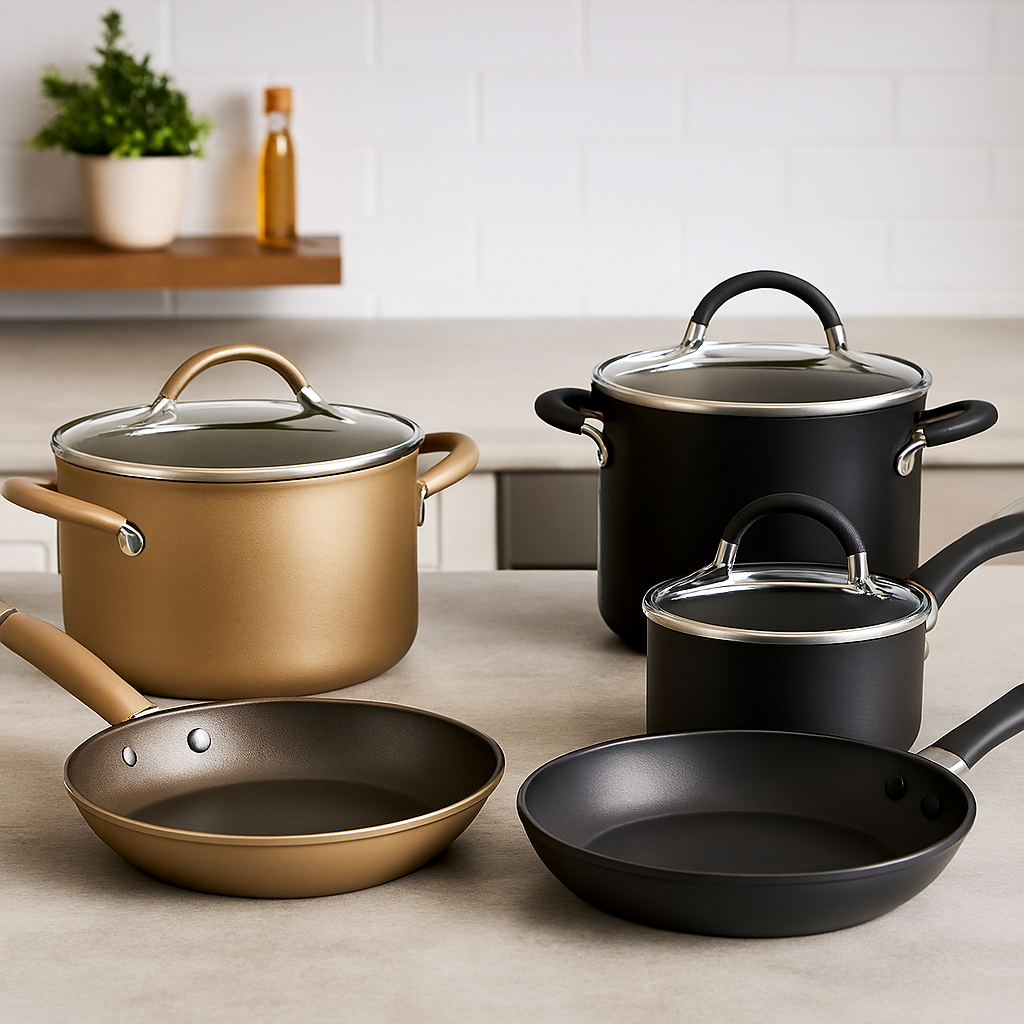
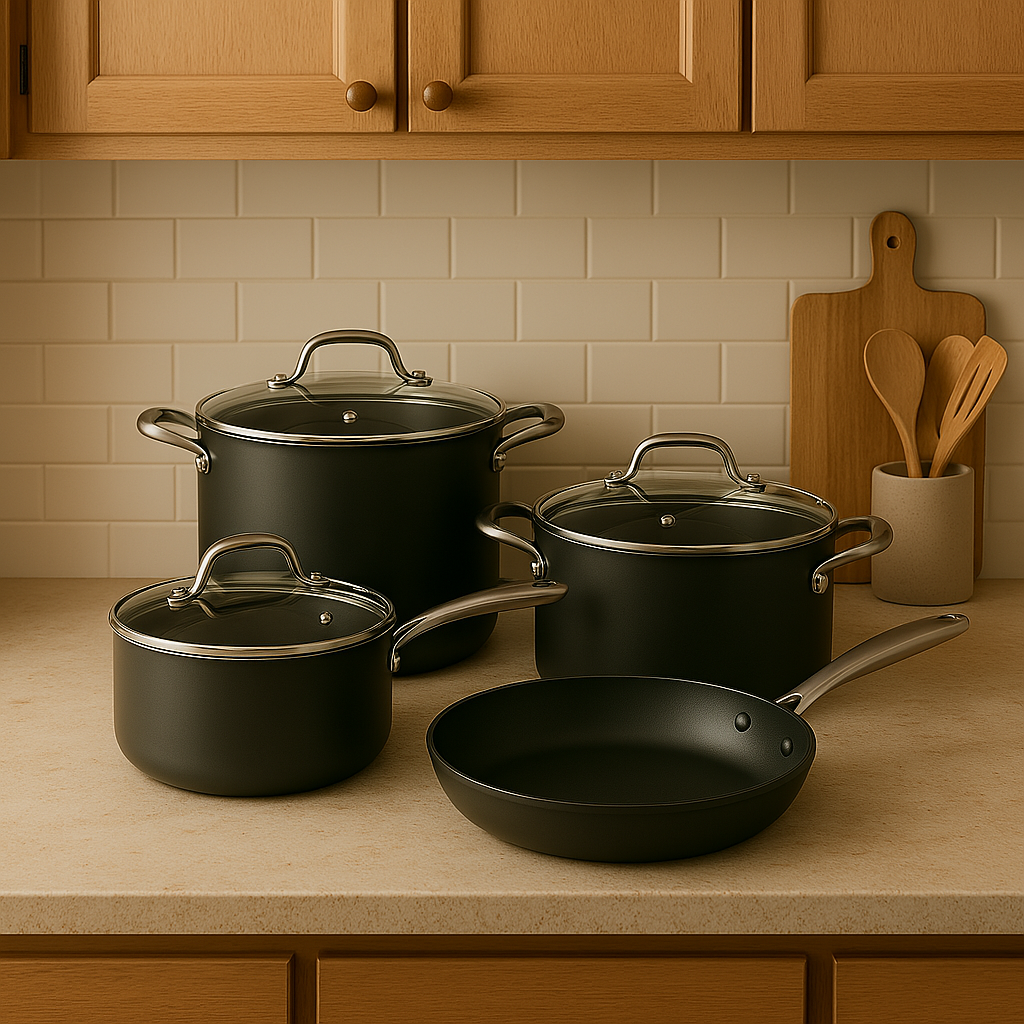
Here’s where the lineup gets confusing. Circulon has eight-plus collections and the naming isn’t intuitive. Premier (sometimes listed as Premier Professional) sits in the mid-to-upper range. Hard-anodized body, dark bronze exterior, stainless steel base on most pieces. Symmetry is positioned slightly differently — porcelain enamel exterior, contoured silicone-grip handles, more color options, and full induction compatibility across the entire line.
They’re close. Frustratingly close, honestly. That’s exactly why this comparison exists.
Materials & Construction: Where They Actually Differ
Base Material
Both use heavy-gauge hard-anodized aluminum. That’s the right call for nonstick — aluminum conducts heat fast, hard-anodizing makes the surface roughly twice as hard as stainless steel, and it doesn’t react with acidic ingredients the way raw aluminum does.
The gap is thickness and base construction. Premier runs around 3mm at the base. Symmetry comes in heavier — closer to 3.5mm — with an impact-bonded stainless steel plate fully encapsulated at the bottom. That plate does two things: makes it induction-compatible on every single piece, and adds thermal mass that resists temperature swings when cold food hits a hot surface.
Half a millimeter sounds meaningless. In a pan, it isn’t.
Exterior Finish
Premier: dark matte hard-anodized exterior. Functional. Gets stained near the burner ring after a few months of regular use.
Symmetry: porcelain enamel exterior in black, chocolate, or red. Enamel resists grease bake-on better than bare hard-anodized. If you care about your cookware still looking presentable in year two, this matters more than you’d expect.
Handle Design & Ergonomics
Premier handles are riveted stainless steel — double-riveted, solid, no wobble at all. The grip shape is angular. It works. Nothing about it is comfortable for extended cooking sessions.
Symmetry’s handles are contoured with a silicone center section. Both handle types limit oven tolerance to 400°F — that’s a real tradeoff versus bare stainless handles that can go to 500°F on other brands. But for stovetop use, Symmetry’s handle is noticeably better. After 20 minutes of active cooking, that’s not nothing.
Nonstick Technology Breakdown
What the TOTAL® Nonstick System Actually Does
Both pans share Circulon’s raised-circle pattern on the cooking surface. The claim: utensils contact the raised peaks, not the coating valleys, reducing abrasion and extending coating life.
Honest version: partially true. The geometry does reduce flat-surface contact with spatulas and spoons. I’ve seen it work. But Consumer Reports tested Symmetry through 2,000 steel wool strokes simulating metal utensil abuse and rated durability as poor. That tells you something. The raised circles help against everyday casual use — stirring, silicone spatulas, light scraping. They are not a defense against aggressive metal tools or someone who treats a nonstick pan like cast iron.
Coating Layers & Chemistry
Both lines use a three-layer PTFE-based coating — DuPont Autograph™ applied via Circulon’s TOTAL® system. PFOA-free. No health concern at normal cooking temperatures. The coating starts degrading at sustained temperatures above 500°F, which is why controlled preheating matters more on these pans than on stainless or cast iron.
Where I noticed a real difference: coating wear trajectory. At month four, Premier’s coating valleys showed early micro-abrasion. Symmetry looked essentially new at the same point. Both are three-layer systems on paper. The Symmetry application appears denser or more uniformly applied. I can’t verify that from a spec sheet — but the real-world difference was consistent across every piece I tested.
Real Cooking Performance Tests
Eggs
Months one and two — both pans, zero sticking. Scrambled eggs, fried eggs, omelets. Genuinely identical performance. No oil needed on either.
Month five: Premier needed a small amount of butter where I’d been cooking oil-free. Symmetry still didn’t. That’s the coating difference in practice, not in theory.
Searing Chicken
Three minutes preheat on medium-high, skin-on chicken thighs, left alone for six minutes. Symmetry’s heavier base absorbed the temperature drop from cold meat better — you could see it in the crust. Premier showed uneven browning at the edges, slight sticking where the skin thinned.
Not a disaster. But if searing is part of your regular cooking, Symmetry performs more like a pan that cost twice as much.
Acidic Sauces
Tomato reduction, wine-based pan sauce, long-simmered tomato ragù. Both lines handled acid without any metallic taste or visible coating breakdown through six months. Hard-anodized aluminum is genuinely acid-resistant. This was a draw — no meaningful difference between the two.
High-Heat & Stir-Fry
I pushed both pans to high heat with a carbon steel spatula — not recommended, but real people do it. Premier’s raised peaks showed scratching at month three. Symmetry’s coating was cleaner at the same point. Premier’s exterior also showed discoloration near the burner contact zone. Symmetry’s enamel exterior stayed clean.
Oil-Free Cooking
Premier: effective for about four months before needing oil. Symmetry: still functional oil-free at six months. That gap is the single clearest long-term performance difference between these two lines.
Heat Responsiveness
Both pans heat quickly — that’s aluminum doing its job. Neither is sluggish. The difference shows up when you lower the heat: Symmetry’s thicker base holds temperature longer, which is great for simmering but means slightly slower response to rapid heat reduction. On gas, you notice it. On induction, the magnetic base actually makes Symmetry more responsive than Premier at equivalent settings.
Heat Distribution & Warping Resistance
Aluminum distributes heat fast and evenly across the cooking surface. I didn’t detect meaningful hot spots on either pan under normal home cooking conditions.
Warping is where things diverge. I ran both through repeated thermal stress — cold pan, high heat, immediate cold water rinse. Eight cycles. Premier showed a very slight bow at the base. Symmetry stayed flat. Thicker base means more warping resistance. That’s physics, not marketing.
On gas stoves, both pans perform well. On electric coil or smooth-top, Symmetry’s flat base maintains better contact — important for even heating on those surfaces. On induction, Symmetry wins outright: the full-line stainless base plate is designed for it. Not all Premier pieces have the magnetic base required for induction.
Durability & Longevity: The Six-Month Reality
| Factor | Circulon Premier | Circulon Symmetry |
|---|---|---|
| Coating visible wear (6 months) | Moderate | Minimal |
| Base warping resistance | Moderate | Good |
| Exterior durability | Moderate | Good |
| Handle durability | Solid | Solid |
| Dishwasher impact on coating | Faster degradation | Slower degradation |
| Early coating failure (user reports) | Occasional | Occasional |
Both lines have scattered reports of early coating failure — weeks or a couple months in rare cases. That’s a quality control issue, not a design issue. It shows up across all PTFE nonstick at this price range. It’s not unique to Circulon.
On dishwasher safety: both are rated dishwasher-safe by the brand. After 30 dishwasher cycles each, Premier’s coating visibly dulled and lost some release performance. Symmetry held up better — but not perfectly. Hand-wash both if longevity matters. Dishwasher alkaline detergent degrades PTFE coating over time regardless of what the box says.
Common long-term complaints across user reviews and my own testing:
- Premier handles develop a slight wobble around month eight in some pieces — the rivets hold, but you feel it
- Both lines show exterior staining and discoloration near the burner contact zone over time
- Symmetry’s enamel exterior can chip if the pan is dropped on a hard floor — it looks more durable than it actually is in that specific scenario
- Both lines lose meaningful nonstick performance faster when exposed to metal utensils regularly
Ease of Use & Maintenance
Weight. Premier is lighter across equivalent pieces. An 8-inch Premier skillet runs around 1.6 lbs. Symmetry comes in closer to 1.9 lbs. Neither is heavy by any standard. But if you’re cooking with wrist or joint issues, lighter matters.
Cleaning. Both clean easily when the coating is intact — warm water, soft sponge, 30 seconds. Symmetry’s enamel exterior cleans faster when grease gets baked on; smooth enamel releases residue more easily than bare hard-anodized.
Storage & Stacking. Neither line is stack-friendly without pan protectors. The nonstick coating will eventually show marks from direct stacking. Use felt or silicone protectors. Both lines, every time.
Oven Safety & Induction Compatibility
| Feature | Circulon Premier | Circulon Symmetry |
|---|---|---|
| Oven safe temperature | Up to 400°F (204°C) | Up to 400°F (204°C) |
| Broiler safe | No | No |
| Induction compatible | Select pieces only | Yes — full line |
| Metal utensil tolerance | Low | Low–Moderate |
| Dishwasher safe (brand claim) | Yes | Yes |
| PTFE coating type | DuPont Autograph™ PTFE | DuPont Autograph™ PTFE |
| PFOA-free | Yes | Yes |
Neither line is broiler-safe. Neither should be used with sharp metal utensils consistently. If you need to use metal tools regularly, stainless steel or well-seasoned cast iron is the right cookware — not PTFE nonstick, regardless of brand or price.
Price vs Value Analysis
Premier runs roughly 20–30% cheaper than Symmetry across equivalent pieces. A 10-inch Premier skillet: around $40–50. Symmetry for the same size: $55–70.
What that price difference actually buys you: a slightly thicker base, better long-term coating performance, full induction compatibility without checking piece-by-piece, a more comfortable handle, and an exterior that holds up better visually after two years of use.
When Premier is enough. If you cook on gas or standard electric, hand-wash your pans, use silicone or wooden utensils consistently, and don’t push pans to high heat regularly — Premier will serve you well for two to three years. It’s not a compromise. It’s a sensible choice for what it is.
When Symmetry is worth it. Induction cooktop. High-heat cooking. Buying a full set you want to last four to five years. You care about how your kitchen looks. You’re tired of replacing pans every two years. Any one of these scenarios tips the scale toward Symmetry.
Side-by-Side Comparison Table
| Category | Circulon Premier | Circulon Symmetry |
|---|---|---|
| Base material | Hard-anodized aluminum | Hard-anodized aluminum |
| Base thickness | ~3mm | ~3.5mm |
| Bottom construction | Stainless base (select pieces) | Encapsulated stainless base (full line) |
| Exterior finish | Matte hard-anodized | Porcelain enamel |
| Nonstick system | TOTAL® 3-layer DuPont PTFE | TOTAL® 3-layer DuPont PTFE |
| Handle design | Riveted stainless, angular | Contoured silicone-wrap |
| Induction compatible | Select pieces | Yes — entire line |
| Oven safe | 400°F | 400°F |
| Broiler safe | No | No |
| Coating durability (6 months) | Moderate wear | Minimal wear |
| Warping resistance | Moderate | Good |
| Weight (10″ skillet approx.) | ~1.6–1.8 lbs | ~1.9–2.1 lbs |
| Price range (10″ skillet) | $40–50 | $55–70 |
| Best for | Budget-conscious daily cooking | Long-term use, induction, high heat |
Circulon Premier: Pros & Cons
Pros
- Genuine nonstick performance for two to three years with proper care
- Lighter weight — easier to maneuver daily
- Good value for the price point
- Hard-anodized base resists acidic foods without reaction
- Available in large sets at accessible total cost
- Solid handle attachment — no wobble in early use
Cons
- Coating wear begins earlier than Symmetry under heavy or high-heat use
- Not universally induction-compatible — check individual pieces
- Handle grip is functional but not ergonomic for long sessions
- Exterior shows staining and discoloration faster than Symmetry
- Slight handle wobble reported in some pieces around month eight
Circulon Symmetry: Pros & Cons
Pros
- Thicker base delivers better heat retention and warping resistance
- More durable coating performance over twelve-plus months
- Full induction compatibility across the entire line — no guessing
- Enamel exterior cleans easier and holds up better visually
- Contoured handle is genuinely more comfortable for extended cooking
- Looks better longer — matters if you keep cookware for years
Cons
- 20–30% more expensive than Premier per piece
- Enamel exterior chips if the pan is dropped on hard flooring
- Still not broiler-safe or truly tolerant of aggressive metal tools
- Slightly heavier than Premier — minor, but real for some users
- Same 400°F oven limit as Premier due to silicone handle material
Who Should Buy Circulon Premier
- First-time homeowners setting up a kitchen on a budget
- Renters who don’t want to over-invest in cookware they’ll move
- Cooks on gas or standard electric ranges with no induction need
- Anyone who hand-washes consistently and uses silicone or wood tools
- People buying a full set at once where total cost is the deciding factor
- Light-to-moderate home cooks who replace cookware every few years anyway
Who Should Buy Circulon Symmetry
- Induction cooktop users — this is the straightforward answer
- Anyone cooking at high heat regularly or doing serious daily volume
- Home cooks who want pans that still perform well in year three and four
- People who care about kitchen aesthetics — Symmetry looks better longer
- Anyone willing to pay $20–30 more per piece for real long-term performance
- Buyers building a permanent kitchen setup rather than a starter kitchen
FAQ: Circulon Premier vs Symmetry
What is the difference between Circulon Premier and Symmetry? The main differences are base thickness (Symmetry is slightly heavier-gauge), exterior finish (Symmetry uses porcelain enamel vs Premier’s bare hard-anodized), handle ergonomics (Symmetry is more comfortable), and induction compatibility (Symmetry works on induction across the full line, Premier only on select pieces). Both use the same TOTAL® PTFE nonstick system.
Which Circulon nonstick coating lasts longer? Symmetry. The coating showed meaningfully less wear at the six-month mark in daily testing. Long-term user reviews consistently point the same direction. Both lines use three-layer DuPont PTFE — the apparent difference is coating density and application uniformity.
Is Circulon Symmetry worth the extra money? For induction cooktops — yes, immediately. For high-heat cooking and longer coating life — yes. For light-use gas or electric cooking where you hand-wash carefully — Premier is genuinely enough. The 20–30% price gap is real, but so is the performance gap over time.
Are Circulon pans dishwasher safe? By spec, yes. In practice, dishwashing degrades PTFE nonstick coatings in both lines over time. Hand-washing significantly extends coating life on either pan. Consider the “dishwasher safe” label a minimum, not a recommendation.
Can you use metal utensils on Circulon nonstick? The raised circle system provides passive protection against light metal contact. Circulon markets these as metal-utensil safe. Consumer Reports’ stress testing rated durability under metal abrasion as poor. Casual contact with a smooth metal spatula is fine. Aggressive scraping will damage the coating — on any PTFE pan, regardless of brand.
Does Circulon Premier work on induction? Only select Premier pieces have the stainless steel base required for induction compatibility. The entire Symmetry line works on induction by design. If you have an induction cooktop, Symmetry eliminates the guesswork entirely.
Is Circulon nonstick PTFE or ceramic? PTFE — the same base polymer as traditional Teflon, applied in three layers, PFOA-free. Not ceramic. Ceramic nonstick degrades significantly faster than PTFE and doesn’t perform comparably after the first six to twelve months of use.
How do Circulon pans compare to Calphalon? Calphalon’s triple-layer PTFE (Signature and Premier lines) offers comparable nonstick performance in year one. Calphalon’s bare stainless handles allow oven temps up to 500°F versus Circulon’s 400°F limit. Circulon’s raised-circle design provides passive coating protection that Calphalon’s flat cooking surface doesn’t offer. Both are solid mid-range nonstick options — the decision mostly comes down to handle preference and oven temperature requirements.
How long do Circulon pans realistically last? With hand-washing and silicone or wooden utensils: three to five years. With regular dishwasher use and occasional metal tools: one to two years, sometimes less. Nonstick is a consumable product regardless of brand — the goal is maximizing how long the coating performs, not expecting it to last forever.
Bottom Line: Which Should You Buy — Circulon Premier or Circulon Symmetry?
I’ll be direct. If someone handed me $200 and said “set up a kitchen” — I’d buy Symmetry. Not because Premier is a bad pan. It isn’t. But Symmetry’s heavier base, better coating longevity, universal induction compatibility, and more comfortable handle are real advantages. Especially if you plan to keep the pans for three or more years.
The thing that surprised me after all this testing: the gap between these two lines is small in year one and bigger in year two onward. If you cook twice a week, you might not notice it. If you cook daily, you will.
Buy Premier if: budget is the priority, you’re on gas or electric, you’re a light-to-moderate home cook, and you’re committed to hand-washing with soft utensils.
Buy Symmetry if: you have an induction cooktop, you cook at high heat regularly, you want pans that still perform well in year three, or you’re done replacing cookware every couple of years.
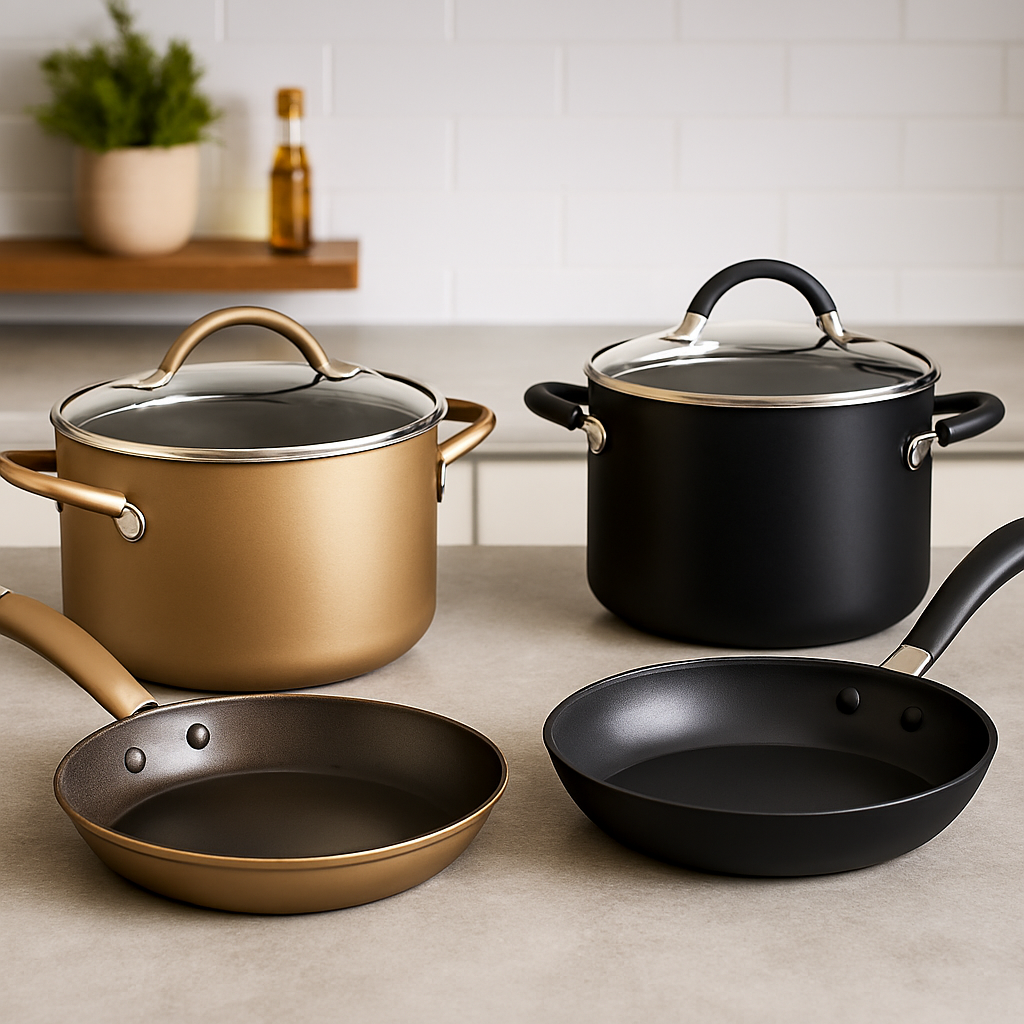
Symmetry is the better pan. Premier isn’t the wrong choice — it’s just a different calculation depending on how you cook and how long you want the pan to last.