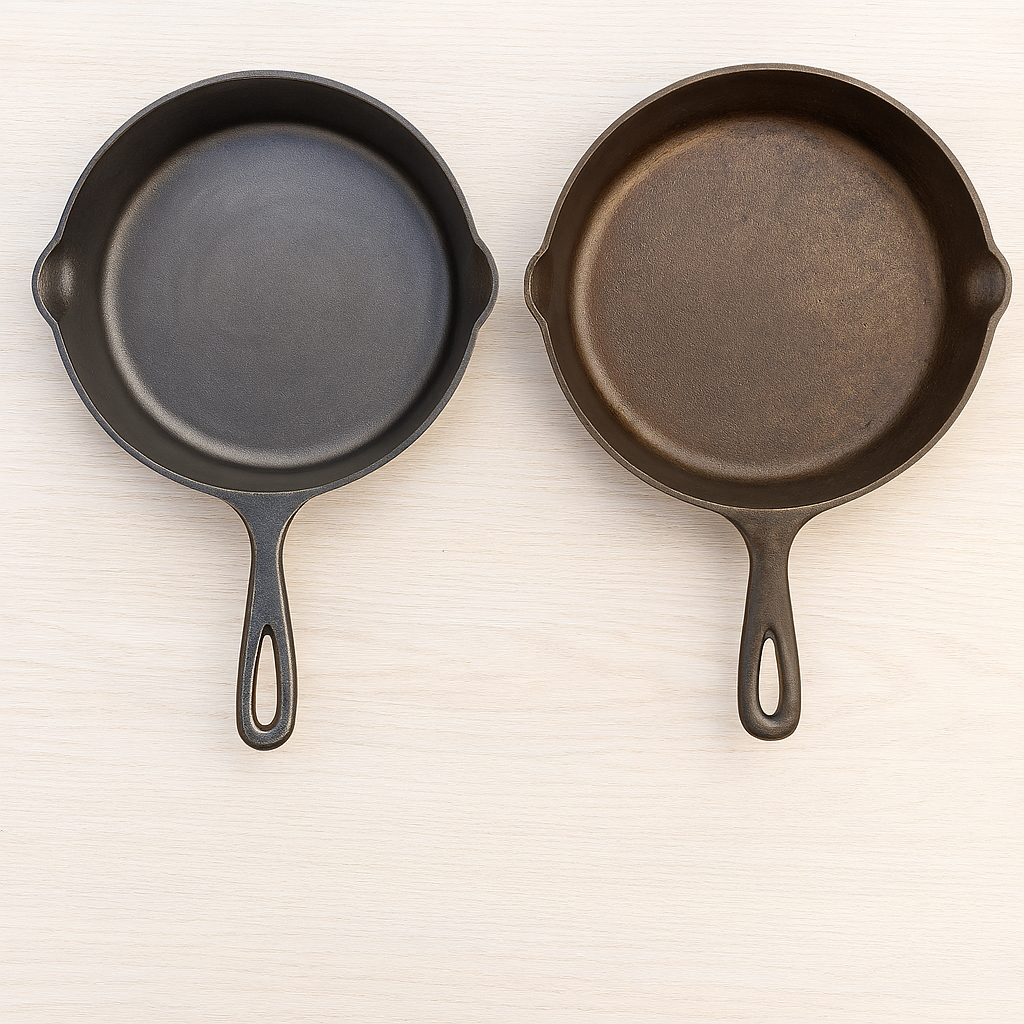
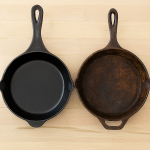
I still remember the day I brought home my first real cast-iron skillet. It wasn’t new — it was a vintage Griswold, passed down through a friend, slightly worn, the surface dark and rich from decades of use. Holding it in my hands, I felt an electric thrill, like I was clutching a piece of culinary history. That pan has, over the years, become so much more than just cooking equipment. And yet, a few years ago, I found myself ordering a brand-new Smithey skillet — a modern recreation of that old-world magic — and suddenly my kitchen had two very different, very special tools.
Over the years, as I’ve cooked omelettes, steaks, braises, pancakes, roasts, and more in both of these pans, I’ve learned intimate truths about each one. I want to share not just what they do well or poorly, but how they feel, how they challenge you, how caring for them becomes part of your daily rhythm, and ultimately what cooking with them means to me.
Origins and Philosophy: Where They Come From
To begin, I always think about the story behind my pans, because for me, cookware isn’t just functional — it’s part of a narrative.
Griswold is an icon of American manufacturing. These pans were made in the 19th and early 20th centuries, long before cast iron became a trendy “heritage brand.” The metal was poured, the molds were carefully crafted, and each piece was designed to last decades — not just months. Holding my Griswold, I feel that lineage. The walls of the skillet have a subtle thinness compared to many modern cast-iron skillets, but that thinness was an intentional choice: it allowed more even heating across its surface, and made it surprisingly agile in skilled hands.
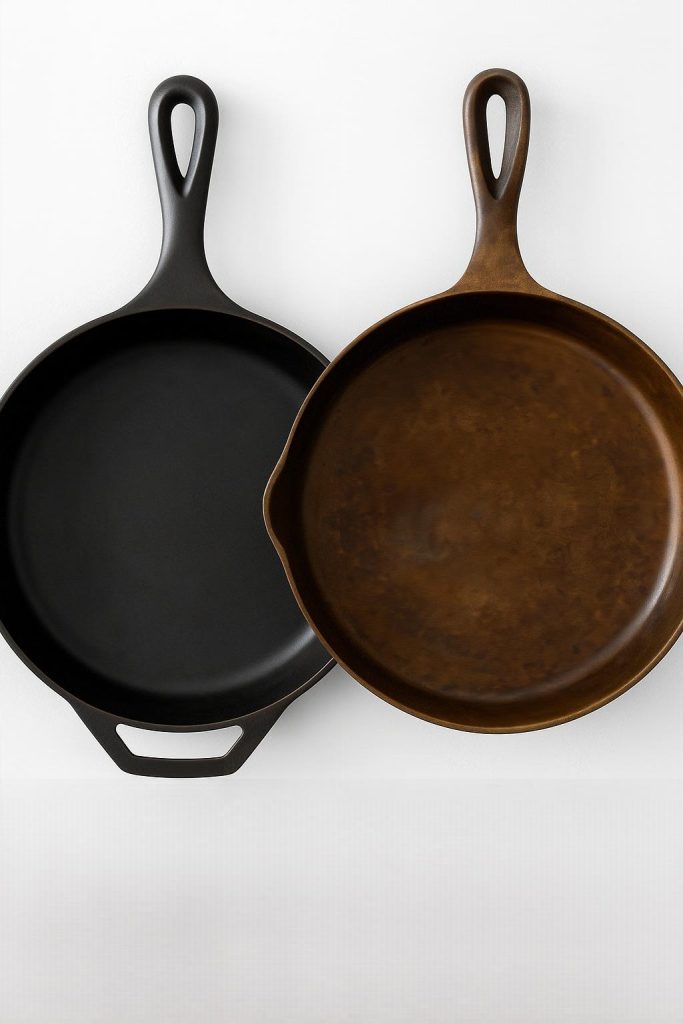
Smithey, in contrast, was born in the 21st century out of reverence for that kind of craftsmanship. When I first saw the Smithey, I was skeptical — could a modern company really capture the soul of a classic Griswold while delivering better manufacturing and more consistent specs? The answer, for me, has been a resounding yes — but not without its own learning curve. Smithey casts in its own foundry, machines and grinds each skillet, tumbles it for smoothness, and then pre-seasons it lightly. The result is a pan that feels high-precision, almost surgical in its finish, yet soulful in use.
This philosophical difference — old-school American foundry vs modern heirloom brand — underpins everything I feel when cooking: the Griswold carries the weight of history; the Smithey carries the promise of future generations.
Physical Feel & Handling: Weight, Balance, and Geometry
The first time I picked up my Smithey No. 10, I was struck by its solidity. It has a dense, reassuring heft: not so heavy that I dread lifting it, but substantial enough that I feel its presence under my hand. The handle is thick, wide, and extremely comfortable — it doesn’t dig into my palm when I stir or swirl food. The helper handle on the other side helps when I carry it full or place it in the oven. The walls of the pan are thick and sturdy, giving a reassuring rigidity. When I pick it up cold, I can feel heat soaking in when I hold it over the stove — a prelude to the deep, even heat it builds.
My Griswold, on the other hand, is lighter. Not fragile, but more nimble. From the first moment I handled it, I felt how elegantly balanced it was. When I stir vegetables or flip pancakes, its lighter weight means I don’t have to fight the pan’s momentum. The walls are slightly thinner, so there’s a different flex in how the pan responds to temperature changes. And that pleasing old-foundry cast — small bumps, minute variations — gives it character. It doesn’t feel polished to perfection; it feels lived in.
The geometry is also different: the Smithey’s profile is more modern, with straight-ish walls that flare gently and a broad cooking surface, while the Griswold curves more subtly from base to rim. That curvature influences how heat flows, how food moves, and how I hold it. The Smithey feels spacious; the Griswold feels intimate.
Seasoning Journey: Building the Patina
Maybe there’s nothing more personal to me than the process of seasoning. It’s ritual, work, care. With both pans, I devoted myself to building deep, stable patinas — but the paths were different.
Seasoning the Smithey
When I unboxed my Smithey, it had a very fine, satin-bronze sheen. Beautiful, yes — but not a seasoned skillet ready to tear through breakfast with zero fuss. My first few cooks were promising, but I noticed some sticky patches, especially where I browned meat. I realized right away that “pre-seasoned” doesn’t mean “perfectly ready”; there’s still work to be done.
So I established a protocol: once a week for the first month, I ran a high-heat seasoning cycle. I’d heat the pan in my oven or on the stovetop, wipe in a very thin film of neutral oil (like grapeseed), then let it cool slowly. Gradually, those sticky spots disappeared. I moved to thinner coatings of oil, more restrained layers, more frequent heat. Over weeks of diligent cooking and occasional seasoning, the Smithey’s surface turned darker and more uniform. Now when I cook in it, I can feel how the patina has filled micro-pores — food glides easier, browning is more consistent, and the risk of rust is very low.
There’s a meditative quality to that process. Each time I rub oil in, I think about the meals I’ll cook, the flavors I want to coax out, the legacy I want to leave. I don’t just season for performance; I season because I care.
Maintaining the Griswold
With the Griswold, things were different from day one. Since it was already seasoned when I received it, I started with maintenance, not restoration. Instead of massive seasoning cycles, I focused on a light, loving touch: after each cook, while the skillet was still warm, I wiped it out gently, sometimes with a little water and a scrub brush (not harsh), dried it carefully, then applied a whisper of oil.
Once every month or so, I’d do a maintenance cycle: heat gently, wipe in oil, cool slowly. Because the metal is thinner, it warms and cools faster, so these seasoning sessions don’t take as long or as much oil. The result, though, is magical: the skillet’s surface stays glossy, deep, and forgiving. It becomes more non-stick for gentle foods — eggs, fish, delicate sauces.
Working on the Griswold in this way — maintaining rather than restoring — feels respectful. I’m preserving decades of seasoning, of craftsmanship. It’s not just cooking; it’s stewardship.
Cooking Performance: Real-Life Trials
Over time, I’ve pushed both pans through everything: weeknight dinners, weekend shows, experiments. Here’s how they behave in real life.
High-Heat Performance (Steaks, Searing, Roasting)
There’s a night that lingers in my memory. I had a thick ribeye, about 1.5 inches, marbled and ready for glory. I pulled out the Smithey. I set it on my stovetop, medium-high, and let it heat gradually. Thirty seconds in, I could feel the pan radiate heat through its base. The moment the steak touched the surface, it hissed.
That sizzle was deep and persistent. The meat immediately developed a crust. I pressed gently with the spatula, and I could feel the resistance — the heat pushing back, cooking steadily. When I flipped, I held for a few seconds longer, wanting that second side to sear as beautifully as the first. I finished on a slightly lower burner to avoid burning, and as I rested the steak, the Smithey held enough residual heat that even with the heat turned off the crust crisped further in the pan.
The result? A crust so deep and caramelized it felt almost primal. The inside cooked perfectly, and I could taste the Maillard reaction — sweet, savory, bold. That night, I knew my Smithey was more than a skillet; it was a searing powerhouse.
I tried the same experiment on Griswold, feeling a little playful: could the lighter pan match that intensity? I preheated similarly, but even though the heat was high, the crust came on a little more gently. The sizzle was there, but it felt less “furnace” and more “earnest.” As I rotated the steak, I noticed the Griswold’s temperature dipped slightly; I had to give it a moment between flips. Still, the crust was good — not quite as aggressive, but beautifully browned in its own way. When I rested that steak, the pan cooled more quickly, but the meat stayed warm. And the flavor? Rich, rewarding, and a little more nuanced — maybe because it didn’t scorch or jump so hard.
Delicate Foods (Eggs, Fish, Veggie Sautés)
On a mellow Sunday morning, I decided to make scrambled eggs with mushroom and greens. I grabbed the Griswold. As I heated it over a gentle flame, I felt the pan come up in temperature fast, responding in a way that felt intuitive. A little butter went in, it melted, and I showered in my shallots and mushrooms. The pan’s surface welcomed them, no sputter, just a soft hiss, and soon the mushrooms softened and browned gently.
When I cracked the eggs in and began stirring, that glassy, seasoned surface did its thing: the curds formed smoothly, the eggs glided, and nothing stuck. The aroma — rich butter, mushrooms, the faint trace of shallot — filled my kitchen. I stirred with a whisk, continuously coaxing the eggs gently. They didn’t cling; they didn’t fight me. They just cooked softly.
I tried the same dish in the Smithey later. I preheated a little more carefully; I added butter, but I dialed down the flame slightly so the eggs wouldn’t overcook. They did cook well, but the behavior was different. Because of the pan’s mass, temperature changes happened more slowly; I couldn’t rush. The eggs formed a little faster in some spots, but I needed to adjust constantly. In the end, they tasted perfectly fine, but the experience felt more mechanical: me controlling heat, adjusting timing — whereas the Griswold invited me to be laid back, intuitive.
Braises, One-Pot Meals, and Oven Use
On a cold evening, I made a short rib braise. I chose the Smithey because I wanted heavy lid weight, stable heat, and durability in the oven. I seared the bones, onions, garlic, then deglazed with wine, added stock, herbs, and vegetables, and slid the whole skillet into a 300°F oven. Over two hours, the deep cast-iron body held consistent heat; the braise simmered quietly, then softened, then collapsed into tender, fall-off-the-bone richness.
When I pulled the skillet out, the Smithey’s walls were hot but manageable, and the crust on the bottom — the fond — was deep and concentrated. I used the pan to finish on the stovetop, reducing the sauce, whisking in butter, and scrubbing in flavor. That night, the dinner came out rich, deeply layered, and utterly satisfying.
I don’t typically braise in the Griswold for long hours — mostly because I worry about strain on its thinner body, and because the lid on my Griswold isn’t as heavy. But I have done one-pot roasts: chicken, potatoes, carrots. In those moments, the Griswold shines because it’s nimble. It preheats faster, and I can move it in and out of the oven without feeling like I’m hauling a tank. The roast browns well, though not with the same sear intensity, but its lighter nature makes the handling easier.
Maintenance & Cleaning Rhythm
Caring for these pans is, in my mind, as much a part of cooking as the meal itself. After nearly every cook, I go through a ritual.
For the Smithey, once the cooking is done, I let the pan cool on a trivet for a few minutes. Then, while still warm, I rinse it with very hot water and gently scrub with a brush — no soap, unless absolutely necessary. Sometimes I use coarse salt to scour stuck bits. Then I dry it thoroughly over a burner, or by hand with a towel. While it’s hot but not blazing, I wipe in a whisper-thin film of oil — often grapeseed or flaxseed — and swirl it around so it coats everything. I let it cool slowly, and sometimes, particularly if I’ve cooked something acidic, I run a mini seasoning session later. This ritual is deliberate, patient, and slow.
For the Griswold, a similar but slightly more relaxed ritual: after cooking, I usually wipe out food while it’s warm, sometimes with a little water, then scrub gently. I dry it. Then — whisper of oil. But with the Griswold, I am less intense about re-seasoning cycles: I rely on its established patina. Occasionally, I do a maintenance heat + oil cycle, but not as often. Because it’s lighter, it cools quickly, so these touches don’t take long.
This ritual of care forces me to slow down, to appreciate the feel of metal and the ritual of maintenance. I don’t just use cast iron — I commune with it.
Durability, Reliability, and Legacy
Let me be honest: when I first bought the Smithey, I worried. Would it develop cracks? Would the finish chip? Would I regret spending that money?
In the years since, none of those fears have come true. The Smithey has taken hundreds of meals — steaks, roasts, seared fish — and though its surface has darkened and developed a deeper patina, it shows no structural wear. There’s no warping, no chipping, no sign that it’s fragile. It feels like something built to stand the test of time.
The Griswold, having survived decades before it came into my life, has proven itself equally reliable. There are small signs of wear — tiny nicks at the rim, some patina inconsistency — but nothing that undermines its performance. It remains stable, strong, responsive.
What this means to me, in a broader sense, is that both pans make real claims to legacy. One carries history; the other is intentionally built to become history. When I cook, I feel that. Each summons the idea of generations: meals made, passed down, remembered, loved.
Emotional & Philosophical Reflections
Cooking with these two pans has become a meditation on time, craft, and memory.
When I cook in the Griswold, I feel linked to generations before me. Sometimes, late at night, I place the pan on the stove, hear it settle, and I imagine the people who poured that iron, who cooked in it over decades. That thought humbles me. I feel like I’m part of a chain, and by continuing to cook and care for the pan, I honor that chain.
With the Smithey, it’s different but equally profound. When I season it, rub in oil, apply gentle heat cycles, I feel like I’m building something new — a legacy that starts with me and (hopefully) continues with someone else in the future. It’s not about nostalgia; it’s about intentionality. I bought it knowing I could hand it down. I treat it not just as a utility, but as an heirloom in progress.
There’s a kind of joy in that. A steady calm in holding a heavy skillet, knowing it’s going to do its job, knowing I’m going to cook something wonderful in it. That joy — the smell of sizzling, the sound of fat shimmering, the weight of meat sliding — becomes part of my life’s texture.
Challenges, Frustrations & Learning Curves
It’s not all dreamy. There have been frustrations, missteps, and lessons — many of them hard-earned.
1. Overheating the Smithey
Early on, I made the mistake of turning the burner up too high too fast. That caused the oil in my seasoning to smoke, darken too quickly, and left lighter spots. I learned that cast-iron, especially a hefty machine-finished one, demands patience. Bring it up in temperature gradually. Let it heat, then rest. That mindset shift took time, but it saved my surface.
2. Thermal shock worries
One time, I accidentally poured cold liquid into a red-hot Griswold pan. I panicked — but nothing cracked. Still, I became hyper-aware of thermal stress: how fast to heat, how to cool, and how careful I need to be. Both pans benefit from a slow, respectful dance with temperature, not jerky jumps.
3. Finding vintage Griswold
Acquiring my Griswold wasn’t easy. Vintage skillets vary massively in quality, condition, and price. I spent weeks tracking one, inspecting for cracks, pitting, warping. There was a moment when I considered buying a lower-grade one just to get started — but I held out. That process taught me a lot: about restoration, about the cast-iron community, about trust. And when I finally got the skillet, I felt like I’d earned it.
4. Initial seasoning work for the Smithey
I underestimated how much “pre-seasoned” would still need my intervention. It wasn’t non-stick overnight, and I had to pay attention, repeat seasoning cycles, and actively manage spots. That was humbling: I had to treat the pan like a living thing, coaxing and building.
5. Regular care takes effort
Maintaining two cast-iron skillets — heavy, beloved — is not a kitchen hack. It’s a habit. Some nights I’m too tired for a full ritual; sometimes I skip re-seasoning. And when I skip, I feel it: a little dulling of the finish, a slight hesitation in release. That makes me recommit. Caring for these pans isn’t optional for me anymore.
Technical Comparisons & Specs (from My Experience)
To help clarify how different these pans feel and perform, here are some of the key “metrics” I register in my day-to-day cooking. These aren’t lab measurements, but my own cook’s sense:
| Characteristic | Smithey (No. 10) | Griswold (vintage) |
|---|---|---|
| Weight | Substantial, dense — very stable, holds heat | Lighter, nimble, quicker response |
| Wall Thickness | Thick, rigid, very solid | Slightly thinner, some variation typical |
| Heat-Up Time | Slower to heat, but stores heat deeply | Faster to warm, but less heat retention |
| Heat Retention | Excellent — great for searing and steady heat | Moderate — good for moderate searing, but more temp fluctuation |
| Temperature Responsiveness | Less responsive — changes slow | Highly responsive — changes in heat more immediate |
| Cooking Delicate Foods | Requires care, lower heat | Excellent — great surface for eggs, fish, veg |
| Long Braises / Oven Use | Ideal — heavy, stable, retains heat well | Usable, but less ideal for long, slow braises (unless careful) |
| Seasoning Ease | Needs several cycles; build-up moderately slow | Easier to maintain once well seasoned; delicate touch works well |
| Maintenance Ritual | More deliberate, careful | Slightly more forgiving; routine but less ritualized |
| Emotional Feel | Modern heirloom, tangible and durable | Vintage heirloom, connection to history |
Cost, Availability & Value
From my perspective, cost and value are deeply personal. My Smithey wasn’t cheap — but to me, it was an investment. I paid more than I would for a basic cast-iron skillet, because I was buying craftsmanship, finish, a guarantee of longevity, and emotional value. And in cooking with it, I have felt that value return. Every steak, every braise, every crisped vegetable is part of that return on my investment.
The Griswold, by contrast, cost me in a different way: time, patience, and sometimes money in restoration. Finding one in good condition was a quest. I had to vet sellers, inspect for flaws, clean and re-season. But when I finally got one — and restored it — I felt the cost was worth it. Because a well-cared-for Griswold can outlast most modern pans in terms of legacy. It’s not just money; it’s history, care, and character.
To me, both pans represent value in different currencies: Smithey in craftsmanship and future legacy, Griswold in antique character and a tangible link to the past.
When I Reach for Each One: My Patterns
After years of daily and weekly use, I’ve developed habits. These habits reveal a lot about what each pan does best in my life. Here’s how I decide which pan to use on any given cook:
- Smithey
- Steaks, chops, any thick cut of meat that needs a strong sear.
- Braises and oven-roasts, where stable, high-quality cast iron helps maintain even cooking.
- High-heat sautéing where I want a powerful, consistent crust.
- When I want to impress guests, or when I’m cooking something I want to photograph — because this pan looks like an heirloom.
- Big-batch searing + transferring to oven.
- Griswold
- Eggs — scrambled, fried, omelettes — where delicacy matters.
- Fish — especially fillets or delicate white fish — because of its responsive surface.
- Vegetables, especially quick sautéing or shallow braising.
- Pancakes and flatbreads, where I appreciate that quick response, that ease of maneuver.
- When I want to feel grounded in tradition, in history — cooking something simple but profound.
Often, I actually use them together in a single meal: Sear meat in the Smithey, then finish or sauté sides in the Griswold. That symbiosis feels deeply satisfying, like I’ve constructed a small cast-iron orchestra and I know which instrument plays which part best.
Community, Restoration, and Cast-Iron Culture
Another unexpected dimension of cooking with both of these pans is how it pulled me into the wider cast-iron community. There are kits, forums, restoration groups, and people who treat cast iron like a kind of craft. I learned how to strip rust, how to buff imperfections, how to do a full seasoning bake cycle.
With my Griswold, I reached out to seasoned restorers. I asked for advice: what grit of sandpaper to use, how to keep the original factory surface, how much oil is too much during seasoning. I spent weekends refinishing the pan, buffing its edges, breathing life back into its metal soul. That work made me more intimate with the pan; every scratch I buffed out, every swirl I smoothed, felt like I was collaborating with the original foundry workers who first cast it.
With the Smithey, my participation was different: I followed recommended seasoning protocols, I tracked my cycles, I even documented changes in color and feel. Occasionally, I’d listen for the hum of the metal as it cooled after oiling. It felt like caring for a newborn heirloom: precise, intentional, hopeful.
This community — the cast-iron “tribe” — has broadened my cooking life. I’ve exchanged stories (“how long did your Smithey take to develop a non-stick surface?”), shared tips (“best oils for seasoning,” “how to avoid thermal shock”), and felt part of something larger: cooks who take their tools seriously, who believe high-quality cookware is more than disposable.
Sustainability & Environmental Reflection
Another thing I think about: sustainability. Cast iron is, at its core, extremely sustainable if used and maintained well. It doesn’t wear out quickly, and when it does, you can restore it. My Griswold is probably already more than 50 years old — possibly much more — and it’s still going strong because of careful use and maintenance. That’s powerful in a throw-away culture.
The Smithey, built to be an heirloom, is also part of that sustainability conversation. Rather than buying cheap skillets that degrade over time, I bought something to maintain, to love, to pass on. Each time I season or care for it, I feel like I’m investing in longevity. That feels ethically and emotionally satisfying. It’s as much about preserving resources as it is about preserving craft.
Sensory Moments & Emotional Highlights
If I close my eyes, I can still feel specific moments:
- The sharp, smoky hiss of butter and steak hitting the Smithey’s hot surface — the smell of caramelizing fat, the crackling patter, the deep satisfaction when I lift that deeply seared crust.
- The gentle shimmer when I swirl eggs in the Griswold — the butter melting into micro-pools, the soft curds forming, the warmth of early morning pressing through my kitchen window.
- The tactile sensation of wiping these pans down: the smooth, cool metal under my finger; the whisper-thin film of oil I apply; the gentle hum of heat as the pan cools.
- The slow thrum of anticipation when I season — when I rub oil into warm cast iron, I feel like I’m participating in a ritual as old as cooking itself, building a surface that will cradle future meals.
- The quiet joy of passing food from one pan to a plate: using the Griswold for eggs, the Smithey for meat, and seeing how the flavors interplay, noticing how textures differ.
These moments feel nearly spiritual. They anchor me. They remind me, every time I cook, that I’m not just making food — I’m engaging in a craft, a legacy, a conversation across time.
Final Thoughts & My Verdict
So, after everything — the decades of history in one skillet, the modern precision in another, the rituals, the challenges, the joys — what do I conclude? What’s my verdict?
- If I had to choose one: Honestly, I lean toward the Smithey. Its weight, its build, its finish, and its potential for passing down make it feel like a true heirloom. I trust it for serious, high-heat work; I know it will age beautifully in my hands; I believe its value will grow — not just monetarily, but emotionally.
- If I were limited to vintage only: Then the Griswold is irreplaceable. Its connection to history, its responsiveness, its gentle character — it’s a piece of the past that carries so much warmth. For delicate cooking, for daily use, for sentimental meals, it’s my heart.
- But in truth: I’m happiest having both. They aren’t rivals in my kitchen; they’re companions. I reach for the Smithey when I want power, depth, sear. I reach for the Griswold when I want intimacy, tradition, finesse. Together, they let me cook in a way that feels complete, balanced, and deeply meaningful.
Advice to You (If You’re Considering Either Pan)
If you’re reading this because you’re deciding between these two, or maybe wondering whether to own both, here are some thoughts from my journey:
- Be honest about how you cook. Do you sear thick meats? Do you make delicate breakfasts? Do you one-pot roast? Understanding your style will guide which pan(s) to invest in.
- Plan for the ritual. If you buy cast iron, you’re signing up for more than just cooking — you’re signing up for maintenance. Learn how to season properly, how to clean carefully, and how to care for these pans. That ritual is part of the joy.
- If buying vintage, inspect carefully. For a Griswold, don’t rush. Look for cracks, warping, excessive pitting. Restoration takes time and effort; it’s not a “get vintage pan and it’s perfect” deal.
- Respect thermal shock. Both pans can survive if you treat them well, but pouring cold water into a screaming-hot skillet or heating them too fast invites danger. Let them heat gradually; let them cool deliberately.
- Use good oil for seasoning. Don’t over-oil. Thin layers, repeated cycles, patience — that’s how you build a stable, durable, truly non-stick patina.
- Enjoy the emotional side. Cast iron isn’t just a tool. It’s an heirloom, a craft, a connection. Let it be part of your story.
In the end, cooking with the Smithey and the Griswold has changed me. It’s made me more patient, more observant, more connected to the act of cooking. It’s given me a sense of stewardship, a sense of legacy. And when I serve dinner — when I carry a skillet to the table, or slide the pan into the oven — I feel it deeply: this is more than food. It’s history, it’s care, it’s love.
I hope sharing my experience helps you — whether you’re deciding which skillet to buy, or simply dreaming of what it means to cook with cast iron that matters. If you ever want to talk more — thicknesses, seasoning oils, restoration tricks — I’m here. Because for me, this isn’t just about pans. It’s about a way of cooking, a way of living, a way of passing something on.