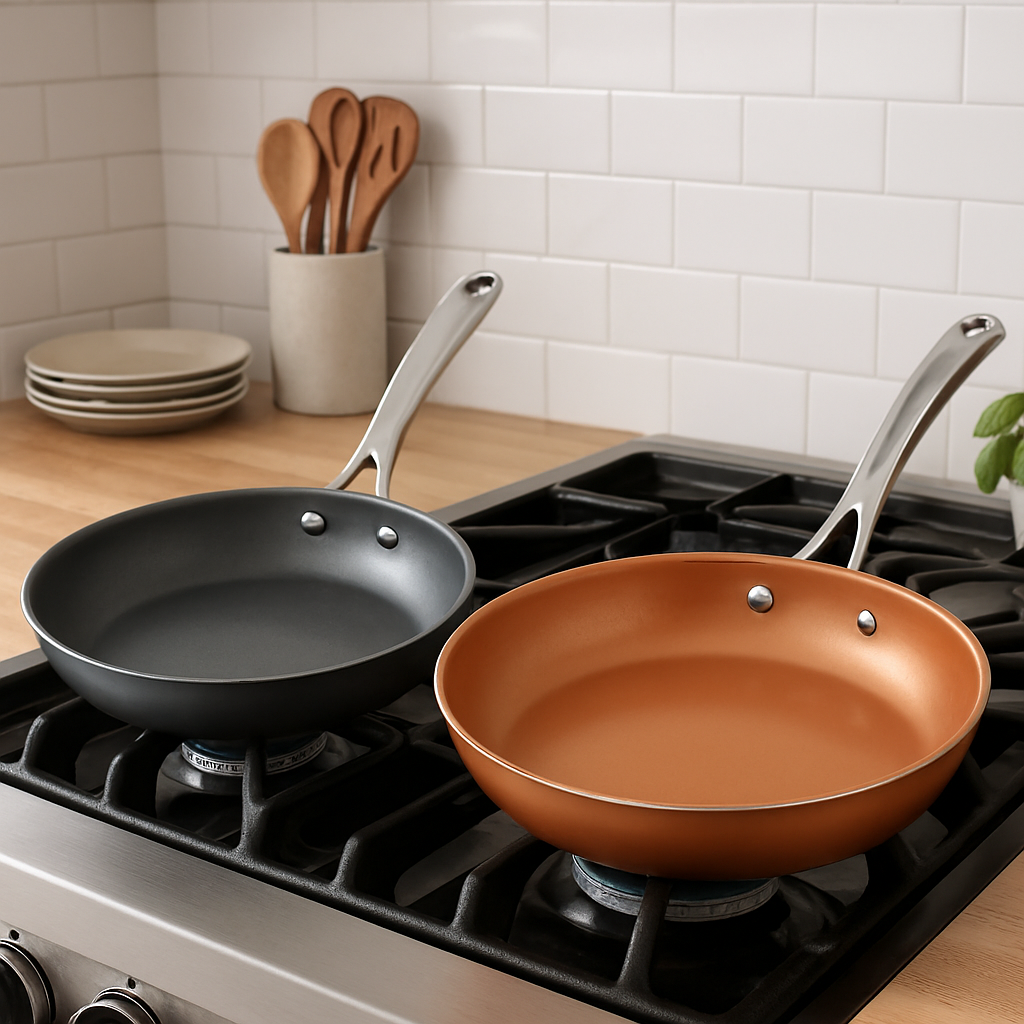
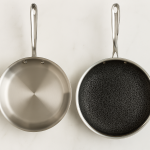
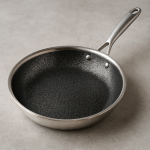
I’ve been testing nonstick cookware for over a decade, and Gotham Steel and Copper Chef are two brands that show up constantly in my inbox. People want to know if these TV-advertised ceramic pans actually work, or if they’re just marketing gimmicks wrapped in copper-colored aluminum.
So I bought both. Cooked with them for months. Let them get beat up the way real pans do in actual kitchens.
Gotham Steel vs Copper Chef — Cooking Behavior Engine
Ceramic nonstick reality check.
This simulation models **heat behavior, coating limits, and user error tolerance** — not ads.
🍳 Cooking Scenario
Ingredient
Mistake
Burner Power
🔥 Nonstick Stability & Forgiveness
Gotham Steel
Copper Chef
🌡️ Surface Heat Consistency
Ceramic coatings amplify hot spots based on base construction.
Gotham Steel
Copper Chef
📊 Coating Degradation Curve
Relative nonstick performance loss after repeated heat stress.
🧠 What Should YOU Buy?
How often do you cook on high heat?
Often
Sometimes
Rarely
How careful are you with cookware?
Not careful
Average
Very careful
What These Brands Actually Claim
Both Gotham Steel and Copper Chef lean hard into similar marketing angles. You’ve probably seen the infomercials—eggs sliding around like air hockey pucks, cheese peeling off in one sheet, that sort of thing.
Gotham Steel positions itself as the “ti-cerama” pan, which is their term for titanium-infused ceramic nonstick coating bonded to aluminum. They promise nothing sticks, ever, and you can use metal utensils without worry.
Copper Chef does almost the same pitch but emphasizes the copper-infused ceramic coating. They also claim extreme heat resistance and scratch-proof durability.
The truth? They’re more alike than different. Both use ceramic nonstick technology. Both have aluminum bodies. Both overstate their durability in ways that become obvious after a few weeks of normal use.
Materials & Construction: What You’re Actually Getting
Let’s break down what these pans are made from, because the marketing makes it sound more complicated than it is.
Gotham Steel Construction
The base is pressed aluminum—lightweight, cheap to manufacture, heats quickly but not always evenly. There’s no steel involved despite the name, unless you count the stainless steel handle on some models.
The coating is a ceramic blend with titanium particles mixed in. Titanium doesn’t make the coating harder in any meaningful way for home cooking. It’s mostly marketing language that sounds tougher than “ceramic nonstick.”
Some Gotham Steel lines have a spiral bottom texture they claim improves heat distribution. In my testing, it didn’t make much difference.
Copper Chef Construction
Also pressed aluminum. Also lightweight. The “copper” is an infused element in the ceramic coating, not a copper core or copper exterior like you’d find in a Mauviel pan.
The coating feels slightly thicker out of the box compared to Gotham Steel, but that difference disappears after a month of cooking. Copper Chef pans have a similar stainless steel handle design.
Neither pan has the kind of multi-layer construction you’d see in All-Clad or Demeyere. They’re single-layer aluminum with a sprayed or bonded ceramic topcoat.
Nonstick Coating: How Ceramic Actually Performs
Here’s where things get interesting, because ceramic nonstick has real limitations that both brands gloss over.
Ceramic coatings work through a super-smooth, glass-like surface that repels food. Unlike PTFE (Teflon), they don’t rely on chemical bonds to prevent sticking. This makes them safer at higher temps—ceramic won’t release toxic fumes if you overheat it.
But ceramic is fragile. Once the surface gets microscratches or develops hotspots from uneven heating, food starts grabbing. And once that starts, it accelerates.
Gotham Steel’s Coating Behavior
Out of the box, Gotham Steel performs exactly like the ads show. Eggs slide. Cheese lifts clean. I cooked a full week without using any oil and everything released perfectly.
Then I made a mistake—left the pan on medium-high heat empty for about three minutes while I prepped vegetables. That was enough to create a permanent hotspot in the center. After that, eggs started sticking right in the middle of the pan.
By week six, even with oil, I had to use a spatula to scrape scrambled eggs. The nonstick was just gone in high-use areas.
Copper Chef’s Coating Behavior
Copper Chef lasted slightly longer before showing wear, maybe two extra weeks. The coating felt more substantial initially, which gave me some hope.
But the same pattern emerged. Hotspots developed. The super-smooth surface dulled. By month three, I was basically using it like a regular uncoated aluminum pan and adding butter or oil every time.
One advantage: when Copper Chef’s nonstick started failing, it failed more gradually. Gotham Steel seemed to go from “perfect” to “useless” faster.
Cooking Performance Tests: Real Food, Real Problems
I ran both pans through the same cooking tests over three months. Here’s what happened.
Eggs (The Classic Nonstick Test)
Week 1: Both pans aced this. Sunny-side-up eggs with zero oil slid around like they were on ice. Scrambled eggs lifted clean.
Week 4: Gotham Steel started sticking in the center unless I used a small amount of butter. Copper Chef still released cleanly.
Week 8: Both pans required oil or butter. Eggs still cooked fine, but the “nonstick magic” was gone.
The lesson here: ceramic nonstick is temporary. Enjoy it while it lasts, but don’t expect it to last.
Pancakes
Pancakes expose heat distribution problems fast. If your pan has uneven heating, you get dark spots and pale spots on the same pancake.
Gotham Steel showed uneven browning from day one. The spiral bottom texture didn’t help. I had to rotate pancakes mid-cook to get even color.
Copper Chef did slightly better, probably because the coating was thicker and diffused heat a bit more. But it still wasn’t great. Thin aluminum just doesn’t hold or distribute heat well.
For reference, a cast iron skillet or a thick stainless steel pan would outperform both of these by a mile for pancakes.
Searing Meat (Chicken Thighs, Steaks)
This is where ceramic nonstick struggles and both pans showed their limits.
You need high heat to get a good sear. But ceramic coatings break down faster at high temps, and thin aluminum buckles slightly when it gets really hot.
I tried searing bone-in chicken thighs in both pans. The skin stuck on Gotham Steel even though I used oil. Copper Chef released better but didn’t generate the kind of crispy crust you want.
For steaks, neither pan got hot enough or stayed hot enough when the cold meat hit the surface. You need thermal mass for a great sear, and these pans don’t have it.
Sticky Sauces (Tomato-Based, Caramelized Onions)
Tomato sauce and caramelized onions are brutal tests for any nonstick surface because sugars and acids both encourage sticking.
In the first month, both pans handled sauces well. I could reduce a marinara without scraping or scrubbing.
After that, sauces started grabbing. Caramelized onions left a thin layer of stuck-on fond that required soaking and scrubbing. Once that happens a few times, the coating degrades faster.
Heat Tolerance: What Happens When You Push the Limits
Both brands claim you can use these pans at high heat without damage. That’s misleading.
Ceramic coatings are more heat-stable than PTFE chemically—they won’t offgas or break down into harmful compounds. But they still degrade from thermal stress.
I tested both pans at various heat levels using an infrared thermometer.
Gotham Steel Heat Behavior
Gotham Steel’s thin aluminum heats up crazy fast. On my gas stove, medium heat brought the pan to 400°F in under two minutes.
The problem is it also cools down fast when you add food. Thermal mass matters, and this pan doesn’t have any.
At temps above 450°F, the coating started showing visible degradation within a week. Little brown spots appeared that wouldn’t wash off. The nonstick properties declined noticeably.
Copper Chef Heat Behavior
Similar story. Slightly thicker coating meant it could tolerate brief high-heat exposure better, but sustained heat above 450°F still damaged it.
One real-world scenario: I preheated Copper Chef on medium-high, added oil, and seared salmon skin-side down. The skin stuck. When I checked the temp, the pan was at 480°F—hotter than I intended because aluminum heats so quickly.
That one cook session left a permanent mark where the fish skin had been.
Induction Compatibility: A Clear Winner
This is one area where there’s a real difference.
Gotham Steel makes both induction-compatible and non-induction models. You have to check the specific product line. The induction versions have a steel disc embedded in the aluminum base.
Copper Chef is generally not induction-compatible unless you buy a specific induction model. The standard Copper Chef pans won’t work on induction cooktops.
If you have induction, double-check before buying either brand.
Durability & Longevity: How Long Do They Actually Last?
Let’s be blunt: neither of these pans lasts long enough to justify the price if you cook daily.
Gotham Steel Durability
I got about eight weeks of genuinely good nonstick performance from Gotham Steel before it started degrading. By month four, the nonstick was essentially dead and I was using oil every time.
The coating never peeled or flaked, which is good—I didn’t want ceramic shards in my food. It just wore down to the point of uselessness.
The handle stayed solid. The pan didn’t warp. But when the whole point of the pan is nonstick convenience, and the nonstick is gone, what’s the point?
Copper Chef Durability
Copper Chef gave me about ten to twelve weeks before noticeable decline. It held up slightly better, maybe because the coating was a bit thicker.
But the end result was the same. By month five, I was cooking in a non-nonstick aluminum pan and wondering why I didn’t just buy a cheap restaurant-supply aluminum skillet for $20.
I’ve tested ceramic pans from GreenPan and Caraway that lasted longer—closer to a year of solid performance. The cheap TV brands just don’t hold up.
Ease of Use: Weight, Handling, Cleaning
Both pans are extremely lightweight, which is great if you have wrist issues or limited strength. It’s terrible if you want a pan that feels substantial and stays put on the burner.
Weight & Balance
Gotham Steel (10-inch): 1.8 lbs. Feels almost toy-like.
Copper Chef (10-inch): 2.1 lbs. Slightly heavier but still very light.
For comparison, a 10-inch cast iron skillet weighs about 5 lbs, and a quality stainless steel skillet weighs 2.5-3 lbs.
The light weight means these pans are easy to maneuver and flip food in, but they also slide around on the stovetop and feel cheap.
Handle Comfort
Both use stainless steel handles that stay relatively cool on the stovetop but get hot in the oven. They’re hollow, so they don’t conduct heat as fast as a solid handle would.
The handles are comfortable enough but nothing special. I’ve used better ergonomic designs on other brands.
Cleaning
When the nonstick is working, both pans clean with a wipe. That’s the whole point.
Once the nonstick starts failing, cleaning gets annoying. You’ll need to soak the pan and scrub with a sponge. I avoided abrasive scrubbers because they’d accelerate the coating breakdown, but honestly, the coating was already dying.
Both brands claim dishwasher-safe. I ran each pan through the dishwasher a few times. It didn’t cause immediate catastrophic failure, but I did notice faster nonstick degradation afterward. Hand washing is better if you want to stretch the lifespan.
Health & Safety: Ceramic vs PTFE
One reason people buy ceramic nonstick is to avoid PTFE (Teflon), which can release harmful fumes if overheated above 500°F.
Ceramic is genuinely safer in that regard. You can overheat these pans and they won’t offgas toxic compounds. That’s a real advantage, especially if you’re absent-minded about heat levels or have pet birds (which are extremely sensitive to PTFE fumes).
But ceramic isn’t perfect either.
Some cheap ceramic coatings have been found to contain lead or cadmium. Gotham Steel and Copper Chef both claim their coatings are free of PTFE, PFOA, lead, and cadmium. I haven’t independently lab-tested these pans, so I’m taking them at their word.
The bigger issue is durability. When ceramic coatings break down, you’re cooking on exposed aluminum. Aluminum exposure through cookware is generally considered safe in normal amounts, but if that bothers you, these pans lose their appeal once the coating fails.
Price vs Value: Are You Getting What You Pay For?
This is where things get frustrating.
Gotham Steel typically runs $20-40 for a single pan depending on size and sales. Copper Chef is similar, sometimes slightly more expensive.
That sounds cheap. And it is. But here’s the problem: if the nonstick only lasts three to four months of regular use, you’re essentially buying a disposable pan.
Compare that to a quality ceramic nonstick pan like GreenPan or Caraway, which costs $60-100 but lasts a year or more. Or compare it to a well-seasoned carbon steel or cast iron pan, which costs $30-60 and can last decades.
The math doesn’t work in favor of Gotham Steel or Copper Chef unless you only cook occasionally and want something cheap for light use.
Side-by-Side Comparison Table
Feature
Gotham Steel
Copper Chef
Base Material
Pressed aluminum
Pressed aluminum
Coating Type
Ti-cerama (titanium-infused ceramic)
Copper-infused ceramic
Initial Nonstick Performance
Excellent
Excellent
Nonstick Longevity
8-10 weeks of daily use
10-12 weeks of daily use
Heat Distribution
Uneven, hotspots develop
Slightly better, still uneven
Max Safe Temp
~450°F before degradation
~450°F before degradation
Weight (10-inch pan)
1.8 lbs
2.1 lbs
Induction Compatible
Some models only
Some models only
Dishwasher Safe
Yes, but hand wash recommended
Yes, but hand wash recommended
Price Range
$20-40
$25-45
Best For
Occasional light cooking
Occasional light cooking
Gotham Steel: Pros and Cons
Pros
Very affordable upfront cost
Lightweight and easy to handle
Initial nonstick performance is genuinely impressive
Safer than PTFE when overheated
Easy to clean when coating is fresh
Cons
Nonstick coating fails quickly (8-10 weeks with regular use)
Thin aluminum = poor heat retention and uneven heating
Develops permanent hotspots easily
Feels cheap and flimsy
Marketing overstates durability significantly
Copper Chef: Pros and Cons
Pros
Slightly longer nonstick lifespan than Gotham Steel
Coating feels more substantial initially
Degrades more gradually
Decent for occasional home cooks
No PTFE fumes when overheated
Cons
Still fails relatively fast (10-12 weeks with daily cooking)
Poor heat distribution
Thin aluminum construction
Not meaningfully better than Gotham Steel despite higher price
Marketing is equally misleading
Who Should Buy Gotham Steel
Buy Gotham Steel if:
You cook infrequently (a few times per week max)
You want the cheapest functional nonstick option
You’re okay replacing pans every few months
You’re cooking simple foods like eggs and don’t need high heat
You want something lightweight for easy handling
Don’t buy Gotham Steel if:
You cook daily and need something durable
You want even heating and good heat retention
You expect the “metal utensil safe” claims to hold up long-term
You’re willing to spend more for better quality
Who Should Buy Copper Chef
Buy Copper Chef if:
You want slightly better durability than Gotham Steel
You cook occasionally and need basic nonstick function
You like the look of the copper-colored exterior
You’re not ready to invest in premium cookware yet
You need something cheap for a rental kitchen or dorm
Don’t buy Copper Chef if:
You expect it to last significantly longer than Gotham Steel (it doesn’t)
You’re paying more than a $5-10 premium over Gotham Steel
You cook regularly and need reliable performance
You want professional-grade results
Bottom Line: Which One Should You Actually Buy?
Neither, honestly.
I know that’s not the answer people want, but after months of testing both pans, I can’t recommend either one for daily cooking.
If I had to pick between the two, I’d choose Copper Chef by a slim margin. It lasted slightly longer and degraded more gradually, which made the decline less annoying. But the difference is minor—maybe two extra weeks of decent performance.
The real problem is that both pans are sold on false promises. The marketing shows decades of perfect nonstick performance with metal utensils and high heat. The reality is three months of good performance followed by steady decline into mediocrity.
Here’s what I’d do instead:
For the same price ($30-40): Buy a carbon steel pan like Matfer Bourgeat or a pre-seasoned Lodge cast iron skillet. Yes, there’s a learning curve with seasoning and maintenance. But once you get it, you’ll have a genuinely nonstick surface that improves with age and lasts forever.
If you want easy ceramic nonstick: Spend $60-80 on GreenPan or Caraway. I’ve tested both and they last 3-4 times longer than Gotham Steel or Copper Chef. The extra $30-40 is worth it when you’re not replacing the pan every few months.
If you must choose between these two: Get whichever one is cheaper when you’re shopping. Don’t pay extra for Copper Chef unless it’s the same price. Save the difference and put it toward a better pan later.
Both Gotham Steel and Copper Chef are fine for what they are—cheap, temporary nonstick pans for light use. Just don’t expect them to deliver on the infomercial promises. They won’t.
FAQ
Q: Do Gotham Steel and Copper Chef actually work without oil?
They do initially. For the first 4-8 weeks, you can cook eggs and pancakes with zero oil and they’ll release perfectly. After that, the coating degrades and you’ll need oil like any other pan.
Q: Are these pans safe to use after the nonstick wears off?
Yes, you’re just cooking on aluminum at that point, which is generally safe. But the whole reason to buy these pans is the nonstick coating, so once that’s gone, you’re better off switching to something more durable.
Q: Can I really use metal utensils on these pans?
Technically yes, but it accelerates coating breakdown. I tested this deliberately and metal utensils created visible scratches within days. If you want your pan to last even the short lifespan it’s capable of, stick with silicone or wood.
Q: Which pan heats more evenly?
Neither heats evenly. Both are thin aluminum with hotspot issues. Copper Chef was marginally better in my tests, but the difference is small.
Q: Are these pans worth it for someone who rarely cooks?
Maybe. If you cook once or twice a week, these pans might last you six months to a year, which could be acceptable for $30. But I’d still recommend spending a bit more on something that lasts longer.
Q: How do these compare to GreenPan or Caraway?
Not even close. GreenPan and Caraway use higher-quality ceramic coatings with better bonding and thicker application. They cost more but last significantly longer—usually a year or more with daily use.