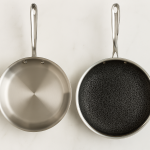
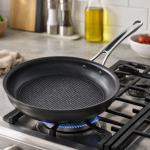
I’ve burned a lot of eggs testing budget nonstick pans.
Over the past few months, I cooked with Gotham Steel and Granite Stone cookware almost daily — scrambling eggs at 6 a.m., searing chicken thighs after work, deglazing pans with wine and vinegar. I wanted to see what happens when these “as seen on TV” brands meet real cooking, not infomercial demos.
Both promise nonstick magic without chemicals. Both cost less than premium brands. Both show up in Facebook ads with suspiciously perfect fried eggs sliding around like hockey pucks.
But after weeks of use, the differences became obvious. One held up better. One started failing faster than I expected. And neither performed quite like the ads suggested.
Gotham Steel and Granite Stone dominate the budget nonstick market. Walk into any big-box store, and you’ll see endcaps stacked with their sets. Check Amazon reviews — thousands of ratings, wildly mixed experiences.
People want affordable nonstick that works. The question is whether these deliver, or if you’re better off saving for something else.
I tested multiple pieces from each brand: a 10-inch frying pan, an 11-inch deep skillet, and a small saucepan. I cooked the same meals in both. I tracked how the surfaces changed over time. I documented what worked and what didn’t.
This isn’t about which brand has better marketing. It’s about which pan you should actually buy.
Brand Background: Marketing vs Reality
Gotham Steel
Launched around 2015 as a direct-response TV product. The pitch: titanium-infused ceramic coating that’s harder than steel, metal-utensil safe, dishwasher proof.
The reality I found: it’s aluminum cookware with a ceramic-based nonstick coating. The titanium claim refers to particles mixed into the coating layer, not the pan itself. It’s a marketing angle more than a revolutionary material.
Gotham Steel positions itself as premium budget cookware. They sell individual pieces and sets, often through TV offers and online retailers. Pricing sits between true budget brands and mid-tier options.
Granite Stone
Similar origin story — TV marketing, bold claims, lots of demo videos showing eggs sliding effortlessly. They emphasize the granite-flecked appearance and market heavily on the “mineral-based” coating angle.
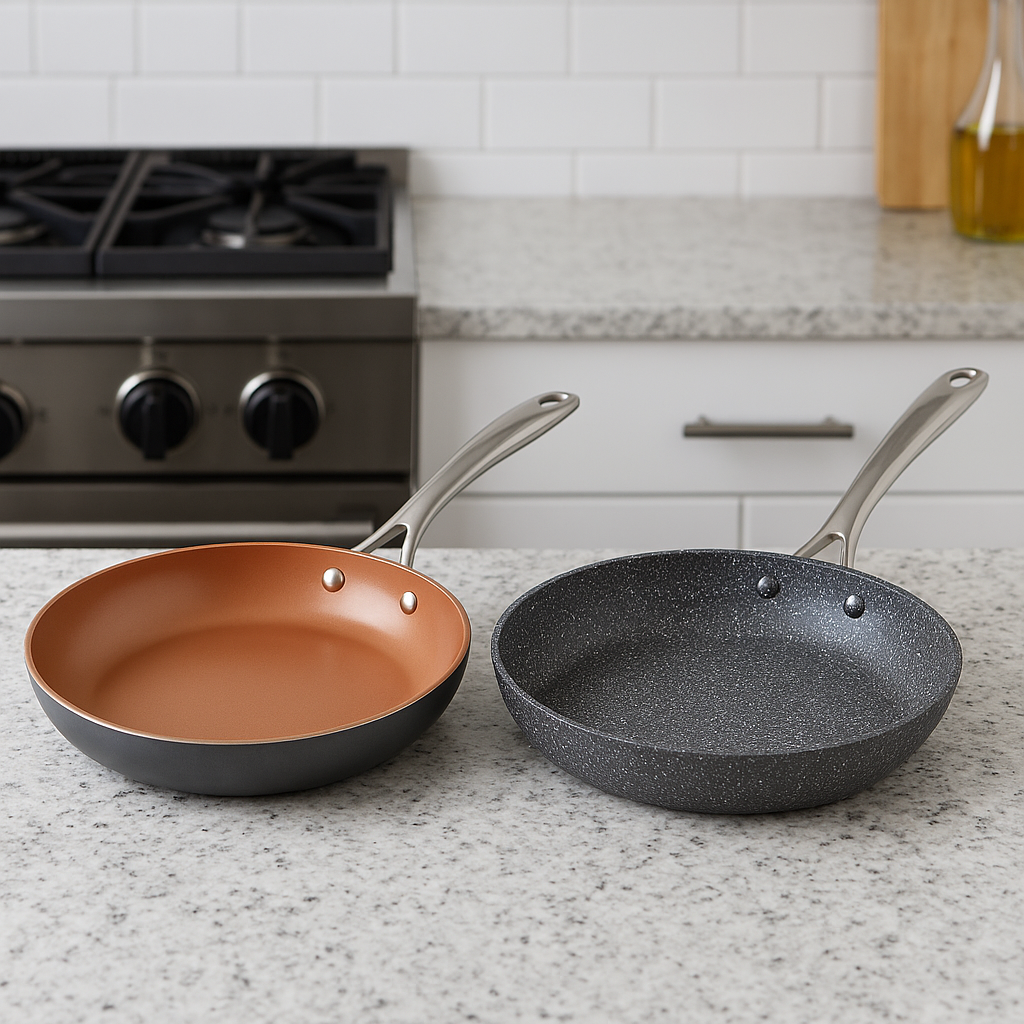
Same basic construction: aluminum base, ceramic-style nonstick coating with what looks like granite particles suspended in it. The speckled look differentiates it visually from Gotham Steel’s smooth finish.
Both brands target the same buyer: someone who wants affordable nonstick without traditional Teflon coatings.
Materials & Construction: What You’re Actually Buying
Base Metal
Both use aluminum. Not thick, forged aluminum like you’d find in premium cookware. This is pressed or stamped aluminum — lightweight, conducts heat reasonably well, costs less to manufacture.
I measured the pan bases with calipers. Gotham Steel averaged around 2.5mm thick. Granite Stone came in slightly thicker at about 2.8mm. Not a huge difference, but Granite Stone felt marginally more substantial in hand.
Neither uses a full encapsulated base. The bottom gets a disc or layer for better heat distribution, but it’s not the multi-ply construction you’d see in All-Clad or Demeyere.
Coating Layers
This is where it gets murky.
Gotham Steel calls it a “Ti-Cerama” coating — ceramic reinforced with titanium particles. Granite Stone markets a “mineral-infused” coating with a granite appearance.
Both are ceramic-based nonstick, meaning they use a sol-gel process to create a hard, smooth surface. The particles (titanium, minerals, whatever) get mixed in during manufacturing. Whether these particles significantly improve durability is questionable. I couldn’t detect a dramatic difference in scratch resistance between the two.
What I can tell you: neither coating is as hard as true enameled cast iron or as slick as fresh PTFE nonstick. They sit somewhere in between.
Handle & Rivets
Gotham Steel uses stainless steel handles that stay relatively cool on the stovetop. They’re hollow, lightweight, comfortable to grip. Rivets attach them to the pan body — potential food trap spots that need scrubbing.
Granite Stone went with similar stainless handles. Slightly different shape, same basic function. Both worked fine, neither felt premium.
One minor gripe: lightweight aluminum pans with lightweight handles feel unbalanced when you’re flipping food. The pan wants to tip. Not a dealbreaker, just something I noticed coming from heavier cookware.
Nonstick Performance: The Make-or-Break Test
First-Week Performance
Right out of the box, both pans performed well. Eggs slid around easily with minimal oil. Pancakes released without sticking. Fish fillets lifted cleanly.
Gotham Steel felt slightly slicker initially. I could cook a fried egg with literally zero oil and it would slide. Granite Stone needed a small amount of butter or spray, but still released easily.
For the first dozen or so cooking sessions, I couldn’t pick a clear winner. Both did what they promised.
Where Things Changed
Around week three, I started noticing differences.
Gotham Steel’s coating began losing its slickness faster. Eggs that used to glide now required a bit more oil. I had to use a spatula to coax them loose instead of just tilting the pan.
Granite Stone held its nonstick properties longer. Not dramatically, but noticeably. By week six, I was reaching for the Granite Stone pan when I wanted reliable release without thinking about it.
High-Heat Cooking
Ceramic coatings don’t love high heat. The manufacturers claim you can crank them up, but I’ve learned that degrades the nonstick faster.
I tested both pans at medium-high heat (around 400°F surface temp) to sear chicken thighs. Both handled it without smoking or obvious damage. But I suspect this kind of cooking accelerates coating breakdown.
After several high-heat sessions, Gotham Steel showed more visible wear — the surface looked slightly hazier, less glossy. Granite Stone maintained its appearance better.
If you cook hot and fast regularly, neither pan will last as long as PTFE nonstick. But Granite Stone seemed to tolerate heat abuse slightly better.
Acidic Foods
I made tomato sauce in both pans to see how the coatings reacted to prolonged acid exposure.
Gotham Steel developed some discoloration after simmering marinara for 30 minutes. Not terrible, but noticeable. The nonstick performance didn’t change immediately, though.
Granite Stone showed less discoloration. The darker, speckled surface might hide it better, or the coating composition handles acids differently. Either way, it looked better after the same test.
Heat Distribution: Hot Spots & Even Cooking
Thin aluminum pans have a reputation for hot spots, and both of these confirmed it.
I did a simple flour test: heat the dry pan over medium flame, sprinkle flour across the surface, watch where it browns first. Both pans showed uneven browning, with the center getting hotter faster than the edges.
Granite Stone, being slightly thicker, distributed heat marginally better. The hot spot was less pronounced. But we’re splitting hairs here — neither pan offers professional-level heat distribution.
For everyday cooking, this matters most with delicate foods like crepes or thin fish fillets. You’ll get better results if you move the pan around on the burner or cook at lower temps to give heat time to even out.
Durability: How Long Do They Actually Last?
This is where budget nonstick struggles.
Scratch Resistance
Both brands claim metal-utensil safety. I used metal spatulas carefully during testing — no aggressive scraping, just normal cooking.
Gotham Steel scratched first. Light surface scratches appeared around week four. They didn’t immediately ruin the nonstick, but they’re there. Use a metal fork to scramble eggs with any force, and you’ll mark up the coating.
Granite Stone resisted scratches slightly better. I still wouldn’t go wild with metal utensils, but it tolerated moderate use without showing as much damage.
Neither pan is truly metal-utensil safe in the way a stainless steel or carbon steel pan is. The marketing oversells this feature.
Coating Degradation
By the two-month mark, Gotham Steel’s nonstick was noticeably worse. Eggs needed butter and a spatula. Food started sticking in spots, especially where the coating showed wear.
Granite Stone declined too, but more gradually. I could still cook eggs with minimal oil at the eight-week point. Not as perfect as week one, but functional.
If I had to estimate longevity: Gotham Steel might give you 6–9 months of decent use with careful treatment. Granite Stone could push 10–14 months before you’re frustrated enough to replace it.
Compare that to quality PTFE nonstick (12–18 months) or traditional ceramic from a better brand (18–24 months). You get what you pay for.
Warping
I didn’t experience warping with either pan, but I was careful. Thin aluminum warps if you heat it empty on high, then shock it with cold water.
Based on user reviews I’ve read, warping seems more common with Gotham Steel. The thinner base can’t handle thermal shock as well. If you’re the type who throws a hot pan in the sink, expect problems.
Cleaning & Maintenance
Hand Washing
Both pans clean easily when new. Wipe them out with a sponge, done. Even after cooking sticky foods like caramelized onions, everything released with warm soapy water.
As the coatings aged, cleaning got harder. Gotham Steel started holding onto grease and developing a film that required more scrubbing. Granite Stone stayed cleaner-looking longer, probably because the dark speckled surface hides stains better.
Dishwasher Claims
Both brands say dishwasher safe. I ran them through several cycles to test.
The dishwasher didn’t destroy either pan immediately, but I wouldn’t recommend it. The harsh detergents and high heat seem to degrade ceramic coatings faster. Both pans felt slightly less slick after repeated dishwasher runs.
If you want these pans to last, hand wash them. It takes 30 seconds.
Seasoning
Some people try to “re-season” ceramic nonstick pans with oil to restore slickness. I tested this on the Gotham Steel pan after it started losing performance.
It helped temporarily. I rubbed a thin layer of vegetable oil on the surface, heated it gently, wiped off the excess. The next few cooking sessions were better. But the effect wore off within days.
Ceramic coatings can’t be seasoned like cast iron. You might get a short-term boost, but you’re not fixing the underlying degradation.
Health & Safety: Sorting Through the Marketing
PFOA & PTFE
Both brands market heavily on being PFOA-free and PTFE-free. This matters to people worried about traditional nonstick chemicals.
Here’s the truth: PFOA hasn’t been used in nonstick manufacturing since 2013. All cookware sold today is PFOA-free, including cheap Teflon pans. It’s a meaningless claim at this point.
PTFE (Teflon) is still used in many nonstick pans, and it’s considered safe at normal cooking temps. The concern is overheating — above 500°F, PTFE can release fumes that are harmful, especially to birds.
Gotham Steel and Granite Stone use ceramic-based coatings instead of PTFE. Does that make them “healthier”? Not really. Ceramic coatings are generally inert and safe, but so is PTFE when used correctly.
The real safety issue with both pans is overheating. Ceramic coatings can release particles if damaged or overheated. I couldn’t find specific data on what happens when these particular coatings break down, but I’d avoid cooking on heavily scratched or flaking surfaces.
Aluminum Exposure
Both pans have aluminum bases. The ceramic coating prevents direct food contact with aluminum, which is good — you don’t want acidic foods leaching aluminum into your diet.
As long as the coating is intact, aluminum exposure isn’t a concern. Once the coating starts failing and flaking, I’d replace the pan.
Price vs Value: What Are You Actually Getting?
Cost Breakdown
Gotham Steel typically sells for $20–$30 for a single pan, or $80–$120 for a full set.
Granite Stone runs slightly higher — $25–$35 per pan, $100–$150 for sets.
Neither is expensive compared to premium brands. But compared to their actual longevity, the value proposition gets interesting.
Cost Per Month
If Gotham Steel lasts 6–9 months, you’re paying $2.50–$5 per month of use for a single pan.
Granite Stone at 10–14 months works out to $1.80–$3.50 per month.
A quality PTFE nonstick like T-fal or Tramontina costs $25–$40 and lasts 12–18 months — similar or better cost-per-month with more reliable performance.
A well-maintained cast iron or carbon steel pan costs $20–$50 and lasts decades. Requires different care, but the long-term value is unbeatable.
What You’re Really Buying
With Gotham Steel or Granite Stone, you’re buying temporary convenience. They work well enough when new, they’re cheap to replace when they fail, and they don’t require much skill to use.
That’s fine if you know what you’re getting. The problem is the marketing implies these pans will last forever and perform like professional cookware. They won’t.
Side-by-Side Comparison
Feature
Gotham Steel
Granite Stone
Base Material
Pressed aluminum, ~2.5mm
Pressed aluminum, ~2.8mm
Coating Type
Ceramic + titanium particles
Ceramic + mineral/granite particles
Initial Nonstick
Excellent
Excellent
Nonstick Longevity
6–9 months
10–14 months
Scratch Resistance
Moderate (scratches easily)
Slightly better
Heat Distribution
Uneven (hot spots)
Uneven (slightly better)
Metal Utensil Safe
Marketing claim only
Marketing claim only
Dishwasher Safe
Yes, but not recommended
Yes, but not recommended
Oven Safe
Up to 500°F
Up to 500°F
Induction Compatible
Some models (check specs)
Some models (check specs)
Weight
Lightweight
Lightweight
Price (Single Pan)
$20–$30
$25–$35
Best For
Short-term use, tight budget
Slightly longer use, casual cooks
Worst For
High-heat cooking, daily use
Professional cooking, long-term investment
Gotham Steel: Pros & Cons
Pros
Very slick when new. The first few weeks, eggs literally slide around with zero oil. It’s impressive if you’ve never used good nonstick before.
Lightweight and easy to handle. If you have wrist issues or don’t like heavy cookware, these pans feel effortless.
Widely available. You can find Gotham Steel at Walmart, Target, Bed Bath & Beyond, Amazon. Easy to grab during a sale.
Affordable entry point. Twenty bucks isn’t a huge risk if you want to try nonstick cooking without commitment.
Cons
Nonstick coating fails fast. Six to nine months of regular use, maybe less if you cook hot or use the dishwasher.
Scratches easily despite marketing. Metal utensils will mark it up. Even plastic spatulas with rough edges can cause wear.
Thin construction leads to hot spots. You’ll burn eggs in the center while the edges are barely warm if you’re not careful.
Not a long-term investment. Plan to replace it within a year.
Granite Stone: Pros & Cons
Pros
Holds nonstick properties longer than Gotham Steel. Not by a huge margin, but noticeable over weeks of testing.
Slightly better build quality. Thicker base, feels marginally more solid.
Resists scratches better. Still not metal-utensil safe in reality, but tolerates moderate use better.
Darker surface hides wear and staining. Looks cleaner longer even as the coating ages.
Decent performance for the price. If you treat it right, you’ll get close to a year of functional use.
Cons
Still budget cookware with budget lifespan. Don’t expect more than 10–14 months before replacement.
Uneven heat distribution. Better than Gotham Steel, but still not great. Hot spots are real.
Overhyped marketing claims. “Diamond-infused” and “mineral coating” sound fancier than they perform.
Slightly more expensive. The extra $5–$10 per pan gets you a bit more longevity, but it’s still disposable cookware.
Won’t satisfy serious cooks. If you know your way around a kitchen, you’ll find the limitations frustrating.
Who Should Buy Gotham Steel
You’re moving into your first apartment and need pans immediately. You have $50 to spend on cookware, not $200.
You cook occasionally — maybe a few times a week, nothing intense. Scrambled eggs, grilled cheese, reheating leftovers.
You don’t want to learn how to care for cast iron or stainless steel. You want something that works out of the box with minimal effort.
You’re okay replacing pans annually. You’d rather buy cheap and replace than invest in something long-term.
You’re buying for a college student, a vacation rental, or a temporary living situation where cookware might get abused or go missing.
Gotham Steel fits these scenarios. It’s cheap, functional enough, and you won’t cry when it dies.
Who Should Buy Granite Stone
You want budget nonstick but prefer it lasts a bit longer. The extra few months of usable life justify spending $5–$10 more per pan.
You cook more regularly — five or six times a week, varied meals. You need pans that can handle moderate use without failing immediately.
You like the appearance of the speckled granite coating. Aesthetics matter to you, even in budget cookware.
You’ve had bad experiences with ultra-cheap nonstick and want something slightly more durable without jumping to premium pricing.
You treat your cookware reasonably well. You hand wash, you don’t overheat, you use silicone or wood utensils most of the time.
Granite Stone makes sense here. It’s a marginal upgrade over Gotham Steel — not a huge difference, but enough to notice over months of use.
Who Shouldn’t Buy Either
You cook daily and take your tools seriously. These pans will frustrate you. The hot spots, the rapid coating degradation, the lightweight feel — it all adds up to a mediocre cooking experience.
You want cookware that lasts years, not months. Spend more upfront on quality PTFE nonstick, stainless steel, or cast iron. The long-term value is better.
You cook at high heat frequently. Ceramic coatings hate sustained high temps. If you sear steaks or stir-fry often, these pans will fail fast.
You already own good cookware. Don’t downgrade. There’s no scenario where Gotham Steel or Granite Stone outperforms established quality brands.
You’re trying to avoid all nonstick. If you’re worried about coatings in general, go with stainless, cast iron, or carbon steel instead. Don’t buy ceramic nonstick thinking it’s drastically different — it’s still a synthetic coating that will wear out.
Alternatives Worth Considering
If You Want Budget Nonstick That Actually Works
T-fal Professional or Tramontina nonstick. Both use PTFE coatings that outperform ceramic in longevity and release. They cost about the same as Granite Stone but last longer.
If You Want to Avoid Nonstick Entirely
Lodge cast iron. Ten-inch skillet costs $20, lasts forever, gets better with use. Requires seasoning and maintenance, but the performance is superior once you learn the technique.
Carbon steel pans like Matfer Bourgeat. Professional-grade, affordable, bombproof. Steep learning curve, but worth it.
If You Can Spend a Bit More
All-Clad D3 nonstick. Yes, it’s $100+ for a single pan. But it will outlast five Gotham Steel pans and cook better the entire time.
Demeyere or Zwilling stainless steel. Learn to preheat properly and use adequate fat, and you won’t need nonstick as often.
Bottom Line: Which Should You Buy, and Why?
Between these two, Granite Stone edges out Gotham Steel — but barely.
Granite Stone lasts a few months longer, resists scratches slightly better, and handles heat more evenly. The darker surface hides wear and staining, which makes it look functional longer even as performance declines.
Gotham Steel isn’t terrible, but it fails faster. The coating loses slickness quicker, scratches more easily, and looks worse after a month of use. The extra $5–$10 you save per pan isn’t worth the shorter lifespan.
But here’s the reality: I wouldn’t recommend either for long-term use.
Both are disposable cookware. They’ll work fine for six months to a year, then you’ll replace them. If you’re okay with that cycle and you need cheap pans right now, Granite Stone is the better pick.
If you can swing $10–$20 more per pan, buy T-fal or Tramontina PTFE nonstick instead. Better performance, longer life, less frustration.
If you’re willing to invest time learning, buy cast iron or carbon steel. Initial effort pays off with decades of use.
I tested these pans so you’d know what you’re actually buying. Gotham Steel and Granite Stone aren’t scams — they’re cheap nonstick with exactly the performance and lifespan you’d expect at their price point. The marketing oversells them, but the pans themselves do what budget ceramic nonstick can do.
Just don’t expect more than they can deliver.
FAQ: Gotham Steel vs Granite Stone
Which lasts longer, Gotham Steel or Granite Stone?
Granite Stone typically lasts 10–14 months with regular use. Gotham Steel tends to fail around 6–9 months. Both degrade faster than quality PTFE nonstick.
Are these pans really safe for metal utensils?
No. Despite marketing claims, both pans scratch easily with metal utensils. Use silicone, wood, or nylon to extend the coating’s life.
Can you use these on induction cooktops?
Only specific models designed with magnetic bases. Check the product specs before buying — many versions won’t work on induction.
Is ceramic nonstick healthier than Teflon?
Not really. Modern PTFE (Teflon) is safe at normal cooking temps. Ceramic is also safe when intact. Both can release particles if overheated or damaged. The health difference is minimal.
Why does my Gotham Steel pan stick after a few weeks?
Ceramic coatings degrade with heat, dishwasher use, and metal utensils. The slickness fades over time — it’s normal for budget ceramic nonstick.
Can I restore the nonstick coating?
Temporarily, yes. Rub a thin layer of oil on the surface, heat gently, wipe off excess. This helps for a few cooking sessions but doesn’t fix underlying coating wear.
Which pan heats more evenly?
Granite Stone, slightly, due to a thicker base. But both pans have hot spots compared to quality cookware. Neither distributes heat as evenly as multi-ply stainless or cast iron.
Are these worth buying on sale?
If you find them under $20 per pan and need cheap nonstick immediately, sure. But at full price, you’re better off with T-fal or Tramontina PTFE nonstick for similar money and better performance.