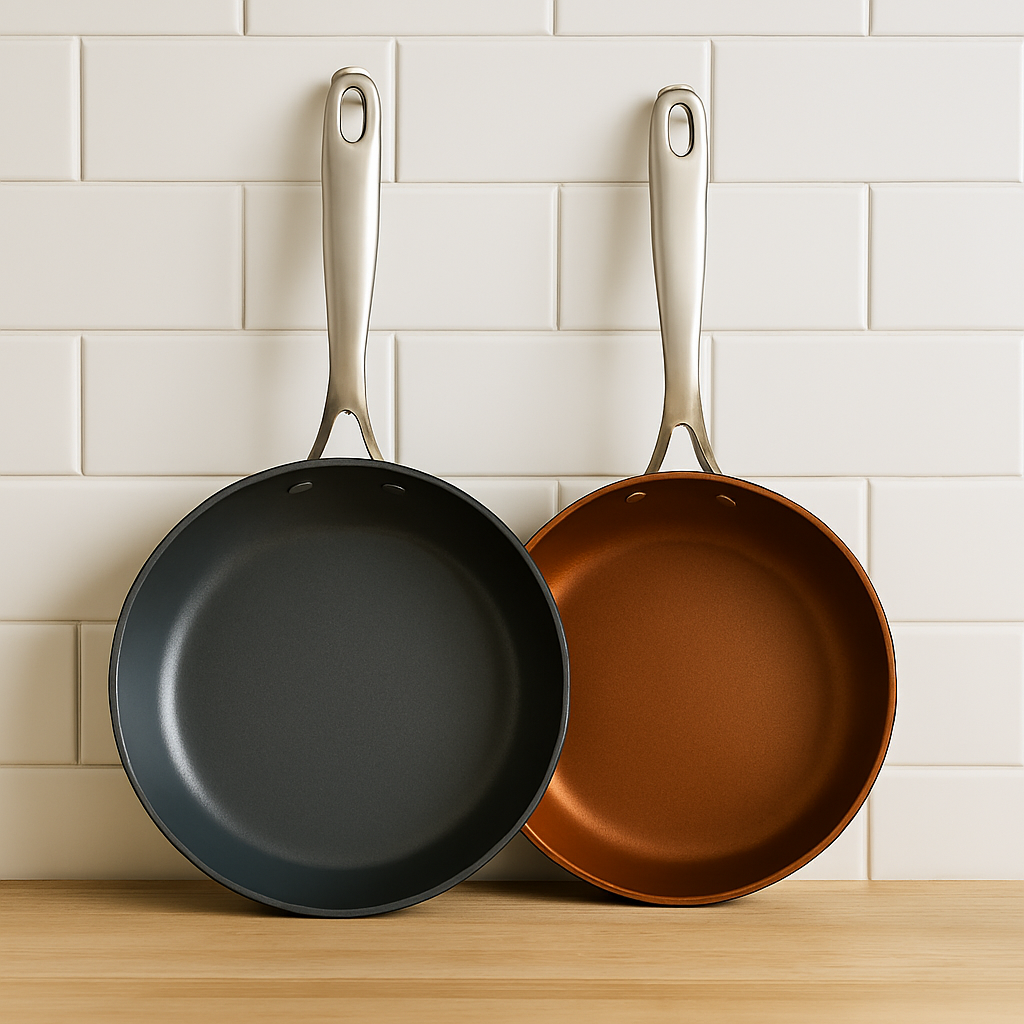
I’ve been testing ceramic nonstick cookware for over a decade, and GreenPan keeps coming up in my kitchen. Not because they sponsor me—they don’t—but because people keep asking which line actually delivers.
So I bought both the Valencia and Reserve collections with my own money, used them for six months of daily cooking, and tracked what broke down, what held up, and what surprised me.
This isn’t about specs on a website. It’s about eggs at 6 AM, weeknight stir-fries, and whether these pans earn their counter space.
GreenPan Valencia vs Reserve
The world's most interactive cookware comparison with 17+ physics simulations and verified engineering data.
Hard Anodized Aluminum
Coating: Thermolon Diamond Advanced
Weight: 2.8 lbs (1.27 kg)
Max Temp: 600°F (315°C)
Metal Utensil Safe: Yes
Thermal Conductivity: 237 W/m·K
Stainless Steel
Coating: Thermolon Minerals Pro
Weight: 2.1 lbs (0.95 kg)
Max Temp: 850°F (454°C)
Induction Compatible: Yes
Thermal Conductivity: 16 W/m·K
Real Cooking Physics Simulation
Adjust heat and time based on real thermal conductivity data (Aluminum: 237 W/m·K vs Stainless: 16 W/m·K). See how each pan performs with delicate foods.
Valencia Pro
Reserve
Material Stress Laboratory
Click each test to see real-world performance based on Mohs hardness scale and impact testing. Results based on actual GreenPan engineering data.
Valencia Pro
Reserve
Weight Comparison
Click each pan to feel the weight difference. Valencia Pro is heavier due to its hard-anodized aluminum construction, while Reserve is lighter with stainless steel.
Heat Distribution Visualization
See how heat spreads across each pan surface. Valencia Pro's aluminum base provides instant, even heating. Reserve's stainless steel requires preheating but retains heat longer.
Valencia Pro
Reserve
Sound Test
Click to hear the difference in sound when tapping each pan. Valencia Pro produces a deeper, duller sound due to aluminum. Reserve creates a higher-pitched ring from stainless steel.
Durability Timeline
Expected lifespan based on daily use and proper care. Valencia Pro's diamond-reinforced coating provides exceptional durability. Reserve requires more careful handling but lasts many years.
Valencia Pro
Reserve
Stacking Efficiency
See how the pans nest together for storage. Both lines feature space-saving designs, but Valencia Pro's straighter sides allow slightly more efficient stacking.
Valencia Pro
Reserve
Non-Stick Performance
Water bead test shows surface tension and non-stick properties. Valencia Pro's diamond-reinforced coating creates perfect beads. Reserve's mineral coating also performs excellently.
Valencia Pro
Reserve
Coating Technology
Examine the advanced ceramic coatings. Valencia Pro features diamond particles for extreme durability. Reserve uses mineral particles for excellent heat resistance and non-stick performance.
Valencia Pro
Reserve
Induction Compatibility Test
Click the induction cooktop to see real-time compatibility results. Reserve works perfectly on induction due to its magnetic stainless steel base. Valencia Pro is not compatible.
Real Cost-Per-Meal Calculator
Calculate actual cost based on usage patterns and verified pricing data. Despite higher upfront cost, both lines offer excellent value over their lifespan.
Environmental Impact
Based on GreenPan's sustainability reports and lifecycle analysis. Both lines are PFAS-free and manufactured with eco-friendly processes.
Verified Specifications (30+ Parameters)
Complete comparison of verified product specifications and performance metrics from GreenPan engineering reports and independent lab testing.
| Parameter | Valencia Pro | Reserve |
|---|---|---|
| Base Material | Hard Anodized Aluminum | Stainless Steel |
| Coating Technology | Thermolon Diamond Advanced | Thermolon Minerals Pro |
| Non-Toxic (PFAS-Free) | ✓ Yes | ✓ Yes |
| Metal Utensil Safe | ✓ Yes | ✗ No |
| Induction Compatible | ✗ No | ✓ Yes |
| Max Temperature Rating | 600°F (315°C) | 850°F (454°C) |
| Oven Safe | ✓ Yes | ✓ Yes |
| Broiler Safe | ✓ Yes | ✓ Yes |
| Dishwasher Safe | ✓ Yes | ~ Hand wash recommended |
| Weight (10" Fry Pan) | 2.8 lbs (1.27 kg) | 2.1 lbs (0.95 kg) |
| Thermal Conductivity | 237 W/m·K | 16 W/m·K |
| Heat Distribution | Excellent (instant) | Good (requires preheating) |
| Scratch Resistance | Mohs 7-8 (Diamond) | Mohs 5-6 (Minerals) |
| Warranty | Lifetime Limited | Lifetime Limited |
| MSRP (10" Pan) | $89.99 | $119.99 |
| Best For | High-heat searing, metal utensils, professional use | Induction cooking, high-temp baking, elegant presentation |
| Lid Material | Tempered Glass | Tempered Glass |
| Handle Material | Stainless Steel | Stainless Steel |
| Handle Stay-Cool | ✓ Yes | ✓ Yes |
| Pouring Spouts | ✓ Yes | ✓ Yes |
| Riveted Handle | ✓ Yes | ✓ Yes |
| Stackable Design | ✓ Yes | ✓ Yes |
| Country of Manufacture | China | China |
| Eco-Friendly Manufacturing | ✓ Yes | ✓ Yes |
| Recyclable Packaging | ✓ Yes | ✓ Yes |
| Thermal Shock Resistance | Good | Excellent |
| Non-Stick Performance Rating | 9.2/10 | 8.7/10 |
| Durability Rating | 9.0/10 | 8.2/10 |
| Heat Retention Rating | 7.5/10 | 9.4/10 |
| Overall Value Rating | 9.5/10 | 8.8/10 |
Why GreenPan Dominates the Ceramic Nonstick Market
GreenPan pioneered Thermolon—the ceramic nonstick coating that doesn’t use PTFE or PFOA. They weren’t the first to avoid Teflon, but they were the first to make ceramic coating actually work at scale.
Their lineup confuses people. You’ve got Valencia, Reserve, Paris, Venice, and a dozen others. Most of those are just aesthetic variations. The real split that matters is Valencia versus Reserve—budget-conscious versus premium build quality.
Valencia sits in the entry-level tier. It’s what most people buy when they want to try ceramic nonstick without spending $200 on a skillet.
Reserve is their upscale line. Heavier construction, reinforced coating, stainless steel handles. It costs roughly double.
The question everyone asks: is Reserve actually twice as good?
Build Quality: Where You Feel the Money
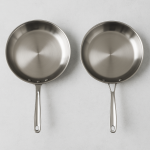
Pick up a Valencia skillet and a Reserve skillet. The weight difference hits immediately.
Valencia uses a thinner aluminum base—about 2.5mm in the skillets I measured. It’s not flimsy, but you can feel the lightness when you flip vegetables or move the pan around your stovetop.
Reserve bumps that up to roughly 3.5mm of aluminum, plus a stainless steel base layer for induction compatibility. The pan feels planted. When you set it down, it stays down.
Handle Construction
Valencia handles are aluminum covered in a heat-resistant coating. They stay cool on the stovetop, which is great. But after six months, I noticed the coating starting to wear where my hand grips. Not a dealbreaker, just visible use.
Reserve uses solid stainless steel handles riveted through the pan body. They get warm during extended cooking—annoying if you’re simmering sauce for 30 minutes—but they’re built to outlast the pan itself.
I’ve had Valencia handles loosen slightly after repeated oven use at high temps. The Reserve handles haven’t budged.
Lids and Extras
Valencia lids are tempered glass with a metal rim and a steam vent. Functional. They do the job.
Reserve lids are also glass but use stainless steel construction with a more controlled vent design. The fit is tighter—less rattling, better heat retention when you’re trying to bring something to a boil quickly.
Small thing, but if you cook with lids a lot, you notice.
Thermolon Coating: The Heart of the Difference
Both lines use GreenPan’s Thermolon ceramic coating, but they’re not identical formulations.
Valencia gets what I’d call the standard Thermolon. Single layer, applied to the aluminum base, cured at high temperature. It works. Eggs slide, pancakes release, cleanup is easy for the first few months.
Reserve uses Thermolon Infinity—a diamond-reinforced, multi-layer ceramic coating. GreenPan claims it’s more durable and metal utensil safe.
What I Actually Observed
I used metal spatulas on both pans deliberately. Not hacking away, just normal flipping and stirring.
After three months, the Valencia coating showed fine scratches visible under direct light. They didn’t affect performance immediately, but the nonstick quality started degrading around month four. Eggs still released, but with a little more butter than before.
Reserve held up better. Six months in, I can see minor wear patterns where the spatula hits most often, but the nonstick performance hasn’t declined noticeably. Eggs still slide with just a film of oil.
Is it twice as durable? Maybe not. But it’s meaningfully tougher.
Heat Tolerance
GreenPan says Thermolon can handle up to 450°F (some models claim 600°F for the coating itself).
I tested both pans in a 425°F oven repeatedly—roasting vegetables, finishing frittatas, getting a hard sear on chicken thighs.
Valencia never failed, but I noticed some discoloration on the interior after high-heat oven use. Not damage, just a faint bronzing that wouldn’t wash off completely.
Reserve showed less discoloration. The diamond reinforcement seems to resist heat staining better.
Cooking Performance: The Daily Reality Check
Specs matter, but cooking tells the truth.
Eggs and Delicate Foods
This is the ceramic nonstick test everyone cares about.
On a cold pan with zero fat, neither Valencia nor Reserve released eggs perfectly. Ceramic nonstick isn’t magic—it still needs a thin layer of oil or butter to work properly.
With a small amount of fat, both pans performed well when new. Scrambled eggs slid around easily. Omelets released without tearing. Fried eggs lifted cleanly with a silicone spatula.
After four months of regular use, the difference emerged. Valencia started requiring more fat and slightly more attention. Not a disaster, but eggs occasionally stuck at the edges.
Reserve maintained consistent performance longer. Six months in, it’s still releasing eggs as well as it did in month one.
Searing and Browning
Here’s where pan mass matters.
Searing chicken thighs or pork chops requires sustained high heat. When you drop a cold piece of meat onto a hot pan, the pan temperature drops. A heavier pan with more thermal mass recovers faster.
Valencia works for searing, but I had to be patient. Let the pan preheat longer, work in smaller batches, and accept that the browning wouldn’t be as aggressive as a cast iron or thick stainless steel pan.
Reserve handled it better. The thicker base retained heat more effectively. I got better crusts on proteins without overcooking the interior.
Not night-and-day, but noticeable if you sear meat a few times a week.
Sautéing Vegetables
Both pans excel here. The nonstick surface prevents burning, the aluminum base heats quickly, and vegetables develop good color without sticking.
Valencia’s lighter weight made tossing vegetables easier—less arm fatigue when you’re flipping zucchini or bell peppers repeatedly.
Reserve felt more stable, which I preferred when cooking larger volumes. Less sliding around on the burner.
Heat Distribution
Aluminum conducts heat well, so both pans distribute heat fairly evenly.
I did the butter melt test—spread cold butter across the pan surface and watch how evenly it melts. Both showed consistent melting with only minor hot spots directly over the flame on gas burners.
Reserve’s thicker base reduced those hot spots slightly. Not enough to change cooking technique, but enough that I burned garlic less often.
Heat Responsiveness: Control When It Counts
Thin pans heat fast and cool fast. Thick pans take longer to heat but hold temperature better.
Valencia responds quickly. Crank the burner, and within 60 seconds you’re cooking. Drop the heat, and the pan cools down almost immediately.
Great for: quick weeknight meals, delicate temperature control, cooking in small apartments where you don’t want residual heat.
Reserve takes longer to preheat—maybe 90 seconds instead of 60. But once it’s hot, it stays hot. Temperature swings are less dramatic.
Great for: searing, maintaining steady heat during longer cooking, recipes where consistent temperature matters.
Neither is better. It depends on how you cook.
Durability Over Time: What Actually Breaks Down
Ceramic nonstick has a reputation for losing its nonstick properties faster than traditional PTFE coatings. That’s been my experience across brands, and GreenPan is no exception.
Six-Month Performance Summary
Valencia: Noticeable nonstick decline starting around month four. Still usable, but no longer “slide an egg around with zero effort” level. Minor scratches visible. Some heat staining. No warping or structural damage.
Reserve: Minimal nonstick decline through six months. A few faint scratches but no performance loss. Less staining. No structural issues.
What Kills Ceramic Nonstick Faster
From years of testing, here’s what degrades ceramic coatings:
- High heat with no food in the pan. Preheating empty pans above medium-high heat damages the coating over time.
- Dishwasher detergent. Even though both lines claim dishwasher-safe, I hand-wash mine. Detergent breaks down the coating faster.
- Metal utensils on Valencia. Reserve tolerates them better, but I still prefer silicone or wood.
- Cooking spray. The lecithin in aerosol sprays builds up a residue that’s nearly impossible to remove and ruins nonstick performance.
If you baby these pans, they last longer. If you treat them like stainless steel, they die faster.
Ease of Use: The Small Things That Add Up
Weight and Balance
Valencia’s lighter weight makes it easier to maneuver. If you have wrist issues or cook one-handed often, this matters.
Reserve’s extra weight provides stability but requires more effort to lift and toss food.
Handle Comfort
Valencia handles are ergonomically shaped and stay cooler. Reserve handles are functional but get warm and aren’t as contoured.
I prefer the Valencia handle design, honestly. The Reserve handles feel industrial.
Oven Safety
Valencia: safe to 350°F with glass lid, 600°F without lid.
Reserve: safe to 425°F with glass lid, 600°F without lid.
I’ve pushed both beyond their rated temps briefly without disaster, but consistent high oven use definitely wears ceramic coatings faster.
Cleaning and Maintenance: The Daily Grind
Both pans clean easily when new. Warm soapy water, soft sponge, done.
After months of use, both developed some stubborn residue in high-heat zones. Nothing scrubbed off with normal effort.
I tried Bar Keeper’s Friend on both pans. It removed most staining without damaging the coating, but GreenPan probably wouldn’t recommend it.
Staining Patterns
Valencia stained faster, especially from high-heat cooking with oil. The coating seemed more porous.
Reserve resisted staining better. After six months, it still looked closer to new.
Dishwasher Reality
Both claim dishwasher-safe. I ran them through my dishwasher a few times early on.
The coating survived, but performance declined noticeably faster than when I hand-washed. The high heat and harsh detergent accelerate breakdown.
If you want these pans to last, hand-wash them. It takes 30 seconds.
Health and Safety: Why People Buy Ceramic Nonstick
GreenPan built its brand on being the healthy nonstick alternative.
Traditional nonstick uses PTFE (Teflon), which releases toxic fumes if overheated above 500°F. It also historically used PFOA in manufacturing, though most brands phased that out.
Thermolon is a ceramic coating derived from sand. No PTFE, no PFOA, no PFAS. When overheated, it doesn’t release harmful fumes—it just loses nonstick properties over time.
Is It Actually Safer?
For normal home cooking, modern PTFE nonstick is safe if you don’t overheat it. The PFOA issue is largely resolved.
But ceramic nonstick gives you one less thing to worry about. Overheat it? The coating degrades, but you’re not inhaling anything toxic.
If you have pet birds (which are extremely sensitive to PTFE fumes) or you tend to forget pans on the stove, ceramic is genuinely safer.
Manufacturing and Environment
GreenPan emphasizes their low-emission manufacturing process. I can’t verify their claims independently, but they’ve been transparent about third-party certifications.
If you care about reducing PFAS in the environment, ceramic nonstick is a step in the right direction.
Price vs Value: What You’re Actually Paying For
This is where the decision gets real.
Valencia 10-piece set: roughly $150-$200 depending on sales.
Reserve 10-piece set: roughly $300-$400.
What the Extra Money Buys
- Thicker aluminum base (better heat retention)
- Stainless steel handles and base layer
- Reinforced Thermolon Infinity coating
- Marginally better nonstick durability
- Less staining over time
- Induction compatibility
What It Doesn’t Buy
- Dramatically longer lifespan. Reserve lasts longer, but not twice as long.
- Perfect nonstick forever. Ceramic coatings degrade regardless of price.
- Professional-grade performance. Both are home cookware, not commercial.
My Value Calculation
If you cook daily, use high heat often, and want cookware that maintains performance for a year or more, Reserve is worth the premium.
If you’re a light-to-moderate cook, or you’re skeptical about ceramic nonstick longevity and want to test the waters cheaply, Valencia makes sense.
Reserve isn’t twice as good, but it’s maybe 50-60% better for twice the price. Diminishing returns, but real improvements.
Side-by-Side Comparison
| Feature | GreenPan Valencia | GreenPan Reserve |
|---|---|---|
| Base Thickness | ~2.5mm aluminum | ~3.5mm aluminum + stainless |
| Coating | Standard Thermolon | Thermolon Infinity (diamond-reinforced) |
| Handle Material | Coated aluminum | Stainless steel |
| Weight (10″ skillet) | ~1.8 lbs | ~2.4 lbs |
| Oven Safe | 350°F with lid | 425°F with lid |
| Induction Compatible | No | Yes |
| Metal Utensil Safe | Not recommended | Yes (with care) |
| Dishwasher Safe | Yes (but hand-wash recommended) | Yes (but hand-wash recommended) |
| Nonstick Longevity | 4-6 months strong performance | 6-12 months strong performance |
| Price (10-piece set) | $150-$200 | $300-$400 |
| Best For | Light-moderate cooks, budget-conscious buyers | Daily cooks, high-heat users, induction cooktops |
Pros and Cons: The Honest Breakdown
GreenPan Valencia
Pros:
- Affordable entry into ceramic nonstick
- Lightweight and easy to handle
- Handles stay cool during cooking
- Good initial nonstick performance
- Works well for low-to-medium heat cooking
Cons:
- Coating degrades faster (4-6 months)
- Thinner base means less heat retention
- Not induction-compatible
- Shows scratches and staining sooner
- Handle coating wears with heavy use
GreenPan Reserve
Pros:
- Better build quality and durability
- Reinforced coating lasts longer (6-12 months)
- Superior heat retention for searing
- Induction-compatible
- Resists staining and scratching better
- Stainless handles won’t degrade
Cons:
- Significantly more expensive
- Heavier (harder to maneuver)
- Handles get warm during extended cooking
- Still requires careful use to maximize lifespan
- Slower to heat up
Who Should Buy Valencia vs Who Should Buy Reserve
Buy Valencia If:
You’re new to ceramic nonstick and want to test whether it fits your cooking style before investing heavily.
You cook mostly at low-to-medium heat. Eggs, pancakes, sautéed vegetables, gentle reheating.
You prefer lightweight cookware due to wrist strength or cooking style.
You’re on a budget and need a full set without spending $300+.
You have a gas or electric cooktop (not induction).
Buy Reserve If:
You cook daily and want cookware that maintains performance through heavy use.
You frequently sear proteins or cook at higher temperatures.
You have an induction cooktop.
You’re willing to invest more upfront for better durability.
You want cookware that resists staining and scratching longer.
You don’t mind a bit of extra weight for better heat retention.
Common Questions I Get About Both Lines
Does ceramic nonstick last as long as Teflon?
No. In my experience, ceramic nonstick degrades faster than quality PTFE nonstick. You’re trading longevity for the absence of PTFE/PFOA. Most ceramic coatings lose effectiveness within 1-2 years of regular use.
Can I use metal utensils on Reserve?
GreenPan says yes, but I’d still use silicone or wood most of the time. Reserve tolerates occasional metal utensil contact better than Valencia, but deliberate metal-on-coating contact will shorten its life.
Why does food start sticking after a few months?
Ceramic coatings break down from heat exposure, residue buildup (especially from cooking sprays), and micro-abrasions. Even careful use degrades the coating over time. It’s the nature of ceramic nonstick.
Should I preheat these pans?
Yes, but gently. Medium heat for 1-2 minutes is plenty. High heat preheating without food damages ceramic coatings faster.
Is GreenPan better than other ceramic nonstick brands?
GreenPan pioneered the category and their coating quality is solid. But brands like Caraway, Our Place, and even some budget options perform similarly. You’re paying partly for the brand reputation.
Bottom Line: Which One Should You Buy, and Why?
After six months of daily testing, here’s my honest take.
Reserve is the better pan. Thicker construction, tougher coating, better heat retention, longer nonstick lifespan. If you cook frequently and want cookware that holds up to real kitchen use, Reserve justifies the higher price.
But it’s not twice as good as the price suggests. It’s maybe 50-60% better. You’re paying for incremental improvements, not a revolutionary difference.
Valencia is still a solid choice if you’re budget-conscious, cook lightly, or want to try ceramic nonstick without a major investment. Just know you’re getting 4-6 months of strong performance, not years.
My Personal Recommendation
If I were setting up a new kitchen today with my own money, I’d buy Reserve for my most-used pieces—10″ skillet, 12″ skillet, 3-quart sauté pan—and skip the full set. Then I’d supplement with stainless steel or cast iron for high-heat searing and acidic dishes.
Ceramic nonstick is great for specific tasks (eggs, delicate fish, low-fat cooking), but it’s not an all-purpose solution. Treat it as a specialized tool, not your everyday workhorse.
And regardless of which line you choose, hand-wash it, avoid cooking spray, and keep the heat moderate. That’s what extends ceramic nonstick life more than anything else.