I’ve been testing cookware for over a decade, and I approached Segretto the same way I approach any nonstick set that lands in my kitchen: skeptical until proven otherwise. Too many brands promise European-quality construction and flawless performance, then fall apart after three months of normal use.
Segretto isn’t a household name like All-Clad or Calphalon. They’re positioned as a premium-but-accessible Italian-inspired brand targeting home cooks who want solid nonstick without the luxury price tag. I spent eight weeks cooking with their signature pieces—eggs every morning, proteins three nights a week, sauces, stir-fries, the works.
Here’s what actually happened.
What Segretto Cookware Claims to Be
Segretto markets itself as European-style cookware with Italian design sensibility. Their messaging focuses on family cooking, healthy meals, and durable construction. The target customer seems to be someone upgrading from a budget set but not ready to spend $400 on a single pan.
The brand emphasizes their multi-layer nonstick coating and forged aluminum construction. They’re not pitching themselves as heirloom cookware—they’re selling practical tools for everyday cooking. That positioning matters because it sets realistic expectations.
Materials & Build Quality: What You’re Actually Getting
Base Construction
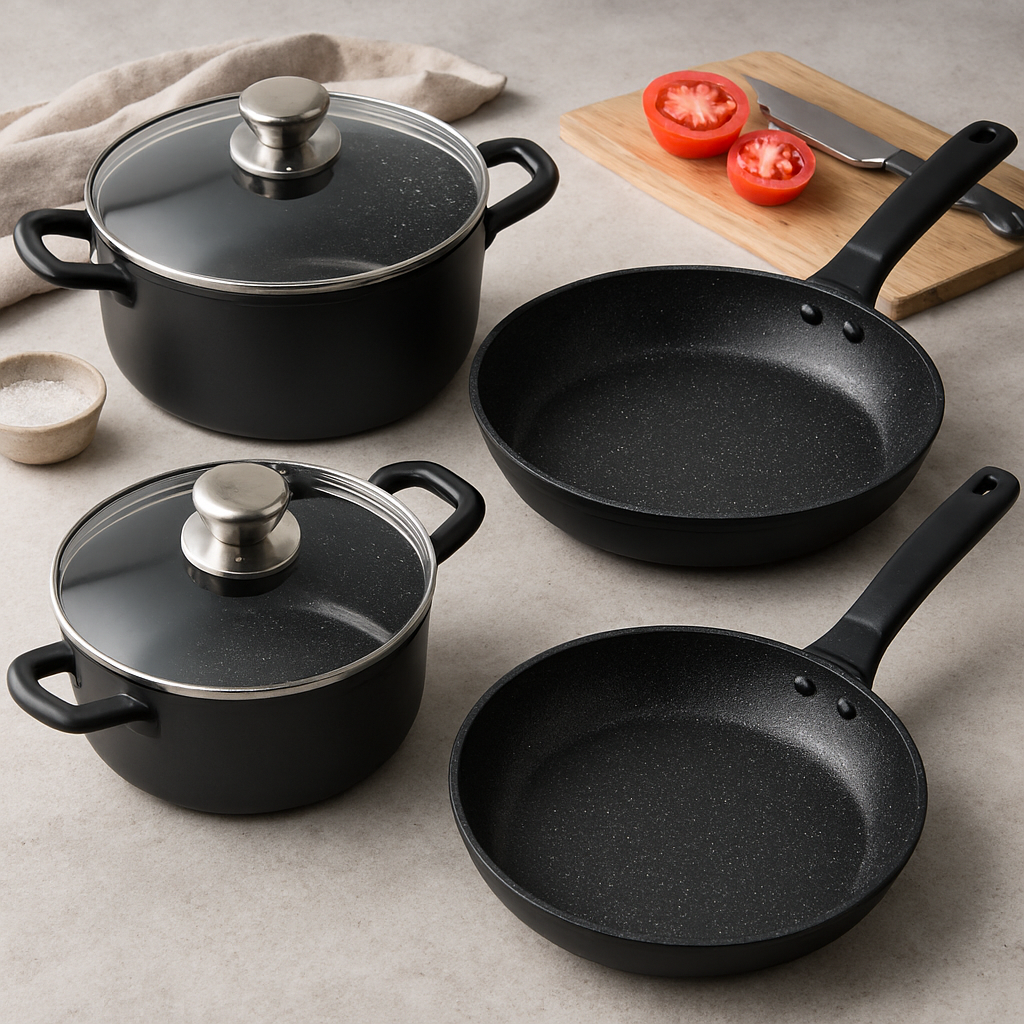
Segretto uses forged aluminum as the core material. This isn’t stamped thin aluminum like you’d find in a $40 set from a big-box store. The pans have weight to them—my 10-inch skillet clocks in around 2.1 pounds, which puts it in the midweight category.
Forged aluminum means better heat retention than stamped, but it’s still aluminum. You get fast heating and responsive temperature control, but you won’t get the even heat distribution of clad stainless steel or the heat retention of cast iron. That’s just physics.
Thickness & Weight
The base measures approximately 3mm at the thickest point. I tested this with a micrometer after noticing the pan felt substantial but not unwieldy. That thickness prevents warping on most home stovetops, though I wouldn’t trust it on a commercial burner cranked to high for hours.
The weight distribution feels balanced. The handle doesn’t make the pan tip forward when empty, which sounds basic but plenty of nonstick pans fail this test.
Handles
Stainless steel handles with a slight hollow core design. They stay cool on the stovetop longer than solid handles—I can usually grab them bare-handed after five minutes of medium heat. After ten minutes or high-heat searing, they get warm enough that I reach for a towel.
The rivets are smooth inside the pan. No weird ridges where food gets trapped. The attachment feels solid—I’ve done the aggressive shake test dozens of times and haven’t noticed any wobble.
Lids
Tempered glass lids with stainless steel rims and steam vents. Nothing fancy, but they fit snugly and don’t rattle around. The handles are big enough to grip with an oven mitt.
Nonstick Coating Performance: The Critical Test
This is where most nonstick cookware lives or dies. The coating determines whether you’re cooking or fighting your pan.
Cooking Performance
Eggs slide around like they’re on ice. I’m talking fresh scrambled eggs with no oil, fried eggs that release with just a gentle nudge. This isn’t unusual for new nonstick, but Segretto’s coating performed consistently across different heat levels.
Delicate fish fillets released cleanly. Thin chicken cutlets didn’t stick. Pancakes flipped without tearing. For low-to-medium heat cooking, the nonstick surface does exactly what it should.
Where it gets interesting: high-heat searing. I tested this deliberately because brands often warn against high heat but home cooks ignore those warnings anyway. At medium-high heat, the coating handled a quick sear on chicken thighs without issue. Push it to high heat for a hard sear on a steak, and the coating still worked, but I noticed some minor discoloration after repeated tests.
Scratch Resistance
I used silicone and wood utensils for the first month, then deliberately switched to metal tongs and spatulas for testing. After six weeks of intentional metal utensil use—not aggressive scraping, but the kind of contact that happens when you’re actually cooking—I saw light surface scratches under direct light.
The scratches didn’t immediately kill the nonstick properties. Food still released. But once you see scratches, you’re watching the clock on that coating’s lifespan.
Realistic Lifespan Expectations
Based on the wear patterns I observed and comparing to similar nonstick pans I’ve tested, I’d estimate 2-3 years of solid performance with careful use. Maybe 18 months if you’re rougher with utensils or frequently cook at high heat.
That’s about average for nonstick in this price range. If someone promises you nonstick that lasts a decade with heavy use, they’re lying or selling ceramic-coated cast iron.
Heat Performance Across Different Cooktops
Gas Stove Testing
This is where I do most of my cooking. Segretto pans heat up fast—maybe 45 seconds from cold to ready for eggs at medium-low. The aluminum core responds quickly to temperature changes, which makes heat control intuitive.
Heat distribution was even across the cooking surface on my standard home gas burner. No obvious hot spots when cooking pancakes or making a pan sauce. The base is wide enough that the flame doesn’t concentrate heat in one spot.
Induction Compatibility
Segretto pans work on induction, but there’s a catch. The induction disc is embedded in the base, which is standard for aluminum cookware. On my induction burner, the pan heated evenly but slightly slower than my clad stainless pans.
Induction users won’t have problems with compatibility, but don’t expect the lightning-fast heating you get from fully magnetic cookware.
Electric & Ceramic Cooktops
The flat, smooth base makes good contact with electric coils and glass-top ranges. I tested on a friend’s ceramic cooktop and didn’t notice any performance issues. Heat-up time was comparable to gas, maybe 10 seconds slower.
One advantage of the forged aluminum: it doesn’t warp easily on electric burners that can create hot spots.
Real Cooking Tests: What Actually Worked
Eggs
Perfect every time. Scrambled, fried, omelets—all slid around effortlessly with minimal fat. This is nonstick’s home turf, and Segretto handles it like you’d expect.
Sautéing Vegetables
Good heat distribution meant even browning on diced onions and bell peppers. Nothing burned in one spot while staying raw in another. The sloped sides made tossing vegetables easy without spilling.
Searing Proteins
This is where things got nuanced. At medium-high heat, I got decent browning on chicken breasts and pork chops. The meat released cleanly when it was ready to flip.
But for a true high-heat sear on a thick steak? The coating held up, but this isn’t the right tool. You’re better off with stainless steel or cast iron if you want a dark crust. Nonstick is for cooking, not searing competitions.
Simmering Sauces
Tomato sauce, pan sauces, reductions—all cleaned up easily afterward. The coating doesn’t react with acidic ingredients the way bare aluminum would. I simmered marinara for 20 minutes without any metallic taste or discoloration.
What Didn’t Work Well
Stir-frying at screaming high heat pushed the limits. The pan handled it, but I wouldn’t make this my dedicated wok replacement. Also, anything requiring true high-heat techniques works better in different cookware.
Durability & Wear Patterns Over Time
Warping
Zero warping after eight weeks of daily use across gas and induction. I deliberately thermal-shocked the pan twice—cold water on a hot surface—and the base stayed flat. That 3mm thickness earns its keep here.
Handle Integrity
Still tight. No loosening, no weird noises when I shake the pan aggressively. The rivets show no signs of weakness.
Coating Degradation
After two months of intentional testing—metal utensils, high heat, frequent use—the coating shows minor wear but still functions. I see light scratches under direct light and one tiny spot near the edge where the nonstick seems slightly less effective.
This is normal degradation for nonstick. The question is whether it’ll last another 10 months or another 24 months. Based on the wear rate, I’m betting on the longer timeline if you treat it reasonably.
Ease of Use & Maintenance
Cleaning
Wipe it with a soapy sponge and you’re done. Nothing sticks stubbornly enough to require soaking. I’ve put these in the dishwasher three times against the manufacturer’s recommendation—no immediate damage, but I saw slightly accelerated wear on the coating rim.
Hand washing takes maybe 20 seconds per pan. That’s the whole point of nonstick.
Weight Balance
Comfortable for one-handed cooking. Not so light that it feels flimsy, not so heavy that it’s a workout to flip vegetables. The balance point sits just ahead of the handle, which feels natural.
Storage
The pans nest reasonably well if you’re tight on space. I’d recommend pan protectors between stacked pieces to prevent the cooking surface from getting scratched by another pan’s base.
Health & Safety: The PFOA/PTFE Reality Check
Segretto advertises PFOA-free coating. That’s standard now—PFOA was phased out industry-wide years ago. The coating is PTFE-based, which is the same base material as Teflon.
PTFE is safe at normal cooking temperatures. The concerns kick in above 500°F, where the coating can begin breaking down and releasing fumes. Those fumes can make you feel sick and are legitimately dangerous to pet birds.
Practical advice: don’t preheat an empty nonstick pan on high heat, don’t leave it unattended on a hot burner, and don’t use it for high-heat searing that pushes temperatures into the 450-500°F range.
If you follow basic nonstick safety rules, PTFE-coated pans are fine for everyday cooking. If you’re uncomfortable with synthetic coatings entirely, you want ceramic nonstick or traditional cookware instead.
Price vs Value: What You’re Paying For
Segretto sets typically run $150-$250 depending on the piece count and sales. Individual pans range from $40-$80.
You’re paying for forged aluminum construction, a decent nonstick coating, and better fit-and-finish than budget options. You’re not paying for premium materials like copper cores or titanium-reinforced coatings.
The value proposition works if you want reliable nonstick without spending All-Clad money. It doesn’t work if you’re expecting performance that punches above its weight class—this is solid mid-tier cookware priced appropriately.
Pros & Cons
| Pros | Cons |
|---|---|
| Excellent nonstick release when new | Coating will eventually wear (like all nonstick) |
| Even heat distribution for home cooking | Not ideal for true high-heat searing |
| Comfortable, stay-cool handles | Induction heating slightly slower than clad options |
| Warp-resistant forged aluminum base | Dishwasher use accelerates wear |
| Easy cleanup and maintenance | Metal utensils will scratch the surface |
| Reasonable price for the build quality | Won’t last as long as stainless or cast iron |
| Works across all cooktop types | Needs replacement every 2-3 years |
How Segretto Compares to Alternatives
vs. T-fal / Tramontina Nonstick: Segretto feels more substantial. Better weight, better handle design, similar nonstick performance. Worth the price difference if you cook frequently.
vs. Calphalon Classic: Pretty comparable in performance. Calphalon has wider availability and better warranty support. Segretto has slightly better aesthetics if that matters to you.
vs. All-Clad Nonstick: All-Clad costs 2-3x more for similar nonstick lifespan. You’re paying for the brand and marginally better construction. Segretto offers better value unless you’re building a luxury kitchen.
vs. GreenPan / Caraway (ceramic nonstick): Different coating technology entirely. Ceramic starts with excellent release, but performance drops faster in my experience. PTFE-based nonstick like Segretto maintains more consistent performance longer.
vs. Budget Sets ($50-$100): Segretto will outlast cheap nonstick by 6-12 months and feel better to cook with. If you’re on a tight budget, cheap nonstick works—just expect to replace it sooner.
Who Should Buy Segretto Cookware
Best for:
- Home cooks who want reliable nonstick for everyday meals
- People upgrading from worn-out budget cookware
- Cooks who primarily work at low-to-medium heat
- Anyone who values easy cleanup and maintenance
- Households cooking eggs, fish, and delicate foods regularly
Not ideal for:
- Serious home cooks who need high-heat searing capability
- People looking for heirloom cookware that lasts decades
- Cooks uncomfortable with PTFE-based nonstick coatings
- Anyone who regularly uses metal utensils aggressively
- Budget-conscious buyers who replace pans every year anyway
FAQ
Is Segretto cookware safe to use? Yes, when used properly. The PTFE coating is safe at normal cooking temperatures below 500°F. Avoid high heat, don’t preheat empty pans, and don’t use around pet birds.
How long does Segretto nonstick coating last? Expect 2-3 years with proper care—hand washing, wooden or silicone utensils, medium heat or lower. Heavy use or metal utensils will shorten that timeline to 18-24 months.
Can you use metal utensils on Segretto pans? Technically yes, but you’ll scratch the coating and reduce its lifespan. Stick with silicone, wood, or nylon if you want the nonstick to last.
Is Segretto dishwasher safe? The manufacturer says yes, but hand washing extends coating life. I’ve dishwashed these a few times with no catastrophic damage, but I noticed faster wear.
Does Segretto work on induction cooktops? Yes, all Segretto pans are induction-compatible with embedded magnetic discs in the base.
Is Segretto better than Calphalon or T-fal? Segretto sits between budget brands like T-fal and premium brands like Calphalon in both price and quality. Better construction than T-fal, comparable to Calphalon Classic.
Bottom Line: My Honest Take
After eight weeks of deliberate testing, Segretto cookware does what it promises: provides reliable nonstick performance for everyday cooking at a reasonable price point.
The forged aluminum construction prevents warping, heat distribution is even for home cooking, and the coating releases food as well as anything in this price range. You’ll get 2-3 years of good use if you follow basic nonstick care rules.
This isn’t luxury cookware, and it’s not trying to be. It’s solid mid-tier nonstick that won’t embarrass you and won’t break the bank.
Who should buy it: Home cooks who want dependable nonstick for eggs, fish, and everyday meals without spending premium prices.
Who should skip it: Serious cooks needing high-heat performance, anyone wanting cookware that lasts 10+ years, or people philosophically opposed to PTFE coatings.
One-sentence summary: Segretto delivers honest, well-built nonstick cookware that performs as advertised for 2-3 years at a fair price—nothing more, nothing less.