I’ve been cooking with HexClad for the past 18 months now. Not just testing it for a weekend review—I mean actually using these pans every day, through breakfast scrambles, seared steaks, sticky pan sauces, and the kind of weeknight disasters that reveal what cookware is really made of.
When I first unboxed my HexClad set, I was skeptical. The marketing felt loud. The price tag made me wince. But I wanted to know if this hybrid cookware could actually deliver on its promise: nonstick performance you can sear on, without the fragility of traditional nonstick.
So I put it through everything. High heat searing. Metal utensils. Tomato sauces that simmer for hours. Even the dishwasher, against my better judgment.
HexClad isn’t traditional nonstick. It’s not stainless steel either.
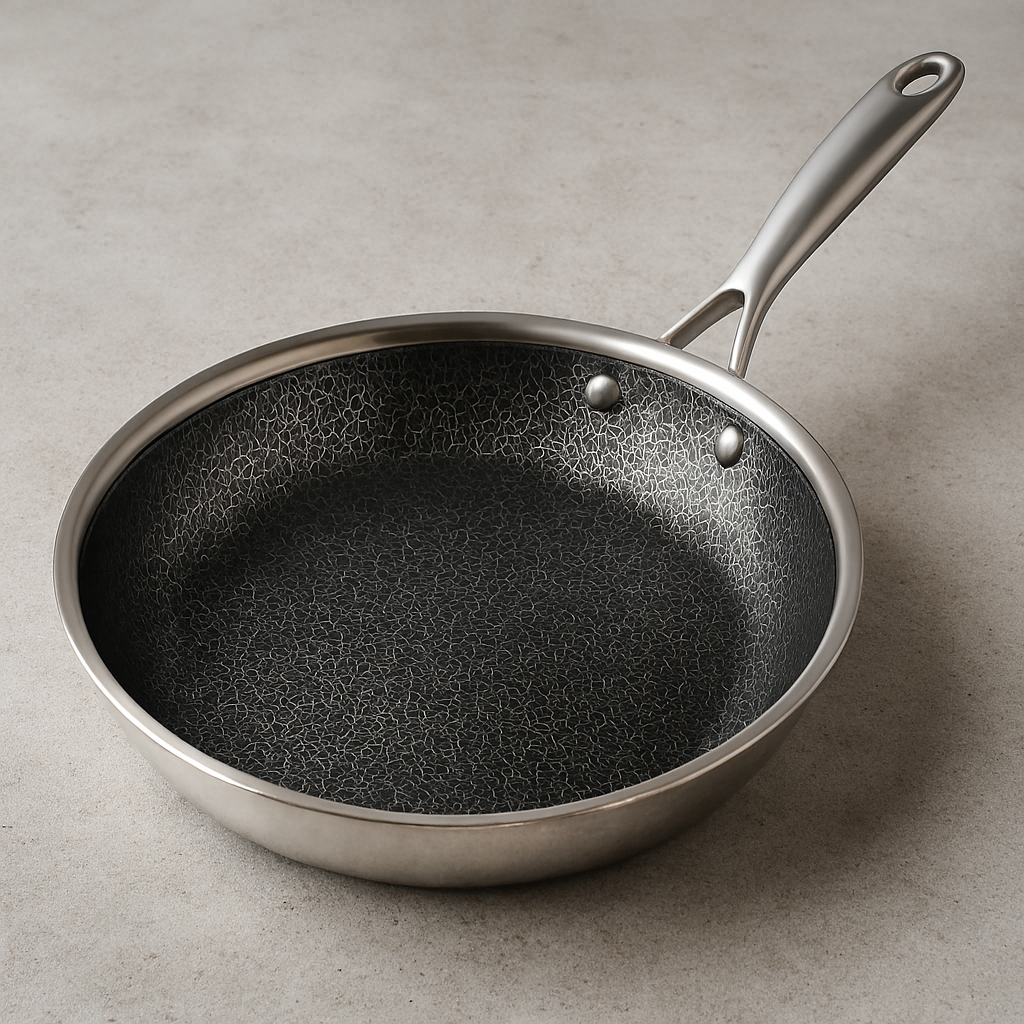
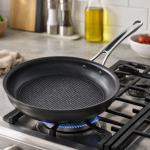
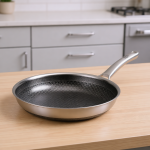
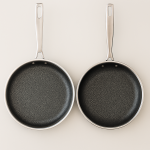
The surface has a hexagonal pattern—raised stainless steel peaks with nonstick valleys between them. When you cook, your food contacts both surfaces simultaneously. The stainless steel gives you browning and high-heat tolerance. The nonstick coating handles release.
This matters because traditional nonstick pans die fast under high heat. You can’t get a proper sear without damaging the coating. And stainless steel, while durable, requires fat and technique to prevent sticking.
The pan construction is tri-ply: aluminum core sandwiched between two layers of stainless steel. This design is standard in good cookware—aluminum conducts heat evenly, stainless provides durability and induction compatibility.
HexClad hasn’t released a major redesign this year. The core technology remains the same hexagonal laser-etched pattern they’ve been using since launch. They’ve added a few pieces to their lineup—a deeper sauté pan, some larger stockpot options—but the fundamental cookware hasn’t changed.
What has changed is the competition. More brands are now attempting hybrid designs. Some cheaper, some using different coating technologies. This puts pressure on HexClad to justify its premium pricing.
The other shift: HexClad’s direct-to-consumer pricing has become more aggressive. I’ve seen bigger bundle discounts and seasonal sales than in previous years, which makes the value proposition slightly better if you’re patient.
But if you bought HexClad in 2023 or 2024, you’re not missing out on some revolutionary upgrade.
Best HexClad Cookware Options in 2026
After cooking with nearly every piece HexClad makes, here’s what I’d actually recommend.
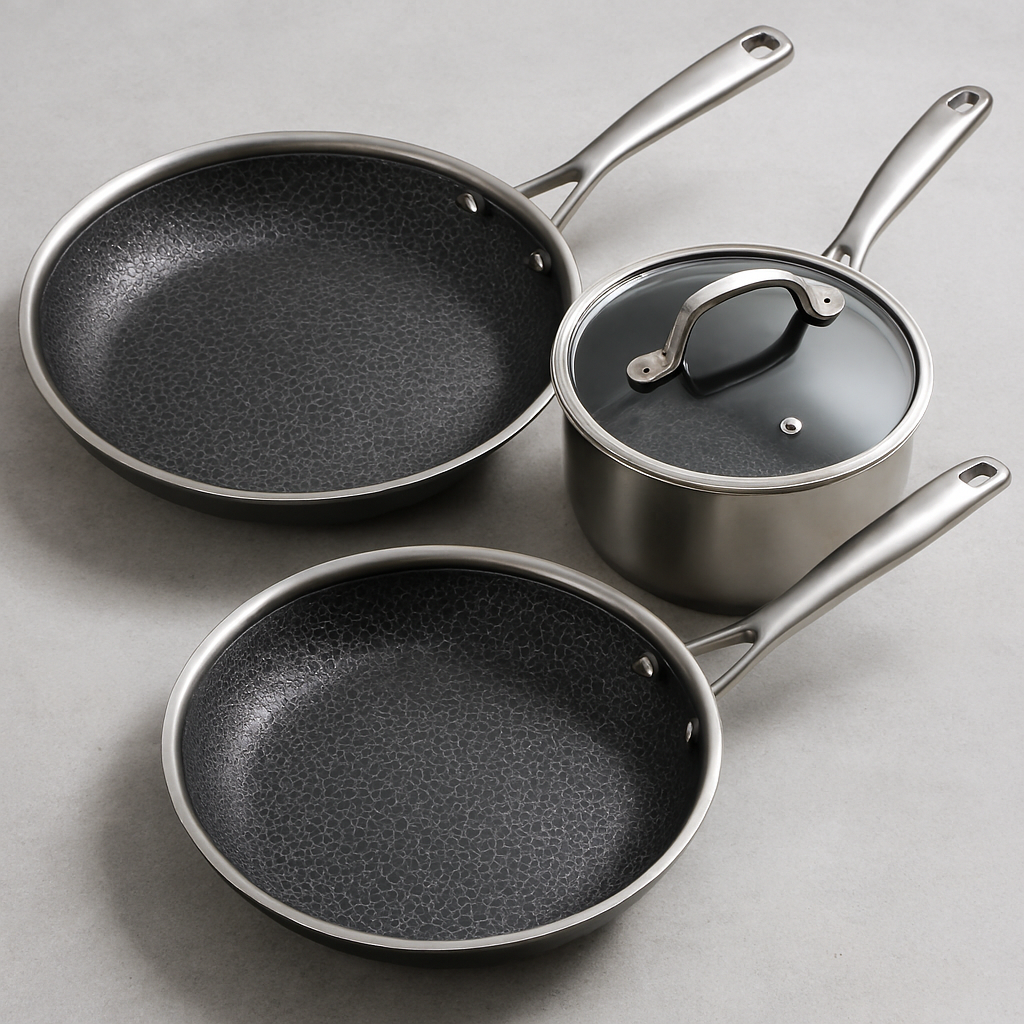
Best Overall Set: HexClad 7-Piece Hybrid Set
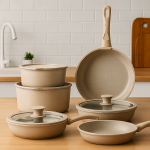
This set gets you the essentials without overwhelming your kitchen. You get an 8-inch pan, 10-inch pan, 12-inch pan with lid, and a 3-quart pot with lid.
I use the 10-inch and 12-inch pans constantly. The 8-inch is perfect for small tasks—single servings, reheating, quick egg scrambles. The 3-quart pot handles sauces and grains well enough, though I still prefer my stainless steel saucepan for more delicate work.
The lids are tempered glass, which I prefer over metal. I like seeing what’s happening without lifting the lid and losing heat.
This set runs around $400-500 depending on sales. That’s steep, but if you’re committed to HexClad, it’s the most sensible entry point.
Best Individual Pan: HexClad 12-Inch Hybrid Fry Pan
If you’re testing the waters before committing to a full set, start here.
The 12-inch pan is the workhorse. I use mine for everything from pancakes to chicken thighs to stir-fries. It’s large enough to handle family meals but not so big that heat distribution suffers.
The sloped sides make tossing and flipping easier than a straight-sided sauté pan. And at around $150, it’s expensive for a single pan but not completely absurd if it lasts.
I’ve had mine for 18 months. The nonstick performance has declined slightly—eggs sometimes need a bit more fat now—but it’s still functional.
Best for Induction: HexClad 10-Inch Hybrid Pan
Induction cooktops are picky. They need solid magnetic contact, and the base needs to conduct heat efficiently.
HexClad’s tri-ply construction handles this well. The stainless steel exterior provides the magnetic surface, and the aluminum core distributes heat evenly. I’ve tested this on two different induction burners—one portable unit and one full-size cooktop—and both heated the pan quickly and evenly.
The 10-inch size is ideal for induction because smaller pans sometimes have hot spots on larger burners. This size matches most induction zones perfectly.
If you’re cooking on induction, HexClad works. But so does any quality tri-ply stainless pan at half the price.
Best for Serious Home Cooks: HexClad 14-Inch Wok
This one surprised me.
I wasn’t expecting much from a hybrid nonstick wok. Traditional woks need scorching heat and constant motion—conditions that usually destroy nonstick coatings.
But the HexClad wok handles it. The stainless steel peaks can take the heat, and the nonstick valleys prevent delicate ingredients from welding themselves to the pan. I’ve used it for everything from fried rice to stir-fried vegetables to seared scallops.
The only downside is the flat bottom. Traditional round-bottom woks work better on gas burners with wok rings, but most home cooks don’t have that setup anyway. For a flat-top stove, this wok performs well.
It’s expensive at around $180, but if you cook a lot of high-heat Asian-style dishes, it might be worth it.
Materials & Construction: What You’re Actually Buying
Let’s talk about what’s inside these pans.
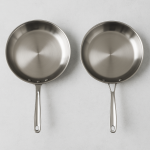
HexClad uses a tri-ply construction: an aluminum core bonded between two layers of stainless steel. This is the same basic design you’ll find in All-Clad, Made In, and other premium cookware.
The aluminum layer is thick enough to distribute heat evenly. I haven’t experienced significant hot spots, even on my slightly uneven gas burner. The stainless steel exterior provides durability and makes the pans compatible with all cooktop types, including induction.
The signature hexagon pattern is laser-etched into the stainless steel, creating raised peaks and recessed valleys. The nonstick coating sits in those valleys.
Here’s the important part: that nonstick coating is still a PTFE-based coating. HexClad markets it as “hybrid technology,” but the nonstick component is fundamentally the same material used in traditional nonstick pans—just applied differently.
This means the coating is still vulnerable to high heat degradation, metal utensil damage, and eventual wear. The stainless steel peaks protect the coating somewhat, but they don’t make it invincible.
The pans are heavy. Heavier than traditional nonstick, lighter than pure cast iron. The weight comes from the tri-ply construction and the substantial stainless steel layers. I appreciate the heft—it feels solid and well-made—but if you have wrist issues or struggle with heavy cookware, this might be a problem.
Cooking Performance: The Real Test
I’ve cooked hundreds of meals on HexClad. Here’s how it performs across different techniques.
Eggs
This is the classic nonstick test. I’ve made scrambled eggs, fried eggs, omelets, and frittatas.
Fresh out of the box, eggs slide around beautifully with minimal fat. A small pat of butter is plenty. The release is almost as good as traditional nonstick.
After 18 months of regular use, I need slightly more fat. Eggs still release cleanly, but they don’t glide quite as effortlessly. If I use too little butter, I get some sticking in spots.
Compared to a brand-new Teflon pan? The Teflon wins on pure nonstick performance. But HexClad holds up better over time because the stainless steel peaks protect the coating from direct metal utensil contact.
Searing Steaks
This is where HexClad is supposed to shine.
Traditional nonstick pans can’t handle the high heat needed for a proper sear. The coating breaks down, releases fumes, and loses its nonstick properties quickly.
HexClad handles it better. I’ve seared dozens of steaks, pork chops, and chicken thighs at high heat. The stainless steel peaks create decent browning and crust development. Not quite as good as pure stainless steel or cast iron, but significantly better than traditional nonstick.
The trick is understanding that you’re not getting full stainless steel contact. Only about 10-15% of the food surface touches the stainless peaks at any moment. The rest sits on nonstick coating, which means some moisture gets trapped under the meat, slightly steaming it instead of searing.
This results in good browning, but not the deep, crusty sear you’d get from a proper stainless steel or carbon steel pan.
For most home cooks, it’s good enough. If you’re chasing restaurant-quality crust, you’ll be disappointed.
Pan Sauces and Deglazing
Here’s an unexpected benefit: HexClad deglazes beautifully.
When you sear meat in stainless steel, you get fond—those browned bits stuck to the pan bottom. You deglaze with wine or stock, scrape up the fond, and build a sauce. It’s classic technique, and it creates incredible flavor.
Traditional nonstick pans don’t develop fond because nothing sticks.
HexClad splits the difference again. You get some fond on the stainless steel peaks, which you can deglaze and incorporate into a pan sauce. It’s not as much fond as pure stainless, but it’s enough to add depth to your sauce.
I’ve made dozens of pan sauces on HexClad—red wine reductions, lemon butter sauces, cream-based sauces—and they all turned out well. The nonstick coating prevents the sauce from burning while the stainless peaks contribute flavor.
The stainless steel surface is nonreactive, so there’s no metallic flavor transfer. I’ve simmered tomato sauce for hours without any issues.
The nonstick coating holds up reasonably well to acidic foods, though I’ve noticed slightly faster wear in pans I’ve used frequently for tomato-based dishes. Nothing catastrophic, just a gradual decline in slickness.
High-Heat Cooking
HexClad is oven-safe up to 500°F.
I’ve used the pans for everything from roasted vegetables to finishing thick steaks in the oven. The handles stay cool enough to grab with a towel, and the pans come out without warping.
But here’s the thing: repeated high-heat use accelerates nonstick coating degradation. I noticed this especially with the pan I used most often for oven finishing. After six months of regular oven use at 450-500°F, the nonstick performance declined noticeably.
HexClad handles high heat better than traditional nonstick, but it’s not immune to heat damage.
Nonstick Performance vs Traditional Nonstick
Let’s be direct: HexClad is not as nonstick as a good Teflon pan.
A brand-new Teflon-coated pan from Nordic Ware, Scanpan, or even a decent ceramic nonstick will outperform HexClad on pure nonstick capability. Eggs slide easier. Delicate fish releases cleaner. You can cook with less fat.
But that’s not really the point.
Traditional nonstick dies fast. You can’t use metal utensils. You can’t cook over high heat. You can’t put it in the dishwasher without accelerating wear. Most nonstick pans last 1-3 years before you need to replace them.
HexClad lasts longer because the stainless steel peaks protect the coating. I’ve used metal spatulas, whisks, and tongs on my pans without destroying the surface. The nonstick has degraded, yes, but it’s still functional after 18 months of daily use.
A traditional nonstick pan would be in the trash by now.
So the trade-off is: slightly worse initial nonstick performance in exchange for better durability and high-heat tolerance.
Is that worth the price premium? Depends on how you cook.
Durability & Longevity: What to Expect
I’ve been tough on these pans.
Metal utensils. Dishwasher. High heat. Acidic sauces. Everything you’re technically not supposed to do to nonstick cookware.
After 18 months, here’s the condition:
The stainless steel peaks show some scratching and discoloration. This is normal for stainless and doesn’t affect performance. The scratches are purely cosmetic.
The nonstick coating in the valleys has worn down in high-use areas, particularly the center of the pan where food sits most often. Eggs still release, but I need more fat than I did when the pans were new.
No coating has peeled or flaked off. This is important—flaking coating is a sign of failure and a potential health concern. HexClad’s coating is bonded well enough that even with aggressive use, I haven’t seen peeling.
The handles are still solid. No loosening, no rattling.
So how long will HexClad last?
Based on my experience, I’d estimate 3-5 years of regular use before the nonstick performance degrades enough to warrant replacement. That’s significantly better than traditional nonstick (1-3 years) but not as long-lasting as pure stainless steel or cast iron (decades if maintained properly).
The hybrid design extends the lifespan, but it doesn’t eliminate the fundamental limitation of nonstick coatings: they wear out.
Heat Distribution & Responsiveness
The tri-ply construction does its job.
I haven’t experienced significant hot spots, even on my gas range where flame distribution isn’t perfectly even. The aluminum core spreads heat well enough that I don’t get burned edges with undercooked centers.
Temperature responsiveness is good. When I increase heat, the pan reacts quickly. When I reduce heat, it cools down at a reasonable pace—not as fast as thin aluminum, but faster than thick cast iron.
For most home cooking tasks, the heat performance is excellent. You’re not fighting the pan.
One caveat: the 12-inch and 14-inch pans sometimes struggle with edge-to-center temperature consistency on smaller burners. If you’re using a large pan on a small burner, you’ll get a hot center and cooler edges. This is true of any large pan, not just HexClad, but it’s worth noting.
Match your pan size to your burner size, and heat distribution is solid.
Ease of Use & Maintenance
HexClad is easier to use than stainless steel, harder to maintain than traditional nonstick.
Daily Cleaning
Most of the time, I just wipe the pan clean with a sponge and hot water. The nonstick coating prevents serious stuck-on food.
For stuck bits on the stainless steel peaks, I use a non-abrasive scrubber or a paste of baking soda and water. This removes residue without damaging the coating.
Dishwasher Use
HexClad claims their pans are dishwasher-safe.
I’ve run them through the dishwasher dozens of times. The pans come out clean, but I’ve noticed the nonstick coating wears faster with regular dishwasher use. The harsh detergents and high heat accelerate degradation.
If you want your HexClad to last as long as possible, hand-wash. If convenience matters more than longevity, the dishwasher won’t destroy them overnight, but it will shorten their lifespan.
Weight and Handling
These pans are heavy. Not cast iron heavy, but heavier than traditional nonstick.
The 12-inch pan feels substantial when loaded with food. I don’t mind the weight—it makes the pan feel durable and stable—but if you cook with one hand or have grip strength issues, it might be fatiguing.
The handles are stay-cool on the stovetop, which I appreciate. I can usually grab them without a towel during cooking. In the oven, they get hot, so you need protection.
Seasoning
HexClad doesn’t require seasoning like cast iron, but I’ve noticed that a light coating of oil before storage helps maintain the nonstick performance. This isn’t official guidance from HexClad, just something I’ve found useful.
Health & Safety Analysis
Let’s address the concerns people actually have.
PFOA
HexClad’s nonstick coating is PFOA-free. PFOA (perfluorooctanoic acid) was a chemical used in older nonstick coatings that was linked to health concerns. It’s been phased out of cookware manufacturing for years.
Modern PTFE coatings, including HexClad’s, don’t contain PFOA.
PTFE and High Heat
PTFE coatings break down at high temperatures—usually above 500°F. When they break down, they can release fumes that cause flu-like symptoms in humans and can be fatal to birds.
HexClad is oven-safe to 500°F, which is right at the edge of PTFE’s safe temperature range. I’ve used the pans at this temperature without issue, but I wouldn’t push it higher.
The stainless steel peaks help dissipate heat and protect the coating from direct high-heat exposure, which provides some safety margin. But PTFE is still PTFE—treat it with respect.
Metal Utensils
HexClad markets their pans as metal utensil-safe.
This is technically true—the stainless steel peaks won’t be damaged by metal utensils. But the nonstick coating in the valleys can still be scratched or worn down by aggressive scraping with sharp metal tools.
I use metal spatulas and tongs regularly without catastrophic damage, but I’m not deliberately gouging the surface. Use common sense. Gentle contact is fine. Aggressive scraping will accelerate wear.
Overall Safety
As nonstick cookware goes, HexClad is about as safe as any modern PTFE-based pan. The coating is PFOA-free, the materials are food-safe, and the construction is solid.
The main concern is the same as any nonstick: don’t overheat it, don’t use it with damaged coating, and replace it when the nonstick wears out.
Price vs Value Analysis
This is where HexClad gets controversial.
A 7-piece set costs $400-500. A single 12-inch pan costs around $150.
For context:
A quality traditional nonstick pan costs $30-80
A tri-ply stainless steel pan costs $80-150
A cast iron skillet costs $20-60
So HexClad is priced at the high end of premium cookware, competing with brands like All-Clad, Demeyere, and Made In.
Is it worth it?
The honest answer: it depends on your priorities.
If you want the absolute best nonstick performance, buy traditional nonstick and replace it every 2-3 years. You’ll spend less over time.
If you want the best searing and browning, buy stainless steel or cast iron. You’ll get better results for less money.
If you want the convenience of nonstick with the durability and high-heat tolerance of stainless steel, and you’re willing to accept compromises in both areas, HexClad delivers.
The value proposition improves if you:
Cook frequently and use your pans hard
Want to use metal utensils without worry
Need versatility (nonstick for eggs, high-heat for steaks)
Don’t want to maintain multiple pan types
The value proposition falls apart if you:
Cook infrequently (traditional nonstick will last you years anyway)
Already own good stainless steel and don’t mind the learning curve
Are on a budget
HexClad is a premium product solving a convenience problem. It’s not solving a performance problem, because traditional cookware already performs better in specific areas.
HexClad vs Alternatives
Feature
HexClad
Traditional Nonstick
Stainless Steel
Cast Iron
Nonstick performance
Good
Excellent
None
Good (when seasoned)
High-heat searing
Good
Poor
Excellent
Excellent
Durability
Good (3-5 years)
Poor (1-3 years)
Excellent (decades)
Excellent (lifetime)
Metal utensil-safe
Yes
No
Yes
Yes
Dishwasher-safe
Yes (with wear)
No
Yes
No
Ease of use
Easy
Very easy
Moderate
Moderate
Maintenance
Low
Low
Moderate
Moderate-High
Price
$150/pan
$30-80/pan
$80-150/pan
$20-60/pan
Induction compatible
Yes
Varies
Yes
Yes
Weight
Heavy
Light
Heavy
Very heavy
Pros & Cons
What HexClad Does Well
Versatility. I can fry eggs in the morning and sear steaks at night without switching pans. For a one-pan kitchen, this is valuable.
Durability. The stainless steel peaks protect the nonstick coating from metal utensil damage and high-heat degradation. My pans have lasted longer than any traditional nonstick I’ve owned.
High-heat tolerance. I can preheat aggressively and cook over high heat without immediate coating failure. This opens up cooking techniques that traditional nonstick can’t handle.
Deglazing and fond development. The stainless peaks create enough stuck-on bits to build flavorful pan sauces. This is impossible with pure nonstick.
Build quality. The pans feel substantial and well-made. Solid handles, even heat distribution, no warping.
What HexClad Doesn’t Do Well
Pure nonstick performance. It’s not as slick as traditional Teflon, especially after a few months of use. If you want truly effortless egg cooking, this isn’t it.
Searing power. It doesn’t brown as well as pure stainless steel or cast iron. You’re getting maybe 70-80% of the sear quality, which is good but not great.
Price. The cost is hard to justify unless you specifically value the hybrid design. You can buy better traditional nonstick and stainless steel separately for less money.
Weight. These pans are heavy, which some cooks will find fatiguing.
Coating longevity. Despite being more durable than traditional nonstick, the coating still wears out. You’re not buying a lifetime pan.
Who HexClad Is Perfect For—And Who It’s Not
Buy HexClad if you:
Want to simplify your cookware collection and use fewer pans. Cook frequently and value durability over peak performance. Use metal utensils and don’t want to worry about scratching. Cook at high heat regularly (searing, stir-frying, roasting). Appreciate design and aesthetics in your kitchen tools. Have the budget and view cookware as a long-term investment.
Skip HexClad if you:
Already own good stainless steel and nonstick pans and are happy with them. Cook infrequently or are just starting out (buy cheaper cookware first). Want the absolute best nonstick performance (buy traditional nonstick). Want the absolute best searing power (buy stainless steel or cast iron). Are on a tight budget. Have wrist or grip strength issues (these pans are heavy).
FAQ
Is HexClad actually nonstick?
Yes, but not as nonstick as traditional Teflon pans. The hybrid design includes nonstick coating in the hexagonal valleys, but only about 85-90% of the cooking surface is nonstick. Food contacts the stainless steel peaks as well, which reduces pure nonstick performance.
How long does HexClad cookware last?
Based on my testing, expect 3-5 years of regular use before nonstick performance degrades significantly. This is longer than traditional nonstick (1-3 years) but not as long as stainless steel or cast iron (decades).
Can you use metal utensils on HexClad?
Yes. The stainless steel peaks protect the nonstick coating from direct metal contact. I’ve used metal spatulas, tongs, and whisks without catastrophic damage, though gentle use will extend the coating’s life.
Is HexClad safe for high-heat cooking?
Yes, safer than traditional nonstick. HexClad is oven-safe to 500°F. The stainless steel peaks help dissipate heat and protect the PTFE coating from breaking down as quickly. But don’t exceed the 500°F limit.
Does HexClad work on induction cooktops?
Yes. The stainless steel exterior is magnetic and provides excellent contact with induction burners. Heat distribution is even and responsive.
Is HexClad dishwasher-safe?
Technically yes, but hand-washing extends the nonstick coating’s lifespan. I’ve used the dishwasher many times without destroying the pans, but I’ve noticed faster coating wear compared to hand-washed pans.
What’s the difference between HexClad and regular nonstick?
HexClad has a hybrid surface with raised stainless steel peaks and nonstick valleys. This allows for higher heat cooking, metal utensil use, and better browning than traditional nonstick. The trade-off is slightly worse nonstick performance and higher cost.
Is HexClad better than stainless steel?
Not better—different. HexClad is easier to use and more forgiving than stainless steel, with some nonstick properties. Stainless steel browns better, lasts longer, and costs less, but requires more skill and fat to prevent sticking.
Bottom Line: How I’d Set Up My Kitchen with HexClad in 2026
If I were starting from scratch today, here’s exactly what I’d buy:
For most home cooks: Get the HexClad 12-inch pan and use it alongside a good stainless steel saucepan and a cast iron skillet. This gives you versatility without breaking the bank. Use the HexClad for everyday cooking—eggs, fish, quick sautés. Use stainless for sauces and acidic dishes. Use cast iron for high-heat searing and oven work.
If you love the HexClad concept: Buy the 7-piece set when it’s on sale. You’ll get the core pans you actually need without redundant sizes. Expect to spend $400-450 if you wait for a promotion.
If you’re skeptical: Start with the 10-inch pan. Use it for a few months. If you love it, expand your collection. If you’re underwhelmed, you’ve only spent $130 instead of $500.
If you’re on a budget: Skip HexClad entirely. Buy a $40 nonstick pan for eggs and a $100 stainless steel pan for everything else. Replace the nonstick every 2-3 years. You’ll save money and get better performance in each category.
After 18 months of daily use, I still reach for my HexClad pans regularly. They’re convenient, durable, and versatile. But I also still use my stainless steel and cast iron because those tools do certain jobs better.
HexClad isn’t revolutionary. It’s a well-executed hybrid design that solves specific problems for cooks who value convenience and durability over peak performance in any single category.
Is it worth $150 for a pan? Maybe, if it replaces two pans and lasts three times as long.
Is it worth buying a full set? Only if you’re committed to the concept and have the budget.
The cookware itself is good. The marketing is loud. The price is high. The performance is solid but not exceptional.
If that sounds like a fair trade to you, HexClad won’t disappoint.